

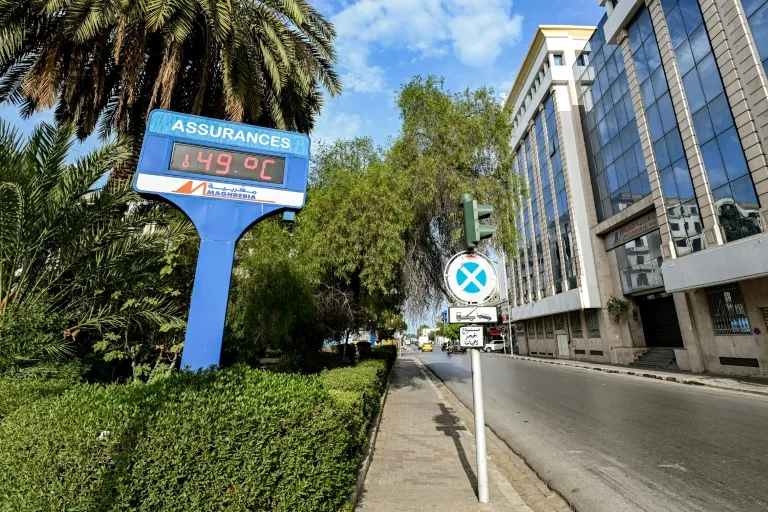
Tunisia has officially recorded its hottest summer since meteorological records began in 1950, with the summer of 2026 registering an average temperature approximately 2.9 degrees Celsius above the previous record. The National Meteorological Institute confirmed this historic heat, noting that the nation endured a particularly challenging period characterized by intense and prolonged heatwaves throughout July and August.
Record-Breaking Heatwaves Grip Tunisia
The extreme temperatures experienced this summer were not isolated incidents but rather a series of “intense and prolonged heatwaves,” according to the National Meteorological Institute. This relentless heat led to persistently high nighttime temperatures as well, offering little respite to residents. Scientists widely attribute such extreme weather phenomena to the overarching impacts of climate change, which is increasingly manifesting in more frequent and severe heat events globally.
Key Temperature Extremes Recorded
- Kairouan: The central city of Kairouan recorded the highest temperature, reaching a scorching 49.7 degrees Celsius in mid-July.
- Beja: In the northwestern region, Beja experienced temperatures as high as 49.2 degrees Celsius.
- Tozeur: The southern city of Tozeur also saw extreme heat, with temperatures climbing to 48.4 degrees Celsius.
Broader Impacts of the Heatwave
Beyond the direct temperature readings, the extreme heat had significant ripple effects across Tunisia. While official figures detailing the health impact are still pending, a representative group of young Tunisian doctors reported numerous fatalities they believe were directly caused by the heat. The severity of the situation was underscored by the Tunisian League for Human Rights (LTDH), which documented 23 deaths within prisons. The league cited the harsh living conditions, exacerbated by the extreme temperatures and severe overcrowding in prison cells, as contributing factors to these tragic outcomes.
Infrastructure Strain and Public Services
The summer’s heat also placed immense strain on Tunisia’s infrastructure, particularly its power and water supply systems. President Kais Saied addressed the issue of widespread power outages, some lasting over ten hours, even affecting the capital. He asserted that these were not mere accidental breakdowns but part of deliberate “criminal plans” and “attempts at provocation.” The state-run electricity company, STEG, had previously stated that the power cuts were implemented as a load-shedding measure to alleviate pressure on the national grid during peak demand, which is often intensified by the use of air conditioning during heatwaves.
The disruption to the electricity supply had a cascading effect on the water infrastructure. A significant portion of Tunisia’s water supply relies on electric pumps, which were rendered inoperable during the frequent power outages. This led to widespread water cuts, further compounding the difficulties faced by the population. The situation was worsened by a shortage of bottled water, which was also linked to the power outages affecting production and distribution.
Climate Change and Future Outlook
The record-breaking summer heat in Tunisia serves as a stark reminder of the escalating impacts of climate change. As global temperatures continue to rise, countries like Tunisia, which are particularly vulnerable to heat and water scarcity, face increasing challenges. The events of the summer of 2026 highlight the urgent need for adaptation strategies, infrastructure resilience, and global efforts to mitigate climate change. The interconnectedness of extreme weather, infrastructure reliability, and public health has been brought into sharp focus, underscoring the complex challenges that lie ahead for the nation and the wider region.
Looking forward, the National Meteorological Institute and climate scientists will continue to monitor temperature trends and provide data to inform public policy and preparedness measures. The experiences of this record-breaking summer are expected to influence future planning for infrastructure, public health services, and emergency response protocols to better cope with increasingly extreme climatic conditions.
