

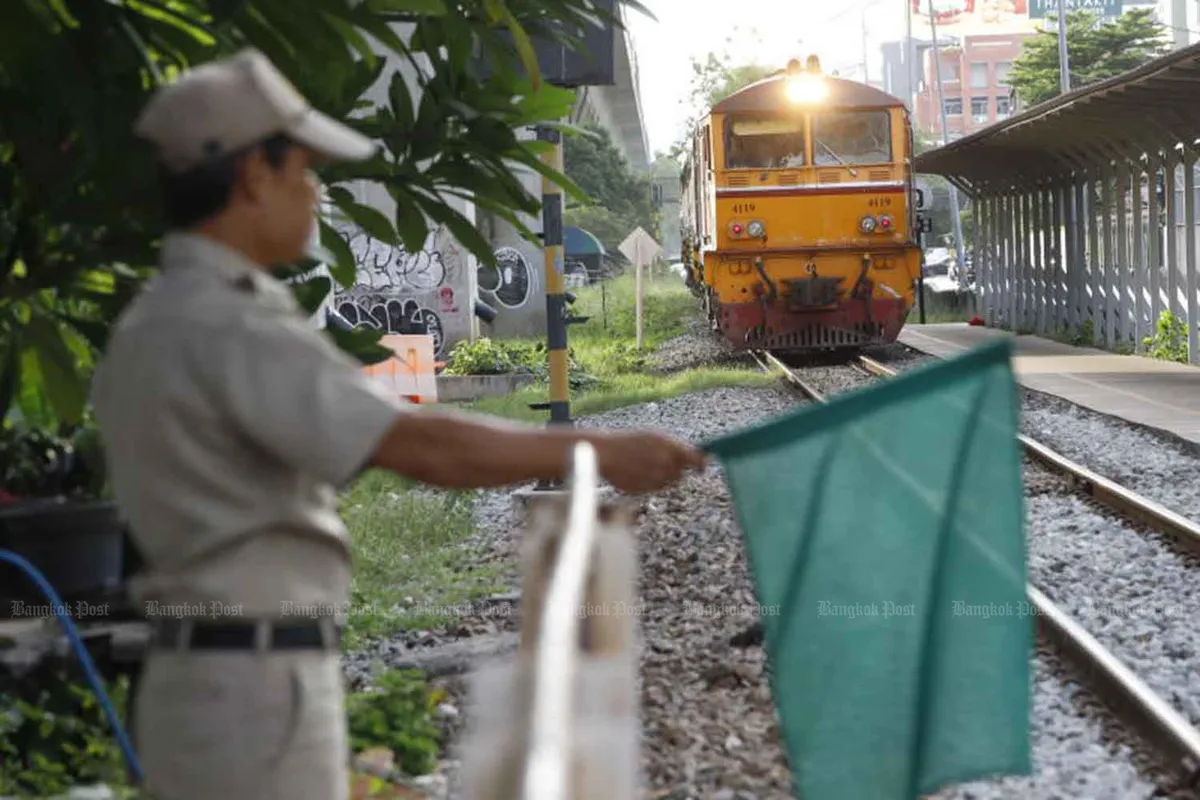
Railway System Grapples with Workforce, Debt, and Modernization Hurdles
A recent comprehensive study has identified five significant structural challenges threatening the long-term sustainability of Thailand’s railway network, operated by the State Railway of Thailand (SRT).
The findings emerged from a research project conducted between May and July of the previous year by the State Railway Workers’ Union of Thailand (SRUT) in collaboration with the College of Leadership and Social Innovation at Rangsit University. Data was gathered from railway employees, specialists, and stakeholders across the nation to assess the current state and future viability of the rail system.
The study, presented at a seminar titled “Solving Problems and Developing the Railway Sector Sustainably,” highlighted critical issues including:
- Workforce and operational safety shortages
- Deficiencies in locomotives and rolling stock
- Substantial debt burdens linked to public service obligations
- Management and investment challenges
- Difficulties in transitioning to a new-generation rail system
Government Acknowledges Deep-Rooted Issues
Transport Minister Phiphat Ratchakitprakarn has acknowledged the government’s awareness of these structural problems. He noted that over 70% of Thailand’s rail network remains single-track, and a significant portion of the existing locomotives and passenger cars have surpassed their operational lifespans.
Compounding these issues is a dramatic reduction in the railway workforce. The number of employees has fallen from over 20,000 to approximately 8,000, despite the network’s expansion to more than 4,100 kilometers. This drastic decrease has led to increased workloads for remaining staff and raised concerns regarding operational efficiency and safety.
Proposed Solutions and Financial Realities
In response to the workforce shortage, the Ministry of Transport is seeking cabinet approval to create 2,850 new positions within the SRT. The focus will be on filling urgent roles such as train drivers, mechanics, station masters, engineers, and maintenance personnel. The ministry is also undertaking a review of workforce management restrictions that have previously hampered SRT operations.
Minister Phiphat also addressed the SRT’s considerable debt, which now exceeds 300 billion baht. He explained that a significant portion of this debt is a consequence of the railway’s public service mandate, which requires providing transportation at fares set below operational costs. Currently, the average operating cost per passenger-kilometer stands at over 3 baht, while fares remain as low as 0.24 baht per passenger-kilometer, underscoring the railway’s role in ensuring affordable travel.
To improve the railway’s financial standing, the government is exploring strategies to increase revenue through the commercial development of SRT-owned land and assets.
