

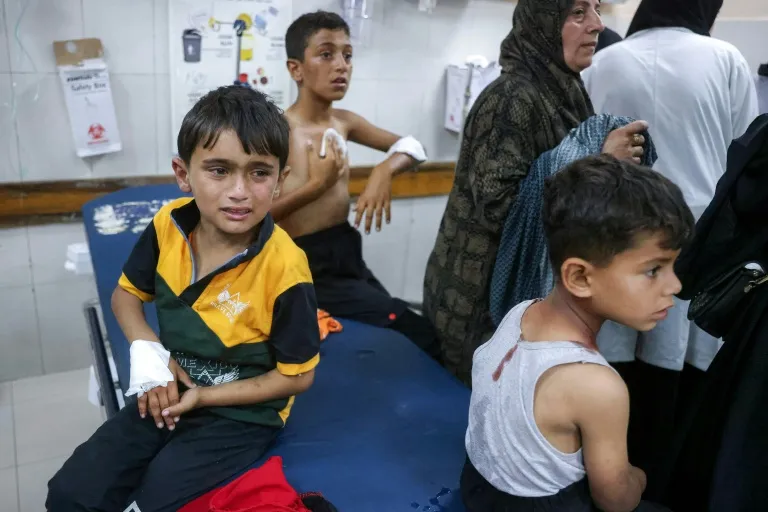
Despite a declared ceasefire in October 2025, Israeli strikes have persisted across Gaza, resulting in the deaths of at least 992 Palestinian children since that time. These figures, considered reliable by the United Nations, were released by the territory’s health ministry.
Unicef Highlights Devastating Child Casualties
The United Nations Children’s Fund (Unicef) has described the number of Palestinian children killed since the ceasefire announcement between Israel and Hamas, which governs Gaza, as an “absurd and devastating figure.”
“During a period supposedly defined by restraint and protection, a child has been killed, on average, every single day for more than eight months,” stated Unicef spokesman James Elder during a briefing in Geneva, speaking from Amman. “For many, many months, the world has been told there is a ceasefire in Gaza. Yet for Palestinian children, this so-called ceasefire has become a cruel and a deadly illusion.”
Children Killed Outside Conflict Zones
Elder emphasized that the children who have died since the ceasefire began were not killed in active war zones. “They were killed in their homes. In their schools. Playing football. Fishing. They were shot, bombed struck by quadcopters,” he detailed. “If a child is being killed every day, surely the debate is no longer about the quality of the ceasefire. It is about the credibility of calling it one.”
He provided recent examples, noting that “a two-year-old boy was shot and killed by Israeli forces; a 13-year-old boy was shot and killed inside his tent; a five-year-old boy and his father were killed by an Israeli strike, and on and on it goes.”
Unacceptable Injuries and Medical Crisis
Beyond the fatalities, more than 400 children have sustained injuries since the ceasefire was enacted, many with severe and life-altering wounds. Elder highlighted that “hundreds of children urgently require medical evacuation,” while Israeli “restrictions on essential medicines mean wounded children are enduring greater pain and face an increased risk of infection, complications and further amputations.”
Profound Psychological Trauma
The psychological toll on Gaza’s children is also a significant concern. Elder described how “fear, loss and violence… is woven into the very fabric of their childhood.” He added that “the trauma is so profound that it affects children’s ability to eat, sleep and, of course, to develop normally.”
Elder asserted that the ongoing deaths of children are not due to a lack of available options but rather a “consequence of a lack of political will.” He urged, “We must stop accepting levels of child deaths that would provoke international outrage anywhere else in the world. We must stop normalising the abnormal.””
