

Nigerian security forces sustained casualties during operations to rescue schoolchildren and staff held captive for nearly two months in the southwestern state of Oyo. The successful rescue, announced on Friday, involved a multi-agency effort that included intelligence agencies, police, and local vigilante groups, alongside the army. While the operation achieved its primary goal of freeing the hostages, the military confirmed that some security personnel were lost during the carefully planned and executed missions.
Details of the Kidnapping and Rescue
The abduction occurred in the Oriire local government area of Oyo state, a region not typically associated with such extremist violence. The victims, comprising pupils and their teachers, were taken from three different schools. Their captivity lasted for close to two months, causing significant distress to their families and communities. President Bola Tinubu identified the perpetrators as militants from Ansaru, a splinter faction of Boko Haram known to operate in Nigeria’s central regions and whose reach had extended into the southwest.
Senator Abdulfatai Buhari, representing Oyo state, described the emotional toll of the ordeal, noting that some of the rescued children were as young as two and three years old. He expressed his relief at their safe return but highlighted their frail condition, a testament to the mental and physical hardship they endured. The senator’s account underscored the severity of the situation and the profound impact on the young victims.
Broader Security Context in Nigeria
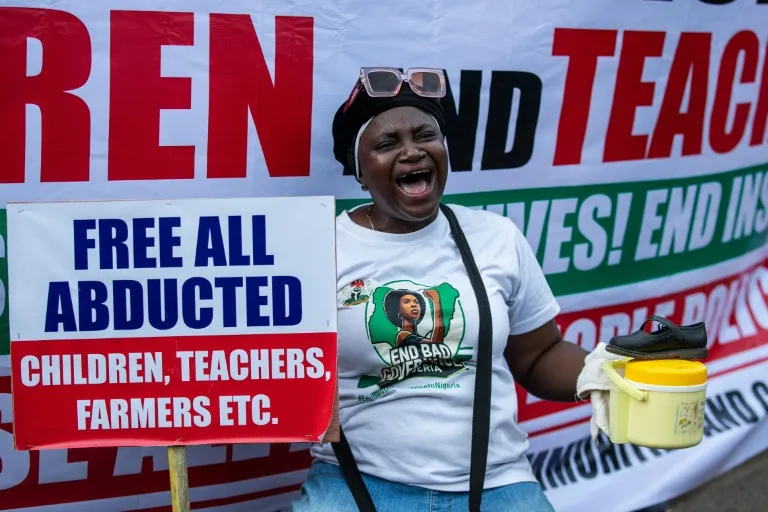
This incident in Oyo state sent shockwaves across Nigeria, as it occurred far from the northeastern strongholds where a protracted jihadist conflict has been ongoing for years. While mass kidnappings have become a grimly familiar tactic employed by both jihadist groups and criminal gangs, often referred to as “bandits,” in the north, the Oyo incident highlighted the expanding reach of these security threats. The violence has led to widespread protests, strikes by educators, and significant political condemnation, particularly with presidential elections on the horizon in January 2027.
Southwestern Nigeria, which includes the nation’s economic hub, Lagos, has historically been considered one of the more secure regions amidst the country’s various security challenges. Oyo state itself is densely populated, and its capital, Ibadan, is a significant center for education, making the kidnapping of students particularly alarming.
Hostages Used as Leverage
According to Defence Minister Christopher Musa, the kidnappers intended to use the abducted students and staff as “leverage” against the Nigerian government, possibly in exchange for the release of their own commanders who were in custody. Musa indicated that the militants had issued threats to kill the hostages if security forces attempted a direct intervention. However, the military’s strategy focused on dismantling the kidnappers’ operational networks and bases.
Military Operations and Disruption of Networks
The army’s operations, which spanned over a month, were designed to systematically target the broader networks supporting the kidnappers. These efforts included raids on several hideouts located within the forests of the Old Oyo National Park. Concurrently, arrests made in various parts of the country were crucial in disrupting the group’s command structure and operational capacity. The military stated that these actions “completely disorganised the group, exerted overwhelming pressure on them and ultimately led the terrorist group to ‘unconditionally release’ the pupils and teachers.”
Medical Care and Precedents of Mass Kidnappings
Following their rescue, the pupils and staff are receiving medical attention at a Nigerian military base in Ibadan. This incident echoes a pattern of mass school abductions that armed groups, particularly jihadists, have employed in Nigeria. The most infamous case occurred in April 2014, when Boko Haram abducted 276 schoolgirls from Chibok in Borno state. More recently, in late 2025, a series of abductions, including that of two dozen schoolgirls in Kebbi state and approximately 300 students and teachers in Niger state, brought renewed international focus to Nigeria’s persistent insecurity issues.
The successful, albeit costly, rescue operation in Oyo state underscores the complex and evolving security landscape in Nigeria. It highlights the determination of security forces to combat terrorism and related criminal activities, even in the face of significant risks and sacrifices.
