

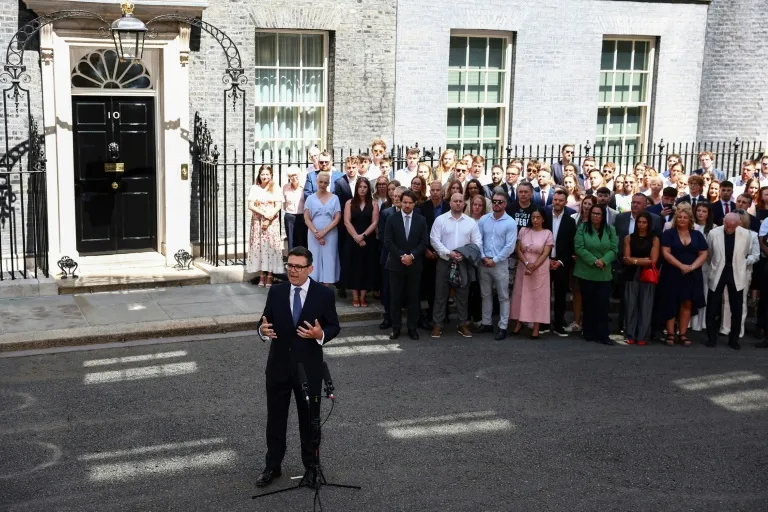
In his inaugural day as the United Kingdom’s Prime Minister, a significant policy shift was announced: a reduction in Value Added Tax (VAT) on consumer electricity bills. This marks the first major initiative under the new leadership, aiming to provide immediate financial relief to households grappling with the rising cost of living.
Energy Tax Cut Details and Impact
Effective October 1st, the VAT on electricity consumption will be eliminated. The government estimates this measure will save the average UK household approximately £45 annually. Prime Minister Burnham stated, “We’re taking immediate action to cut taxes on energy bills, put more money in people’s pockets and bring back hope.” This policy is projected to cost the government around £850 million during the current financial year.
Funding the Tax Cut
The funding for this VAT reduction is slated to come from the cancellation of a previously planned digital ID scheme. This initiative, championed by the former administration, was estimated to cost taxpayers £1.8 billion. However, questions have been raised regarding the financial implications and the clarity of the funding mechanism. A former minister, Darren Jones, noted on social media that the digital ID program was considered “unfunded” and suggested that the government would need to present a comprehensive budget outlining how its new policies will be financed.
Government Reshuffle and New Direction
The Prime Minister’s arrival in Downing Street was accompanied by a significant reshuffling of the cabinet. Several loyalists of the previous leader were removed, signaling a potential shift in the government’s political direction. Key appointments include:
- John Healey has been appointed as the new finance minister, replacing Rachel Reeves.
- David Lammy has stepped down as deputy prime minister.
- Ed Miliband has taken on the role of foreign minister.
- Wes Streeting has been named defence minister.
- Angela Rayner, a prominent figure on the left of the party, has returned to a government position.
This reshuffling underscores the new Prime Minister’s efforts to consolidate his leadership and align his team with his policy agenda.
Prime Minister’s Vision and Policy Aims
The new Prime Minister, a figure known for his pragmatic approach, has pledged to offer “breathing space now, some help with the cost of living.” Beyond the immediate energy tax relief, his administration is reportedly exploring measures such as rent controls and caps on bus fares. In his initial address, he articulated a vision for the nation that includes:
- Re-industrializing the country.
- Decentralizing governmental power away from London to other major cities and regions.
- Developing a 10-year plan for the UK.
- Increasing public control over essential utilities.
- Expanding public housing initiatives.
International Engagement and Domestic Challenges
The Prime Minister’s first day also involved significant international engagement, including calls with leaders such as US President Donald Trump, Ukrainian President Volodymyr Zelensky, and French leader Emmanuel Macron. This highlights the administration’s immediate focus on global relations.
However, the new government faces a complex array of domestic challenges. These include:
- A sluggish economy.
- High government borrowing costs.
- A substantial welfare bill.
- Ongoing issues with irregular migration.
Furthermore, external factors such as unpredictable energy prices, potentially influenced by geopolitical events like the US-Iran war, and fluctuating relations with the United States under the Trump administration, present additional uncertainties that could impact the premiership.
Navigating Fiscal Constraints
The Prime Minister operates within a challenging fiscal environment characterized by high public debt and stringent financial regulations that necessitate balancing government expenditure with tax revenues. His rapid ascent to leadership, facilitated by a substantial parliamentary majority, occurred without a detailed public roadmap for achieving his stated objectives. This has led some, including political figures like Nigel Farage, to question the mandate for his administration and call for a general election.
Conclusion
The initial policy announcement of an energy VAT cut signals a clear intent by the new UK Prime Minister to address immediate cost-of-living pressures. Coupled with a significant cabinet reshuffle and a stated commitment to broader economic and social reforms, the administration is embarking on a path that aims to reshape the nation’s trajectory. However, the success of these ambitious plans will hinge on navigating considerable economic headwinds, managing fiscal responsibilities, and effectively addressing the diverse challenges that lie ahead.
