

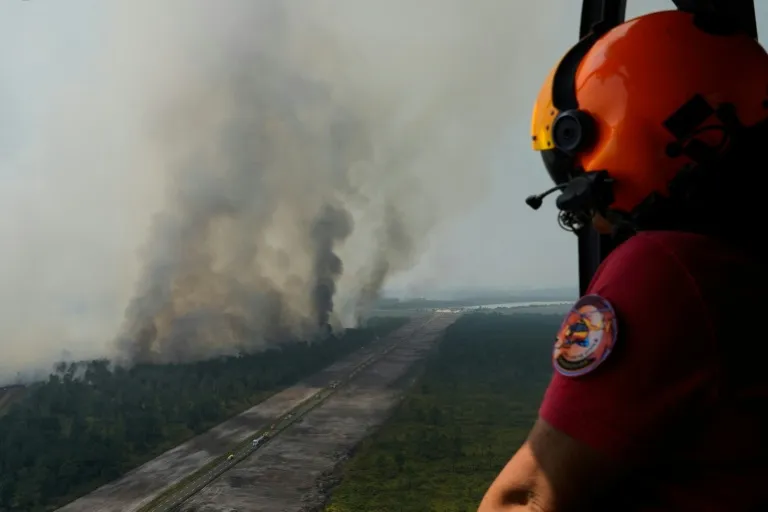
Tens of thousands of residents evacuated due to severe wildfires in Spain have begun returning to their homes as firefighting efforts show positive results, aided by improved overnight weather conditions. The fires, among the most destructive in recent memory, had ravaged vast tracts of land across the country and neighboring nations for over a week, prompting widespread evacuations.
Evacuations Lifted West of Madrid
By late Tuesday, authorities in Spain lifted evacuation orders for numerous municipalities situated west of the capital, Madrid, which had been the epicenter of the most intense blazes. Francisco Martin Aguirre, the central government’s delegate to the Community of Madrid, announced via X (formerly Twitter) that approximately 24,000 evacuated individuals were permitted to return home. An additional 20,000 people, who had been confined to shelters or safe zones within the region, were also released.
Similar relief measures were enacted in the Valencia region, located on the country’s eastern coast, allowing more residents to reclaim their homes. Maria Jesus Perez Blanca, a woman in her seventies, expressed her relief upon returning to Aldea del Fresno, a town west of Madrid. “I’m happy — I couldn’t wait to come home and have my coffee and breakfast,” she shared on Wednesday morning, joining a small group of residents at local cafes.
Her daughter, Susana Barrul, a 39-year-old housewife, echoed the sentiment, stating her gladness to be back and resuming her familiar daily routine. “getting up in the morning, having coffee, going shopping, coming home, and cooking,” she described.
Stabilizing Fire Conditions
The central government’s delegate office in Madrid reported on Wednesday that a decrease in fire intensity and stabilization of the fire perimeters were achieved thanks to more favorable weather overnight. Interior Minister Fernando Grande-Marlaska informed reporters on Tuesday that firefighters were successfully containing the blazes and expressed an aim to stabilize and extinguish all flames by Wednesday.
Prime Minister Pedro Sanchez conveyed optimism on Wednesday, stating that progress in combating a significant wildfire near Madrid was moving “favourably.” He emphasized the critical nature of the upcoming 12 hours, describing them as “decisive for the work of consolidating the work that the civil protection service has done.”
French Fire Situation and Weather Concerns
In France, the Gironde prefecture reported a second consecutive night of calm, with the massive fire west of Bordeaux, the renowned wine-making capital, remaining stable. However, concerns are mounting as weather conditions are expected to deteriorate on Wednesday with the arrival of the fourth heatwave of an already challenging summer.
Jeremy Presi, a local business owner volunteering at a firefighter water refilling station, voiced apprehension. “We fear today,” he stated, as fire trucks passed by en route to the active fire zones. “The tourists can get in their cars and get out of here. Here, it’s our home.”
The Gironde and neighboring Landes departments are under an orange-level weather warning, with inland temperatures predicted to reach 41°C (105.8°F) and 38°C (100.4°F) along the coast. Firefighters are particularly worried that strengthening winds could reignite embers and spread the blaze. Westerly winds are anticipated from early afternoon, with gusts ranging from 30 to 45 km/h (19 to 28 mph) and a significant drop in humidity levels.
Lieutenant Colonel Eric Pitault, the Gironde fire chief, described Wednesday as “an important day that we will be watching very closely, given the extreme temperatures we are going to have.” Despite these anxieties, authorities confirmed that 57,000 residents evacuated from three towns near Bordeaux on Friday and Saturday would be permitted to return home.
Broader European Context and Climate Change
Europe has been significantly impacted by successive heatwaves and a severe drought this year, a situation scientists largely attribute to human-induced climate change. The extreme heat has parched vegetation that experienced vigorous growth during wetter periods earlier in the year, creating exceptionally dry and flammable conditions akin to a tinderbox.
According to the European Forest Fire Information System, Spain has recorded 207,000 hectares (approximately 511,000 acres) of burned land nationwide between January and July, marking one of the largest areas affected during this period in recorded history. Spanish authorities have reported slightly different figures. In France, the total area burned stands at 92,000 hectares, the highest recorded in two decades.
While the current focus is on Western Europe, the European Union has issued warnings that fire-prone conditions are expected to extend towards the center of the continent in the coming days. In Greece, firefighters were actively battling a blaze on the Aegean island of Paros on Wednesday, where strong winds were exacerbating the fire’s spread. The Greek fire service deployed two aircraft, five helicopters, and approximately 100 firefighters in an effort to contain the incident.
Conclusion
The gradual return of evacuees to their homes in Spain signals a hopeful turn in the fight against devastating wildfires. While the immediate threat in some areas appears to be receding, the persistent threat of extreme weather, coupled with the broader context of climate change, underscores the ongoing vulnerability of European landscapes to such destructive events. Continued vigilance and coordinated firefighting efforts remain crucial as the continent braces for further potential challenges.
