

Afghanistan is marking five years since the Taliban regained control of the country, a period characterized by significant internal challenges and limited international recognition. Celebrations, including military parades in Kabul, underscored the Taliban’s narrative of victory over foreign powers. However, the reality on the ground presents a complex picture of ongoing humanitarian crises, severe restrictions on women, and persistent security concerns.
Taliban’s Narrative of Victory and Governance
On what the government termed “victory day,” armored Taliban vehicles paraded through Kabul, displaying flags and banners to commemorate their return to power. Sirajuddin Haqqani, the Taliban’s interior minister, addressed the nation via video, attributing their success to “morale, courage, and divine assistance.” While acknowledging that “issues and problems may still exist,” the official narrative emphasizes a triumph over Western influence.
The Taliban government, which took over in 2021 as U.S. and allied forces withdrew, had initially pledged a more moderate approach compared to their previous rule in the late 1990s and early 2000s. This earlier period was marked by strict social policies, public executions, and sheltering international militants. However, human rights organizations contend that these assurances have largely not materialized.
Humanitarian Crisis and Women’s Rights Restrictions
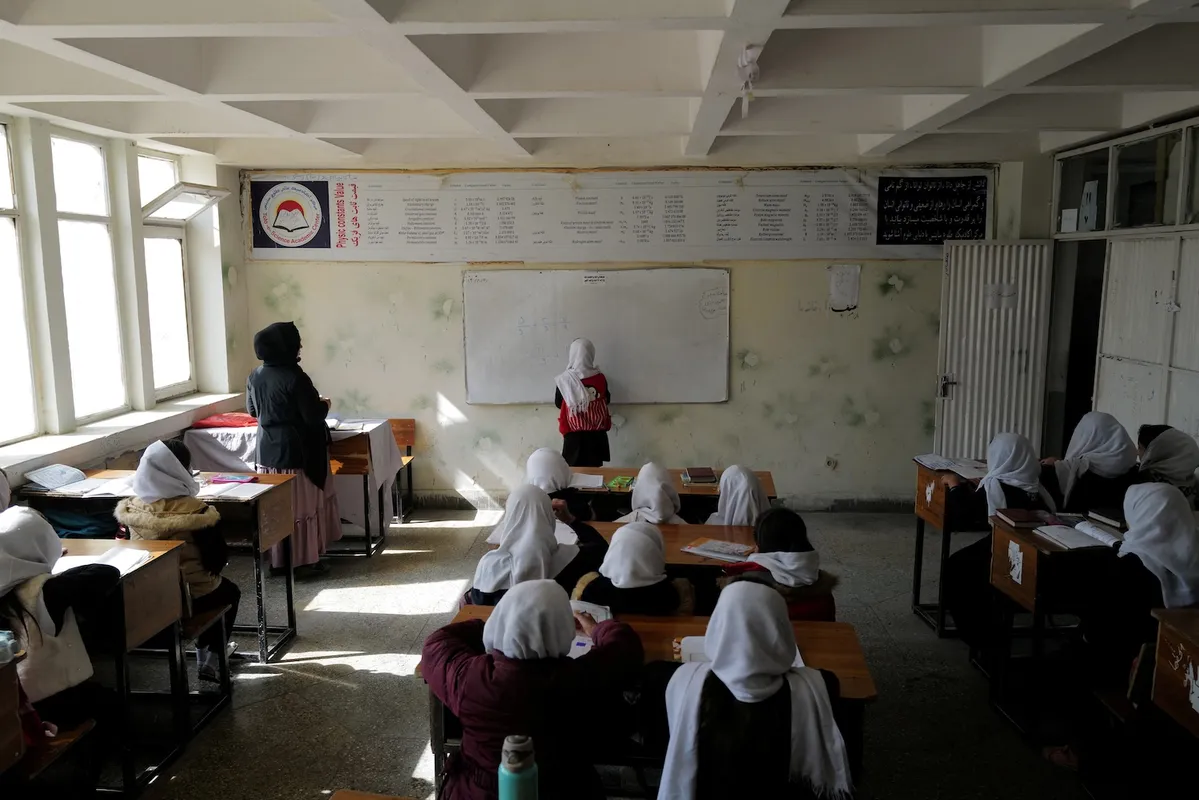
International organizations, including the United Nations, have highlighted the Taliban’s struggles in addressing Afghanistan’s severe natural and humanitarian crises. A significant factor cited is the imposition of sweeping restrictions on women and girls. According to Unesco, approximately 2.5 million girls and women are now barred from secondary education and universities. Furthermore, UN Women reported that half of Afghan women now leave their homes only once or twice a month, indicating a severe limitation on their freedom of movement.
Despite these restrictions, the Taliban maintain that they uphold women’s rights in accordance with Islamic Sharia law. Nevertheless, the international community remains concerned about the impact of these policies on Afghan society and its development.
Security Challenges and Regional Tensions
The past five years have also seen persistent security challenges for the Taliban. Recent weeks have witnessed a series of assassinations targeting key regional officials, particularly in the country’s northeast. In late July, the Taliban’s information director in Badakhshan province was killed in an attack claimed by the Islamic State group. Local media also reported the death of the mayor of the province’s capital in a separate attack on a Thursday, though official confirmation from Taliban authorities was pending.
Relations with Pakistan, initially a crucial partner for the Taliban, have become strained. Islamabad accuses Kabul of harboring and supporting Pakistani insurgents, leading to ongoing diplomatic friction.
International Relations and Economic Pursuits
Five years after their return to power, the Taliban government remains largely unrecognized by the international community. Russia is noted as the sole country to have formally recognized the administration. Many foreign embassies in Kabul, including the former U.S. embassy, have remained vacant since the Taliban’s takeover.
Despite the lack of widespread diplomatic recognition, analysts suggest that the Taliban have been making quiet diplomatic efforts. Some nations are reportedly reassessing their engagement strategies, considering the limits of their influence and the practical need to interact with the de facto government. The Taliban are actively pursuing arrangements with European countries interested in deporting Afghan nationals and are leveraging Afghanistan’s strategic location to forge economic partnerships across South, Central Asia, and the Middle East.
Zia Ahmad Takal, a deputy spokesman for the Taliban’s foreign ministry, indicated that ceremonies commemorating the government’s anniversary were planned in several regional capitals, including Pakistan, China, Uzbekistan, Iran, Turkey, and Malaysia.
Voices from Afghanistan
Among those attending the celebrations in Kabul was Najibullah Ghorzang, a 28-year-old shop owner. He expressed hope for the nation’s future, stating, “My hope for the future of Afghanistan is that we will move toward development, God willing.” He also conveyed a defiant sentiment regarding the nation’s past struggles, saying, “We defeated a great empire, and we will defeat them again,” referring to the U.S. and its allies.
However, the optimism of some is contrasted by the dire realities faced by many. The International Rescue Committee issued a warning about record-high humanitarian needs in Afghanistan, exacerbated by drought, earthquake aftermath, and the deportation of Afghans from neighboring Iran and Pakistan. The number of Afghans requiring humanitarian aid has surged by 3.5 million since 2021, even as foreign aid budgets have decreased.
Georgette Gagnon, a senior UN representative on Afghanistan, emphasized that “Sustainable peace and prosperity require more than just an absence of conflict.” She added, “Afghanistan’s future depends on building a society in which the rights and potential of all Afghans are realised.”
The personal struggles of individuals underscore the widespread challenges. Fatima, a 28-year-old mother, recounted her difficult journey after the Taliban’s return. She fled to Iran to continue working as a makeup artist, a profession banned for women in Afghanistan. After being deported from Iran last year, she returned to Afghanistan, facing daily uncertainty. “Every morning, I wake up wondering how I will cover my basic living expenses, and every night I close my eyes with worries about my child’s future,” she shared, encapsulating the precarious existence many Afghans endure.
Conclusion
As Afghanistan marks five years under Taliban rule, the nation stands at a critical juncture. While the government celebrates its perceived victory and seeks diplomatic and economic engagement, it grapples with profound internal issues. The ongoing humanitarian crisis, severe restrictions on fundamental rights, and persistent security threats present formidable obstacles to stability and prosperity. The path forward hinges on the Taliban’s ability to address these multifaceted challenges and foster an inclusive society where the rights and potential of all Afghans can be realized.
