

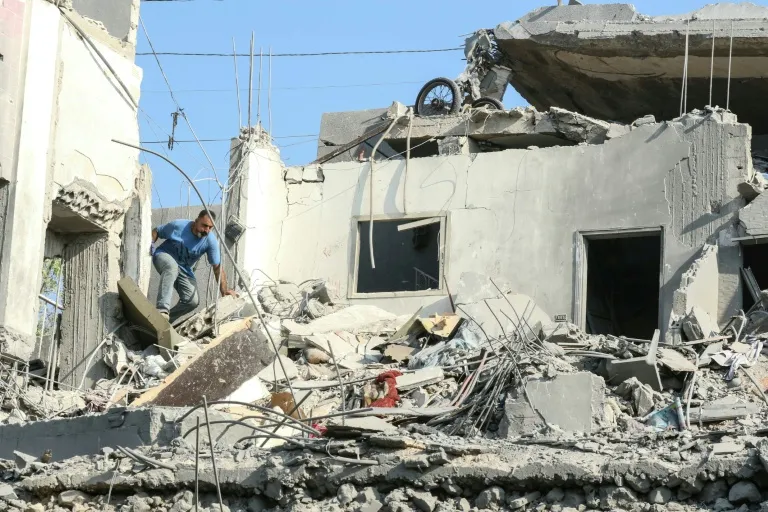
Lebanon reported that children were among seven people killed in Israeli airstrikes on the southern village of Ansar early Saturday. The Lebanese government condemned the attack, stating the victims were not military targets and urging Israel to cease what it called an “extremely dangerous” escalation. Israel, however, maintained that its strikes targeted Hezbollah infrastructure in response to militant actions.
Deadly Airstrikes in Southern Lebanon
Early Saturday morning, Lebanon’s state-run National News Agency (NNA) reported a series of Israeli airstrikes targeting the south. Warplanes reportedly struck a residential building on the outskirts of Ansar and hit the strategic Ali al-Taher ridge, which overlooks the Nabatieh area. Later, another strike was reported in the southern town of Deir Zahrani.
The Lebanese Ministry of Health confirmed that seven individuals, including three children and two women, lost their lives in the Ansar strike. In Deir Zahrani, two people were killed and nine others sustained injuries, with the ministry noting that this toll was preliminary. An Agence France-Presse correspondent at the scene in Ansar observed a destroyed building and rescuers working amidst the rubble, with a swimming pool visibly clouded by dust and debris.
One resident, Abbas Khalil, 60, recounted being awakened by the strike while observing his early morning Islamic prayers. He expressed shock and stated there was no justification for the attack.
Israel’s Justification and Lebanon’s Response
An official statement from the Israeli military asserted that its forces had struck “Hezbollah terror infrastructure in the areas of Nabatieh and Ansar.” The statement further explained that these actions were a direct response to “an action by the Hezbollah terrorist organisation” targeting Israeli soldiers in the Ali al-Taher Ridge vicinity.
However, Lebanese Prime Minister Nawaf Salam strongly refuted Israel’s claims. He emphasized that the seven individuals killed in the Ansar strike were not associated with “military infrastructure” and that the women and children among the deceased were unequivocally not military targets. Prime Minister Salam issued a stern call for Israel to halt the ongoing escalation, describing it as “extremely dangerous” and detrimental to efforts aimed at fostering stability in southern Lebanon.
Background of Escalation and Ceasefire Efforts
The current hostilities stem from a broader regional conflict. Hezbollah, supported by Iran, initiated rocket fire towards Israel in March, drawing Lebanon into the wider Middle East conflict. Israel responded with significant airstrikes and a ground offensive, which Lebanese authorities reported had resulted in over 4,300 fatalities.
A period of reduced violence followed the signing of a memorandum of understanding between the US and Iran in June concerning the Middle East conflict, and a subsequent US-sponsored framework agreement between Lebanon and Israel later that month. Despite this, sporadic Israeli strikes and the demolition of civilian structures in southern Lebanese towns and villages have continued.
Mohammed Saab, the owner of the damaged building in Ansar, expressed his dismay, standing beside a swimming pool that he typically rents out during the summer months. “What do I have here for this to happen?” he questioned, visibly shaken.
The NNA also reported a strike in the valley between Ansar and Zarariyeh, noting its significant geographical depth and that it was the first such strike since the ceasefire two months prior.
Ongoing Negotiations and Disagreements
Ansar is situated approximately 20 kilometers from the Israeli border, extending beyond the Israeli army’s declared “yellow line” – a boundary demarcated within Lebanese territory along the frontier where Israeli troops are currently operating.
The framework agreement negotiated between Israel and Lebanon includes provisions for the disarmament of Hezbollah, a phased withdrawal of Israeli forces from southern Lebanon, and the deployment of the Lebanese army to the region, beginning in designated “pilot zones.”
Despite these agreements, Hezbollah chief Naim Qassem recently accused Lebanese authorities of exerting undue pressure on the country’s armed forces to implement the deal. This indicates ongoing internal and external tensions surrounding the implementation of the framework.
The eighth round of US-sponsored negotiations between Israel and Lebanon is scheduled to take place in Rome early next month. These talks aim to further solidify the peace process and address outstanding issues.
Earlier in the week, Israeli Defense Minister Israel Katz visited southern Lebanon. He reiterated Israel’s intention to maintain troops within a designated “security zone” and stated that the Israeli military was actively engaged in “destroying the underground infrastructure” and “destroying all the houses” in the area. A US State Department official, however, commented that a “permanent military presence in south Lebanon is not consistent with the commitments made in the framework,” highlighting a potential divergence in perspectives on the agreement’s implementation.
Conclusion
The recent airstrikes in southern Lebanon, resulting in civilian casualties including children, underscore the fragile security situation and the persistent challenges in de-escalating tensions. While both sides engage in diplomatic efforts and negotiations, the cycle of violence and retaliatory actions continues to pose a significant threat to regional stability and the well-being of civilians.
