

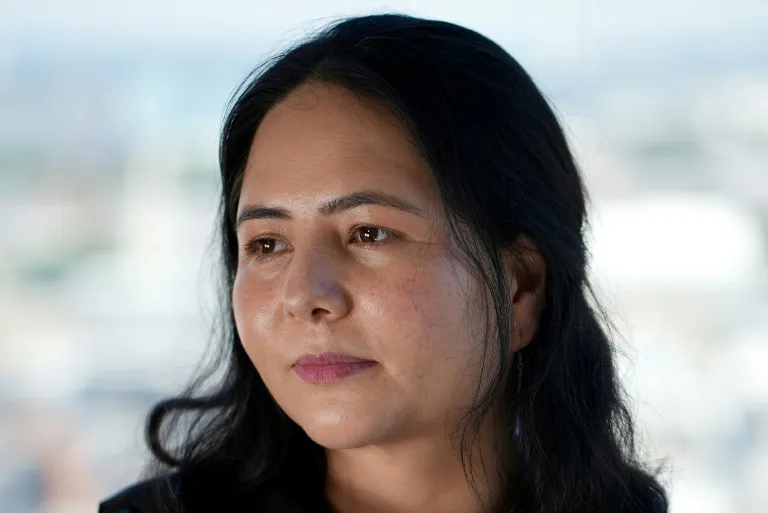
An Afghan writer and founder of Rukhshana Media, an agency dedicated to amplifying women’s voices, has spoken out about the dire situation facing women and girls in her homeland since the Taliban’s return to power. The journalist, who left Kabul in 2021, described the current reality as a “gender war” and pleaded for international solidarity and support for Afghan women who feel “abandoned.”
A Life Interrupted: Fleeing Kabul
The 34-year-old journalist, who hails from the Hazara ethnic minority—a group historically subjected to discrimination—recounted the profound shock and fear of August 15, 2021, the day the Taliban regained control of Afghanistan. Just the week prior, she had been working as a journalist in Kabul, enjoying a meal with a friend. The swift shift in circumstances left her feeling “imprisoned in my house,” she explained. The Taliban’s initial decrees for women upon their return to power mandated that they remain at home, a stark contrast to the freedoms she had previously experienced.
Forced to flee her country, she found refuge in Britain. She articulated that from the Taliban’s perspective, “everything about myself was wrong”—her identity as a woman, her gender, her career as a journalist, and her Hazara ethnicity. This experience underscores the deep-seated restrictions imposed on women’s lives and autonomy.
Echoes of the Past: Education Denied
The current situation for women and girls in Afghanistan brings back painful memories for the writer, who lived through the previous Taliban administration in her childhood. During that era, girls’ education was officially prohibited. To circumvent these restrictions, she recounted how her mother devised a plan for her to attend school disguised as a boy named Muhammad. “She made me a boy. She made boy clothes for me. She cut my hair and I went to school,” she recalled, highlighting the lengths to which families went to ensure education.
Since their 2021 resurgence, Taliban authorities have systematically closed secondary schools and universities to girls over the age of approximately 12. This has made Afghanistan the only country in the world where girls are banned from education beyond primary school. This policy represents a severe rollback of educational opportunities and a significant blow to the future prospects of Afghan girls.
Continuing the Fight from Abroad
Despite living in Britain, the journalist remains dedicated to supporting her colleagues and the women still in Afghanistan. She continues to work with journalists who have remained in the country, operating under extreme secrecy due to the significant personal security risks involved. Her efforts aim to ensure that the stories and experiences of Afghan women are not silenced.
In a recent collaboration with The Guardian, she prompted Afghan women to describe their daily lives. The overwhelming response, she noted, was encapsulated by the phrase, “We’re surrounded by four walls,” illustrating the confinement and isolation many women experience.
‘The Vanishing Girl of Kabul’: A Memoir and a Call to Action
In July, the writer, who is also a by-fellow at the University of Cambridge, published her memoir, The Vanishing Girl of Kabul. The book chronicles her personal journey and sheds light on the broader fate of Afghan women under the current regime. It serves as both a personal testament and a powerful advocacy tool.
She emphasized the isolation faced by Afghan women, stating, “Afghan women are fighting alone.” She described their struggle as a “gender war” and issued a heartfelt plea for global solidarity. “We need your solidarity,” she urged, calling on the international community to listen, share their stories, and hold governments accountable for their engagement with the Taliban. Her message is a stark reminder of the ongoing crisis and the urgent need for sustained attention and action.
The Global Impact of Denied Rights
The systematic denial of rights to women and girls in Afghanistan has far-reaching implications, not only for the individuals affected but also for the stability and development of the nation. International organizations and human rights advocates have consistently condemned the Taliban’s policies, highlighting the violation of fundamental human rights and international conventions. The writer’s ongoing work and her memoir serve as critical tools in raising awareness and fostering empathy, aiming to translate global attention into tangible support and pressure for change.
Her call for governments to be held accountable underscores the importance of diplomatic engagement being tied to the respect for human rights. The international community faces the challenge of balancing geopolitical considerations with the moral imperative to support the rights and dignity of Afghan women and girls. The writer’s plea is a powerful reminder that their struggle is not just a national issue but a global concern for human rights and gender equality.
