

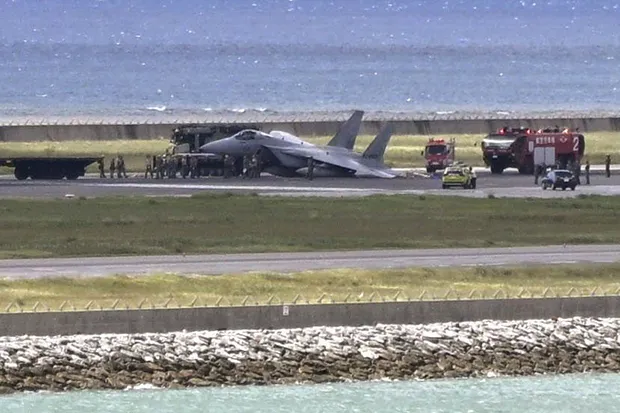
A runway at Naha Airport in Okinawa, Japan, experienced a temporary closure on Tuesday afternoon due to a grounded Japanese Self-Defense Forces (JSDF) fighter jet. The incident, which occurred shortly after the aircraft landed, led to operational disruptions at the busy southern airport. The closure commenced around 12:55 PM local time, impacting flight schedules and necessitating the rerouting of air traffic.
Incident Details and Airport Operations
According to officials from the Ministry of Land, Infrastructure, Transport and Tourism, the fighter jet became immobilized on the tarmac following its landing. While the exact cause of the immobilization has not been immediately disclosed, the event triggered an immediate response to secure the aircraft and assess the situation. The airport, which serves as a critical hub for both civilian and military aviation in Okinawa, has two runways. Following the incident, one of these runways was taken out of service.
Airport authorities confirmed that the second runway remained operational and was being utilized for all scheduled passenger flights. This measure ensured that the disruption to commercial air travel was minimized, although some delays or adjustments to flight paths might have occurred. The affected runway, which has been in operation since March 2020, was the subject of assessment and clearance procedures throughout the afternoon.
Background on Naha Airport and JSDF Presence
Naha Airport (OKA) is a dual-use facility, serving as a major commercial airport for Okinawa Prefecture while also hosting significant Japan Air Self-Defense Force (JASDF) operations. Its strategic location in the East China Sea makes it a vital asset for Japan’s defense capabilities and regional security. The presence of fighter jets and other military aircraft is a common sight at Naha, underscoring its importance in Japan’s national defense strategy.
The JASDF operates various fighter squadrons from Naha Air Base, which shares facilities with the civilian airport. These units play a crucial role in air defense, surveillance, and rapid response missions in the region, which is characterized by complex geopolitical dynamics. Consequently, any incident involving military aircraft at Naha Airport warrants careful attention due to its potential implications for both civilian convenience and national security readiness.
Potential Causes and Safety Protocols
While specific details regarding the immobilization of the JSDF fighter jet remain under investigation, such incidents can stem from a variety of technical or operational issues. Common causes for aircraft immobilization on a runway include landing gear malfunctions, engine problems, or issues with braking systems. In some cases, foreign object debris (FOD) on the runway can also cause damage or impede an aircraft’s movement.
Aviation authorities and the JSDF adhere to stringent safety protocols to prevent and manage such occurrences. Upon immobilization, a standard procedure involves dispatching maintenance crews and safety personnel to assess the situation. The priority is always to ensure the safety of the aircraft, the personnel involved, and the surrounding environment. Following the assessment, a plan is developed for safely removing the immobilized aircraft from the runway, which can involve specialized towing equipment or other recovery methods.
The closure of a runway, even temporarily, highlights the critical nature of maintaining operational integrity at airports. For military aircraft, the ability to rapidly deploy and recover assets is paramount. Incidents like this, while disruptive, also serve as opportunities to review and reinforce safety procedures and maintenance practices within the JSDF and at shared-use airports.
Impact on Air Traffic and Recovery Efforts
The closure of one of Naha Airport’s two runways inevitably leads to a reduction in overall capacity. Air traffic control must carefully manage the flow of aircraft using the remaining runway, potentially leading to delays for both departing and arriving flights. Passengers expecting to travel through Naha on Tuesday afternoon were advised to check with their respective airlines for the latest updates on flight status.
The process of clearing the runway involves not only removing the immobilized jet but also thoroughly inspecting the runway surface for any damage that might have occurred. Once deemed safe, the runway can be reopened. The duration of such closures can vary significantly depending on the complexity of the situation and the resources required for recovery. In this instance, airport officials stated that passenger planes were continuing to operate on the other runway, indicating that the impact, while present, was being managed.
Conclusion
The immobilization of a Japanese Self-Defense Forces fighter jet at Naha Airport on Tuesday resulted in the temporary closure of one of its runways. While the incident caused some disruption to air traffic, operations continued on the second runway, mitigating the full impact on passenger travel. Investigations into the cause of the immobilization are expected to follow, with a focus on ensuring the continued safety and operational efficiency of this vital dual-use airport. The swift response by airport and defense authorities aimed to restore full runway capacity as quickly and safely as possible.
