

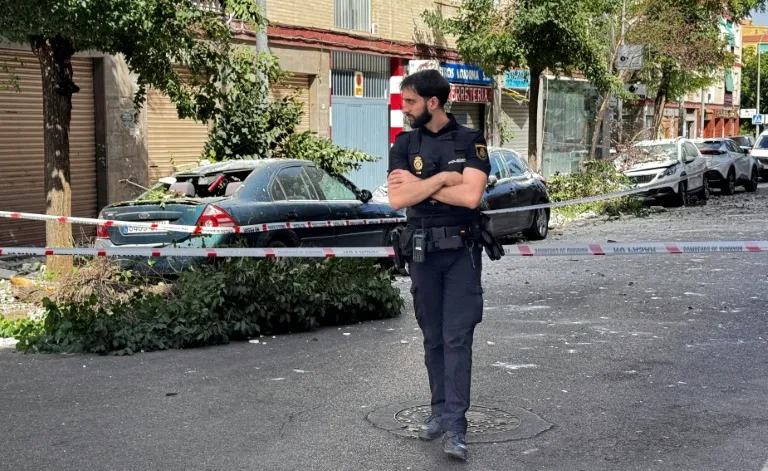
A significant earthquake rattled the southern Spanish city of Granada and its surrounding province on Tuesday morning, causing minor injuries and visible damage. The tremor, which struck at 10:38 AM local time, was the strongest in a series of seismic events to affect the region that day. Its epicenter was located in Alhendin, a town approximately 10 kilometers south of Granada, according to data from the National Geographical Institute.
Earthquake Details and Immediate Impact
The earthquake prompted residents to evacuate buildings and gather in the streets. Officials reported that three people sustained minor injuries. Among them was a young girl who required hospitalization. Antonio Sanz, the top emergencies official for the Andalusia region, confirmed these details. Emergency services reported receiving over 500 calls related to the earthquake. These calls detailed incidents such as cracks appearing in structures, falling debris, and other earthquake-related disturbances. A dozen requests for medical assistance were also logged, with many attributed to anxiety attacks triggered by the event.
Social media platforms were quickly populated with videos and accounts from the affected area. Footage depicted streets littered with debris and some vehicles showing signs of damage. Cristina Ruiz Lopez, a supermarket shopper in Granada at the time of the quake, described the experience on X (formerly Twitter) as “terrifying” and noted that “everything came crashing down.”
Structural Damage and Emergency Response
In La Zubia, a town situated about five kilometers southeast of Granada, social worker Toni Quinones reported that firefighters were engaged in continuous work throughout her neighborhood. She also shared on X that chimneys were falling, exacerbating existing damage to properties. This highlights the potential for secondary hazards following such seismic activity.
The city hall of Granada took precautionary measures by closing all municipal buildings. Only facilities providing essential and emergency services remained operational. The mayor, Marifran Carazo, issued a public appeal, urging residents to remain calm and stay in their homes. She specifically advised against going outside and standing near buildings, especially if further tremors occurred. Mayor Carazo acknowledged the widespread “anguish” felt by the community, particularly among the elderly and young children who had not previously experienced such an event.
Cultural Heritage Sites Assessed
Granada’s renowned Alhambra palace, a UNESCO World Heritage site and a significant monument of medieval Islamic architecture, was also subject to assessment. Conservation teams and experts were dispatched to inspect the palace complex for any signs of damage. The Alcazaba, the oldest part of the Alhambra and its historic fortress, was evacuated as a safety measure. Access to the Nasrid Palaces, another key area within the complex, was temporarily suspended following the earthquake.
Context of Recent Seismic Activity
This recent earthquake follows another notable seismic event that occurred in Granada shortly after 1:00 AM on Saturday. That earlier quake registered a magnitude of 5.0. Fortunately, no injuries were reported from the Saturday tremor, potentially due to the late hour when fewer people were active outdoors. However, some building damage was reported at that time as well.
Expert Outlook and Public Advisory
Experts have indicated that the region may continue to experience seismic movements and aftershocks. Juan Manuel Moreno, the head of the regional government, shared this assessment on X, emphasizing the need for “maximum caution” among the public. This advisory underscores the ongoing seismic risk in the area and the importance of preparedness.
Understanding Earthquakes in the Granada Region
Granada is situated in a seismically active zone in southeastern Spain. The region lies at the convergence of the Eurasian and African tectonic plates, a geological setting that contributes to frequent seismic activity. While many earthquakes are minor and go unnoticed, the area is prone to occasional stronger tremors. Understanding the local geology and maintaining preparedness are crucial for residents and visitors alike.
Preparedness Measures
Following seismic events, emergency services often provide guidance on preparedness. Key recommendations typically include:
- Securing heavy furniture and appliances to prevent them from falling during tremors.
- Identifying safe spots within the home, such as under sturdy tables or against interior walls.
- Having an emergency kit readily available, containing essentials like water, non-perishable food, a first-aid kit, and a flashlight.
- Familiarizing oneself with earthquake safety procedures, including what to do before, during, and after a quake.
The events of Tuesday morning serve as a reminder of the natural forces at play in the region and the importance of staying informed and prepared for seismic activity.
