

Concerns are mounting over the Israeli military’s perceived inaction in confronting escalating settler violence against Palestinians in the West Bank. Experts suggest a complex interplay of government backing for settlements, the increasing influence of settler ideology within the army, and blurred lines between military personnel and settlers contribute to this inertia. This has led to situations where the military appears reluctant or unable to decisively intervene when settlers engage in violent acts.
Military Response to Settler Violence Questioned
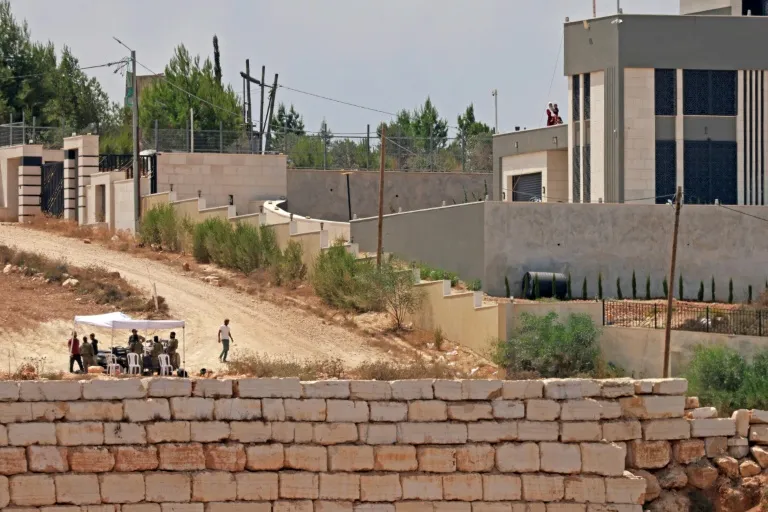
A recent incident in Qusra, near Nablus, highlighted these concerns. Settlers reportedly besieged Palestinians in their homes, cutting off supplies and drawing widespread condemnation, including from the United States, which requested action as one of the affected individuals is a US citizen. Despite the deployment of troops and international pressure, the military’s response was limited. While some settlers’ tents were dismantled and one individual was detained, critics argue that more robust measures were not taken to dislodge the besieging settlers. Videos shared with international media appeared to show soldiers praying with settlers at the scene, prompting the military to promise disciplinary action. Days later, settlers were seen interacting with Israeli forces at the same location.
Political Influence and Ideological Infiltration
Nimrod Novik, a senior adviser to former Israeli Prime Minister Shimon Peres, described the situation as placing the military in an “impossible situation.” He explained that the army is often caught between its professional duty to enforce the law, which would necessitate strong action against violent settlers, and adherence to government policy that, according to Novik, provides political and material support to those he termed “terrorists.” This dynamic, he suggested, results in “paralysis with rare exceptions either due to the severity of the crimes or US intervention.”
The West Bank, occupied by Israel since 1967, is home to over 500,000 Israeli settlers living in communities considered illegal under international law, alongside approximately three million Palestinians. Under Prime Minister Benjamin Netanyahu’s current right-wing government, settlement construction has surged, with some ministers actively promoting outposts that are illegal even by Israeli standards and advocating for the annexation of the territory. Settler violence against Palestinians has been a long-standing issue, but recent months have seen a significant increase in attacks, often with perpetrators facing little to no legal consequences.
Challenges in Law Enforcement
Nadav Weiman, a former sniper and head of the advocacy group Breaking the Silence, which represents Israeli veterans, stated that the existing structures make it exceedingly difficult for soldiers to enforce laws against violent settlers. “The infrastructure of the occupation is built in a way that for a soldier, for us, it’s almost impossible to enforce the law on violent settlers and very easy to do whatever we want on Palestinians,” Weiman explained. He noted that soldiers are rarely given clear instructions on how to handle settlers, often being told to defer to the police due to settlers’ status as Israeli citizens. Weiman’s extensive experience collecting testimonies from soldiers suggests that in most units, there is a lack of explicit guidance on dealing with settlers.
The lines between settlers and soldiers have become increasingly blurred. Many individuals from hardline, ideologically driven pre-military academies are now rising to officer positions within the army. Major General Avi Bluth, the commander responsible for the West Bank, is himself an alumnus of such an academy. This ideological overlap can foster a sense of shared purpose and potentially reduce the willingness to confront settler actions.
Reservists and Armed Settlers
The period following Hamas’s October 7, 2023 attack saw a further integration of settlers into security roles. With many regular soldiers deployed to Gaza or Lebanon, thousands of settler reservists were incorporated into regional defense units tasked with securing West Bank communities. According to the rights group Yesh Din, approximately 7,000 settlers were armed and mobilized in these units during the initial months of the conflict. These reservists, Yesh Din suggests, may be less inclined to prevent settler attacks or might even participate in them. Although many are no longer on active reserve duty, they have been permitted to retain their firearms and uniforms, a situation that rights groups argue facilitates ongoing settler violence by individuals who can present themselves as acting with military authority.
Military and Police Roles
When approached for comment, the military stated that the primary responsibility for addressing violations by Israeli citizens in the West Bank lies with the police. Soldiers are instructed to intervene to stop violations and detain suspects until police arrive. The military also affirmed that incidents where soldiers fail to follow orders are thoroughly investigated, and disciplinary measures are applied.
In response to the Qusra incident, Israel’s Defense Minister Israel Katz suggested that law enforcement in the West Bank should be transferred to the police, arguing that chasing violent settlers is not the soldiers’ role. While such a shift is unlikely in the immediate future, some observers view it as a potential step toward de facto annexation. Despite doubts about the political will to curb settler violence, particularly with elections approaching, the issue is seen by many as requiring urgent attention. Novik warned that if settler violence continues unabated, the risk of a “major bloody conflagration” is significant.
