

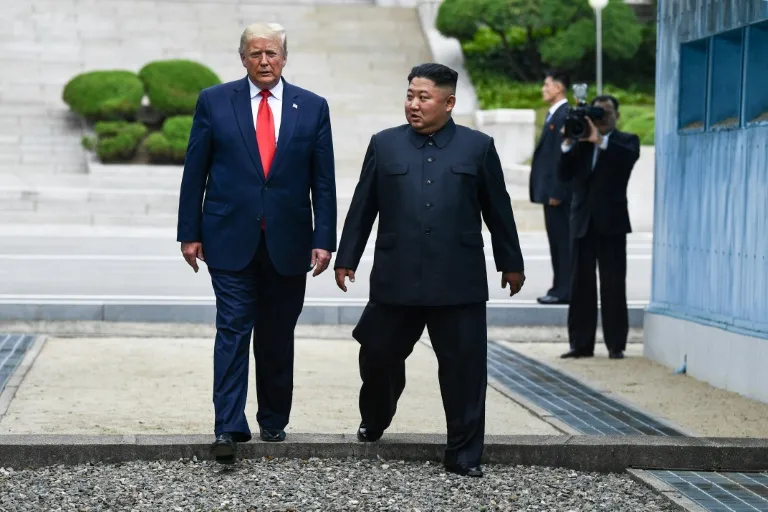
Joint military exercises between the United States and South Korea have been significantly curtailed, with the annual drills concluding earlier than scheduled. This adjustment follows direct intervention from then-President Donald Trump, who cited his diplomatic efforts with North Korean leader Kim Jong Un as the primary reason for reducing the scope and duration of the exercises. The decision has drawn attention from regional allies and analysts concerned about the implications for security cooperation and deterrence on the Korean Peninsula.
US President Orders Drill Reduction
The impetus for shortening the Ulchi Freedom Shield (UFS) exercises originated with President Trump. On a Sunday, he announced his directive to the Pentagon to curtail the drills, which were slated to commence the following day. Trump attributed this decision to his perceived positive relationship with North Korean leader Kim Jong Un, suggesting that reduced military posturing would support ongoing diplomatic overtures.
In a statement released through his social media platform, Trump characterized the drills as potentially counterproductive to fostering a more amicable atmosphere. He expressed a belief that his interactions with Kim Jong Un were leading to a safer environment, stating that he had received positive responses when seeking communication with the North Korean leader.
South Korea Adjusts Exercise Schedule
Following the directive from the US side, South Korea’s military confirmed that the Ulchi Freedom Shield exercises would conclude earlier than initially planned. Originally scheduled to run until August 27, the drills were adjusted to end on Friday, August 21. A statement from South Korea’s Joint Chiefs of Staff indicated that the decision to shorten the exercises was made “at the suggestion of the US side.”
The original plan for UFS involved two phases. The first phase, focused on defensive measures against potential North Korean aggression, was set to run until the end of the week. The second phase, which would have concentrated on counteroffensive strategies, was scheduled from August 24 to August 27. Reports suggest that this second, more offensive-oriented phase has now been entirely scrapped as part of the revised schedule.
Pentagon Assesses Readiness Impact
The Pentagon acknowledged the substantial reduction in the exercises, asserting that the modified drills would still allow for the preservation of essential military readiness. Officials stated that the changes would not lead to any degradation of the United States’ training objectives. The exercises are fundamentally designed to enhance the combined capabilities of US and South Korean forces in preparing for and responding to a potential attack from North Korea.
A South Korean military official described the decision to shorten the drills as “unusual,” highlighting the deviation from standard operational procedures. This sentiment underscores the perceived significance of the UFS exercises in maintaining a robust deterrent posture.
North Korea’s Reaction and Diplomatic Context
North Korea, a nuclear-armed state, has consistently voiced strong opposition to the joint US-South Korea military drills, viewing them as provocative rehearsals for an invasion. State media, including the Korean Central News Agency (KCNA), criticized the exercises on Wednesday, labeling them as “the most immediate and open threat” to the nation and to regional security. Notably, Pyongyang’s commentary did not directly reference President Trump’s order or his stated desire to re-engage in dialogue with Kim Jong Un.
Analysts suggest that the reduction in military exercises could potentially create a more conducive environment for dialogue between the United States and North Korea. Park Won-gon, a professor at Ewha Womans University, commented that the suspension of joint exercises has historically been a prerequisite for North Korea to enter into substantive talks with the US. He noted that Trump’s administration had previously met with Kim Jong Un three times, though no high-level discussions have occurred during the current presidential term.
The Wall Street Journal reported that President Trump was actively encouraging his aides to arrange a meeting with Kim Jong Un as early as the autumn, indicating a continued push for direct engagement.
Alliances and Regional Security Concerns
The United States maintains a significant military presence in South Korea, with approximately 28,500 troops stationed there as a deterrent force. This deployment is a legacy of the Korean War, which concluded in 1953 with an armistice rather than a formal peace treaty. President Trump’s consistent questioning of long-standing alliances has, however, raised concerns among regional partners regarding the steadfastness of US security commitments in East Asia.
In response to these evolving dynamics, Japan’s defense minister emphasized the critical importance of security cooperation among the United States, South Korea, and Japan. This statement reflects a broader regional awareness of the need for coordinated defense strategies in the face of persistent security challenges on the Korean Peninsula and beyond.
Conclusion
The decision to shorten the Ulchi Freedom Shield exercises represents a notable shift in the approach to joint military preparedness and diplomatic engagement on the Korean Peninsula. While intended to support diplomatic initiatives, the move has prompted scrutiny regarding its impact on deterrence and regional security dynamics. The ongoing interplay between military posturing and diplomatic overtures will continue to shape the security landscape in Northeast Asia.
