

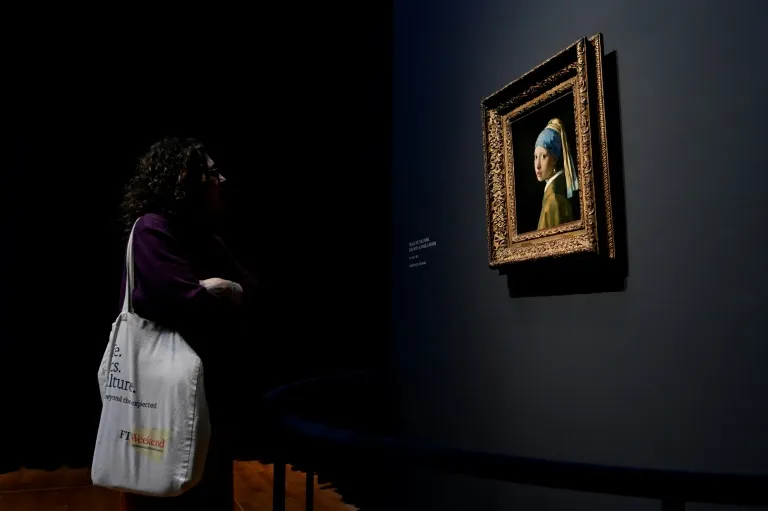
Johannes Vermeer’s iconic masterpiece, ‘Girl with a Pearl Earring,’ is currently on display at the Nakanoshima Museum of Art in Osaka, Japan. This rare exhibition offers a unique opportunity for the Japanese public to view the celebrated painting, with its home institution, the Mauritshuis in The Hague, undergoing essential maintenance. The loan marks a significant cultural exchange, highlighting the deep appreciation for Dutch Golden Age art in Japan.
A Rare Journey for a Prized Masterpiece
The Mauritshuis, renowned for its collection of Dutch Golden Age paintings, has made an exceptional decision to lend its most treasured artwork, ‘Girl with a Pearl Earring,’ to Japan. This move is facilitated by the temporary closure of the Mauritshuis from August 24 to September 20 for renovations. Martine Gosselink, the director of the Mauritshuis, described the loan as a “special opportunity to share her with the Japanese public, perhaps for the very last time.” This sentiment underscores the painting’s immense value and the rarity of its departure from the Dutch museum.
While the Mauritshuis rarely loans the painting due to its status as their “most important and precious painting,” the necessity of renovations provided a window for this international exhibition. The decision to prioritize Japan for this loan was driven by several factors. “We chose Japan, for Japan has a huge number of fans. And they really love Vermeer. They love ‘Girl with a Pearl Earring,'” Gosselink explained. The significant number of Japanese visitors who travel to The Hague annually to see the painting further solidified this choice. “The amount of visitors coming from Japan every year to the Mauritshuis is so large. So we thought, if one country deserves the girl, it should be Japan,” she added.
‘Girl with a Pearl Earring’: The ‘Mona Lisa of the North’
Often referred to as the “Mona Lisa of the North,” ‘Girl with a Pearl Earring’ captivates viewers with the enigmatic expression of its subject, drawing parallels to Leonardo da Vinci’s iconic portrait. The painting’s global renown was significantly amplified by the success of a best-selling novel inspired by it, which was later adapted into a Hollywood film. The artwork itself is a small canvas depicting a young woman against a dark background. Her head is turned towards the viewer, and a striking pearl earring glints beneath her blue and cream turban, creating an image of subtle beauty and mystery.
This exhibition in Osaka, running until September 27, is not the only significant loan from the Mauritshuis. The display also includes a dozen other masterpieces from the museum’s collection, featuring Vermeer’s “Diana and her Nymphs” and Rembrandt’s “The Laughing Man.” These additional works provide a broader context of Dutch Golden Age artistry for visitors.
A History of International Acclaim
The current exhibition in Osaka represents the painting’s fourth visit to Japan, underscoring a long-standing relationship and mutual admiration between the two nations’ art communities. The portrait’s previous international tours highlight its status as a global cultural icon. Notably, the painting embarked on a world tour between 2012 and 2014 when the Mauritshuis was undergoing earlier renovation work. More recently, in 2023, it traveled to the Rijksmuseum in Amsterdam for a loan, though this was a less extensive journey compared to its current exhibition in Japan.
The painting’s first visit to Japan was in 1984 for a show in Tokyo. Subsequently, it traveled to Osaka to commemorate the 400th anniversary of Japan-Netherlands relations, attracting an impressive 600,000 viewers. In 2012, it returned to Japan, appearing in both Tokyo and Kobe and drawing an astounding 1.2 million visitors. These figures demonstrate the immense popularity and drawing power of ‘Girl with a Pearl Earring’ among the Japanese public.
Return to The Hague
Following its display in Osaka, ‘Girl with a Pearl Earring’ is scheduled to return to the Mauritshuis in The Hague. The Dutch museum is expected to reopen its doors to the public in early October, with the painting resuming its place in the permanent collection. The temporary closure and subsequent loan have allowed for crucial maintenance work to be completed, ensuring the preservation of the museum’s invaluable treasures for future generations.
The exhibition in Osaka serves as a poignant reminder of the universal appeal of great art and the importance of cultural diplomacy. It provides a unique chance for art enthusiasts in Japan to connect with a masterpiece that has fascinated the world for centuries, potentially for the final time in such a capacity.
