

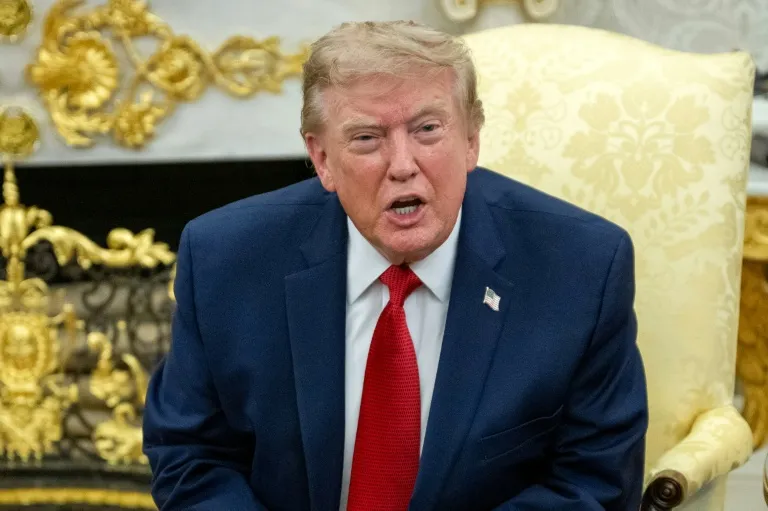
Former U.S. President Donald Trump has announced what he described as the “MOST CRUSHING ECONOMIC OPERATION EVER TAKEN AGAINST ANY COUNTRY,” vowing to impose “Economic Warfare and Isolation on an unprecedented scale” against Iran. The declaration, made via his Truth Social platform, has been met with dismissiveness and criticism from Iranian officials, who characterized it as a continuation of failed policies and a diversion from domestic U.S. economic challenges.
Trump’s ‘Economic Warfare’ Declaration
In his statement, Trump asserted that any nation providing a “lifeline” to Iran through its financial institutions, businesses, airports, or government entities would face “TREMENDOUS Economic Consequences.” He specifically listed activities that he demanded cease immediately, including “oil smuggling, swap lines, cash transfers, exchange houses, ship registries, front companies.” This move comes amid a backdrop of ongoing tensions and a protracted, stalemated conflict between the U.S. and Iran, exacerbated by the closure of the Strait of Hormuz by Tehran and a U.S. naval counter-blockade. With midterm elections approaching and facing domestic pressure over the economic impact of the conflict, Trump appears to be seeking alternative strategies to exert pressure on Tehran.
Iranian Response: ‘Failed Policies’ and ‘Economic Terrorism’
Iran’s Foreign Minister, Abbas Araghchi, swiftly dismissed Trump’s announcement, labeling it a repetition of “failed policies” that would only lead to further defeat for Washington. Araghchi argued on the social platform X that Trump’s initiative was a distraction from the U.S.’s own economic woes, citing “unprecedented debt & surging interest costs.” He further stated that intensifying such measures would only deepen animosity with the Iranian people. The Iranian Foreign Ministry also characterized the U.S. actions as “economic terrorism,” warning of threats to the global economy and international sovereignty.
Context: Sanctions and Iran’s Evasion Tactics
The United States has maintained extensive sanctions against Iran for decades. During his presidency from 2017 to 2021, Trump significantly escalated these sanctions as part of a “maximum pressure” strategy, which included withdrawing from the nuclear deal negotiated under his predecessor, Barack Obama. Despite these stringent measures, Iran has continued to export oil, with China being a primary buyer. Tehran has employed various methods to circumvent sanctions, including operating a “shadow fleet” of tankers to facilitate its oil trade, a tactic also used by Russia.
Trump did not specify which countries might face repercussions or the nature of those consequences. However, historical precedent exists, such as the U.S. imposing a 25 percent tariff on India last August for purchasing Russian oil. The effectiveness of any new sanctions remains uncertain, particularly given the existing U.S. blockade of Iranian ports. Nevertheless, Iran continues to wield its own economic leverage by largely keeping the Strait of Hormuz closed, a critical chokepoint through which approximately one-fifth of global oil supplies passed before the current conflict escalated. Attacks on shipping in the strait have persisted, even as the broader conflict has seen a lull.
Geopolitical Tensions and Shifting Stances
Analysts suggest that Iran has adopted a more confrontational posture in recent weeks, a shift attributed to its assessment of U.S. intentions. Ahmad Zeidabadi, an international relations expert based in Tehran, indicated that the Islamic Republic believes the U.S. has likely abandoned the prospect of war and is now focused on maintaining the status quo, including the naval blockade and economic pressure. This perspective leads Iran to conclude that diplomacy is unlikely to succeed in the current climate, potentially compelling Tehran to consider offensive actions to achieve its objectives.
This hardening of Iran’s stance is further evidenced by recent appointments of hardliners to senior security positions by Supreme Leader Mojtaba Khamenei. Jason Brodsky, policy director at United Against Nuclear Iran, interprets these appointments as a signal that Iran is preparing for a prolonged period of potential conflict. The wider conflict has also had ripple effects, contributing to the resurgence of Yemen’s civil war. The Revolutionary Guards have issued warnings to Saudi Arabia regarding its inability to control Tehran’s allies, the Houthi rebels, who have blockaded Saudi Arabia and attacked shipping in the Red Sea.
Conclusion: A Cycle of Pressure and Retaliation
Donald Trump’s declaration of “economic warfare” against Iran represents a significant escalation in rhetoric, aiming to intensify pressure through unprecedented economic sanctions and isolation. However, Iran’s response indicates a defiant stance, viewing the move as a predictable continuation of failed U.S. policies. The situation remains volatile, with both nations employing economic and military strategies, while regional instability continues to be a major concern. The effectiveness of Trump’s latest threat and Iran’s capacity to circumvent further sanctions will be critical factors in the ongoing geopolitical standoff.
