

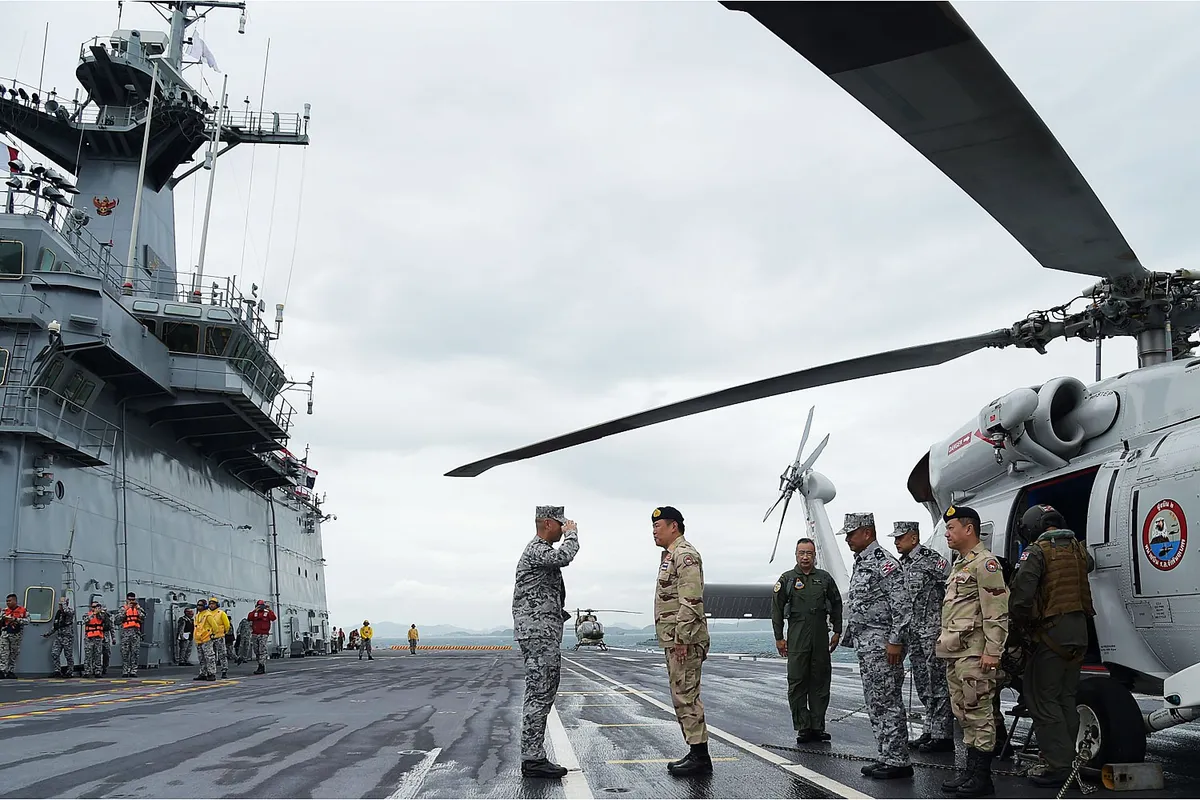
Prime Minister Anutin Charnvirakul has stated he is unconcerned by reports suggesting Cambodia might pursue legal action against him following his recent visit to Chong An Ma, a locality situated in a disputed border region within Thailand’s Ubon Ratchathani province. The Prime Minister’s remarks address speculation that his presence in the area could be interpreted as an act of trespassing by Cambodian authorities.
Background of the Border Dispute
The Chong An Ma area has long been a point of contention between Thailand and Cambodia, with differing interpretations of historical maps and treaties contributing to the ongoing ambiguity over its precise territorial status. These border disputes are not uncommon in Southeast Asia, often stemming from colonial-era demarcations that did not fully account for local geography or subsequent population movements. The lack of clearly defined and agreed-upon markers in certain sectors has led to intermittent tensions and differing claims over land use and sovereignty.
Anutin’s Visit and Its Context
Prime Minister Anutin’s visit to Chong An Ma was reportedly part of an effort to assess the local situation and engage with communities living in the border region. Such visits by high-ranking officials are often aimed at demonstrating governmental attention to local issues, fostering goodwill, and gathering firsthand information to inform policy decisions. However, in areas with unresolved territorial claims, these visits can also inadvertently become points of diplomatic friction if perceived by a neighboring country as a unilateral assertion of control or presence.
The Prime Minister’s office has indicated that the visit was conducted with full awareness of the sensitive nature of the border area. Official statements emphasized that the trip was intended to understand the living conditions of Thai citizens and to explore potential development opportunities, rather than to challenge existing border arrangements. Nevertheless, the mere presence in a disputed zone can be a sensitive matter in international relations.
Potential Cambodian Response and Diplomatic Implications
Reports of Cambodia potentially seeking legal recourse against Prime Minister Anutin signal a more assertive stance from Phnom Penh regarding the territorial claims. While the specifics of any potential legal challenge remain unclear, such a move would represent a significant escalation in diplomatic tensions. International law concerning border incursions and the legal standing of individuals, particularly government officials, in disputed territories can be complex and vary depending on treaties and customary practices.
The Thai government, through Prime Minister Anutin’s dismissive response, appears to be projecting confidence in its legal and diplomatic position. This approach may be intended to de-escalate the situation by signaling that Thailand does not view the visit as a violation of any international norms or agreements. Alternatively, it could be a strategic move to avoid legitimizing Cambodia’s claim through a protracted legal or diplomatic dispute.
Mechanisms for Border Resolution
Border disputes between nations are typically resolved through a combination of diplomatic negotiations, joint border commissions, and, in some cases, international arbitration or adjudication. Thailand and Cambodia have a history of engaging in such mechanisms to address their shared border issues. The Joint Border Commission (JBC) is one such body established to facilitate discussions and find practical solutions for demarcation and management of the border.
The effectiveness of these mechanisms often depends on the political will of both parties and the broader geopolitical context. Successful resolution requires a commitment to dialogue, mutual respect for sovereignty, and a willingness to compromise. The current situation, with potential legal threats, suggests that diplomatic channels may be strained, necessitating a careful approach from both governments to prevent further deterioration of relations.
Anutin’s Stance and Future Outlook
Prime Minister Anutin’s public posture of being “unfazed” suggests that the Thai government believes its actions were legally and diplomatically sound. This confidence might stem from internal legal assessments or a broader understanding of the historical context and existing agreements pertaining to the Chong An Ma area. It is also possible that the Thai government views the reported threat as a political maneuver rather than a genuine legal pursuit.
Moving forward, the situation will likely depend on how both governments choose to proceed. Continued dialogue through established diplomatic channels, possibly involving the JBC, would be the most constructive path. Any formal legal action would introduce a new and potentially complicated dimension to the dispute. The Thai government’s ability to manage this situation will be a test of its diplomatic acumen and its commitment to peaceful border management.
Conclusion
The reported threat of legal action from Cambodia against Prime Minister Anutin Charnvirakul over his visit to the disputed Chong An Ma area highlights the persistent sensitivities surrounding territorial claims. While Anutin has publicly dismissed these concerns, the underlying border dispute remains a complex issue requiring careful diplomatic navigation. The resolution of such long-standing issues hinges on sustained dialogue, adherence to international legal frameworks, and a mutual commitment to peaceful coexistence between the two neighboring nations.
