

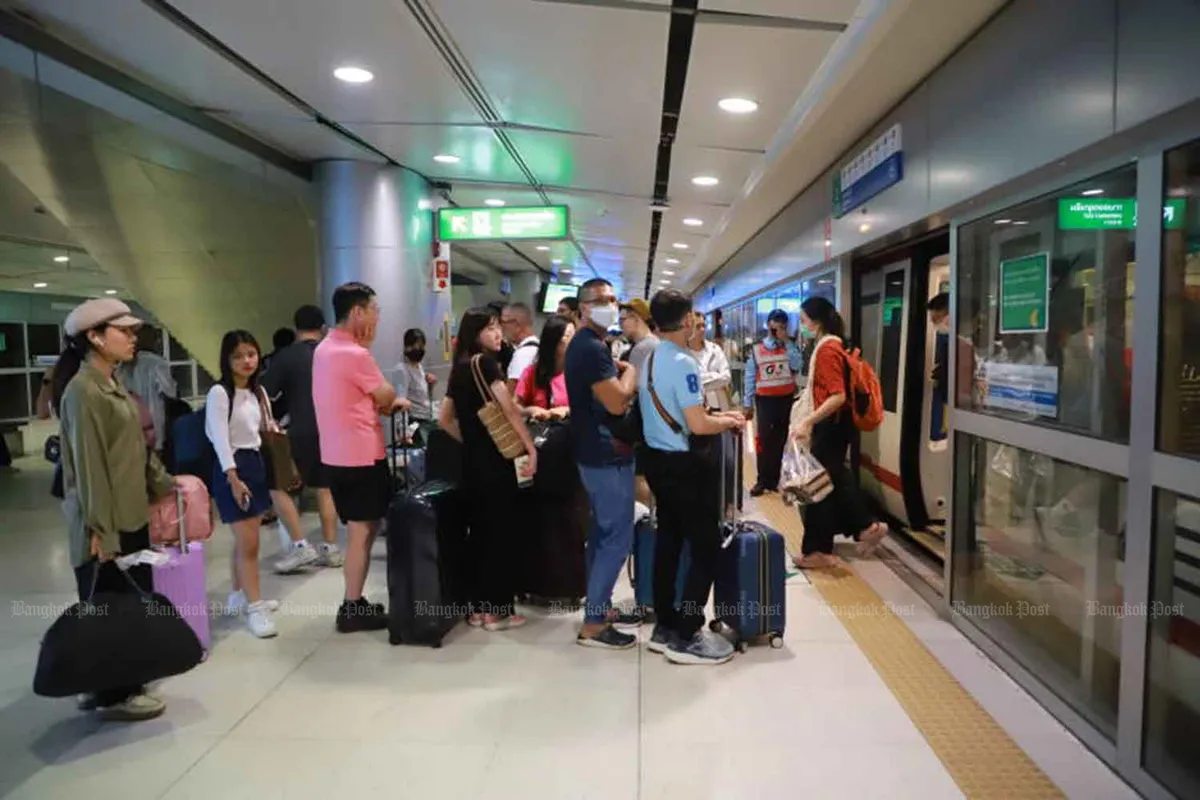
The Airport Rail Link, a vital transport artery connecting Bangkok to Suvarnabhumi Airport, has resolved a significant power outage that disrupted services on Wednesday night and Thursday morning. The electrical failure affected a critical segment of the line, impacting train operations and passenger commutes.
Understanding the Outage and its Impact
The power disruption primarily affected the section of the Airport Rail Link between the Lat Krabang and Ban Thap Chang stations, specifically impacting trains traveling in the direction of Phaya Thai. This meant that services heading towards the city center from the eastern suburbs experienced significant interruptions. For passengers journeying towards Suvarnabhumi Airport, the situation necessitated a track switch at Hua Mak station. Trains operating from Hua Mak to the airport were restricted to a single direction, further complicating travel plans and extending journey times.
Normally, the Airport Rail Link operates with a high frequency, with trains departing every 10 to 15 minutes. However, during the outage, this service interval was drastically extended to 30 minutes. This reduction in frequency meant longer waits for passengers and contributed to a less efficient travel experience for thousands of commuters and travelers relying on the service.
A Pattern of Disruption
This recent power outage marks the second significant disruption to plague the Airport Rail Link in a short period. Just over a week prior, on July 22, the line experienced a separate incident involving a derailment at the Khlong Tan depot. That event led to a severe reduction in train frequencies, with services limited to once an hour for the entire day. The cumulative effect of these two incidents within such a narrow timeframe raises concerns about the reliability and maintenance of the Airport Rail Link’s infrastructure.
Restoration and Future Implications
Airport Rail Link authorities confirmed that the power supply has been fully restored, and normal train operations are gradually resuming. Engineers worked diligently to identify and rectify the cause of the electrical failure, ensuring the safety and functionality of the line. While the immediate crisis has been averted, the recurring nature of these disruptions underscores the need for a thorough review of the system’s maintenance protocols and infrastructure resilience.
The Airport Rail Link is a crucial component of Bangkok’s public transportation network, facilitating seamless travel for both domestic and international travelers arriving at or departing from Suvarnabhumi Airport. Its efficiency directly impacts the city’s connectivity and the overall travel experience. The recent service interruptions highlight the importance of robust infrastructure and proactive maintenance to prevent future disruptions.
Airport Rail Link: A Key Bangkok Connector
Opened in 2010, the Airport Rail Link was designed to alleviate traffic congestion and provide a swift, reliable connection between the heart of Bangkok and its primary international gateway, Suvarnabhumi Airport. The line comprises eight stations, spanning from Phaya Thai in the city center to Suvarnabhumi Airport. It serves a diverse range of passengers, including business travelers, tourists, and daily commuters, making its consistent operation paramount.
The service operates two types of trains: the City Line, which makes frequent stops at all stations, and the Express Line (though this service has been suspended for some time, with all trains now operating as City Line services). The standard frequency of the City Line is designed to accommodate high passenger volumes, especially during peak hours. The recent power outage, coupled with the earlier derailment, significantly hampered this capacity, leading to potential delays for travelers and inconvenience for regular users.
Addressing Infrastructure Challenges
The dual incidents prompt a closer look at the ongoing maintenance and upgrade strategies for the Airport Rail Link. While the system has served millions of passengers effectively over the years, the aging infrastructure in some sections may require increased attention. Investment in modernizing electrical systems, track maintenance, and emergency response protocols is essential to ensure the long-term reliability of this critical transit link.
Officials have stated their commitment to investigating the root causes of both the power outage and the derailment to implement preventative measures. The goal is to restore passenger confidence and ensure that the Airport Rail Link continues to be a dependable mode of transport for years to come. The focus remains on minimizing future disruptions and maintaining the high service standards expected by users.
Conclusion
The swift resolution of the Airport Rail Link power outage is a positive development, allowing normal service to resume. However, the recent spate of disruptions serves as a reminder of the ongoing challenges in maintaining complex urban transit systems. A continued commitment to infrastructure investment, rigorous maintenance schedules, and effective contingency planning will be key to ensuring the Airport Rail Link’s future reliability and its continued role as a cornerstone of Bangkok’s transportation network.
