

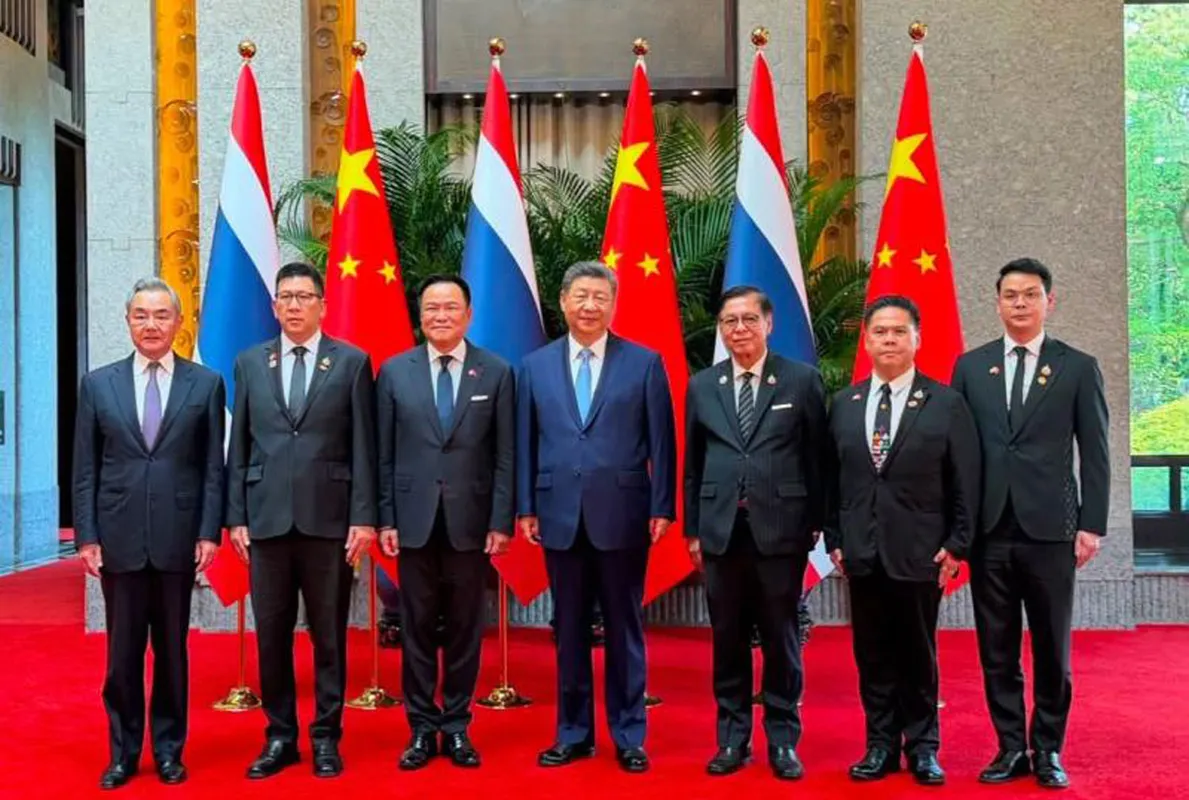
Prime Minister Anutin Charnvirakul engaged in high-level discussions with Chinese President Xi Jinping in Shanghai, focusing on deepening bilateral cooperation, particularly in the burgeoning field of artificial intelligence (AI) and future industries. The meeting, held during an official visit to China, underscored a shared commitment to strengthening the Comprehensive Strategic Cooperative Partnership between Thailand and China.
Strengthening the Thailand-China Partnership
During the summit, President Xi Jinping reiterated the close relationship between the two nations, describing them as “one family.” He pledged China’s support for Thailand’s initiatives to enhance their strategic partnership. Both leaders committed to expanding collaboration across several key sectors, including trade, investment, artificial intelligence, innovation, emerging industries, and regional security. Government spokeswoman Rachada Dhnadirek characterized the talks as comprehensive and substantive, reflecting a mutual dedication to fostering long-term prosperity for both countries and the broader Asian region.
The discussions emphasized building upon the long-standing bilateral ties through practical cooperation. The objective is to stimulate economic growth, bolster Thailand’s global competitiveness, and generate new opportunities for their respective populations. Prime Minister Anutin highlighted China’s position as a trusted and long-standing partner for Thailand, advocating for enhanced cooperation across all domains, with a particular emphasis on sectors poised to define the future economy.
AI as a Future Economic Driver
Prime Minister Anutin identified AI as a critical component for national competitiveness in the coming decade. He proposed a collaborative approach to developing AI technology, cultivating a skilled workforce, and establishing robust governance frameworks. This joint effort aims to maximize the benefits of AI while proactively addressing potential challenges, such as the rise of online crime and the impacts of climate change. The Prime Minister also suggested broadening cooperation in related advanced fields, including semiconductors, health technology, clean energy, and green industries.
To further these goals, Mr. Anutin extended an invitation to leading Chinese technology companies. He encouraged them to establish manufacturing facilities and regional headquarters within Thailand. This initiative seeks to strengthen supply chains, foster local talent development, and increase the utilization of domestic raw materials. The ultimate aim is to create high-quality employment opportunities and significantly enhance Thailand’s overall economic competitiveness.
Enhancing Connectivity and Security Cooperation
A key outcome of the meeting was the agreement to accelerate improvements in transportation infrastructure. Both governments committed to enhancing connectivity across land, sea, and air networks, with a specific focus on regional railway development. These infrastructure upgrades are designed to facilitate smoother trade, attract greater investment, and encourage more travel between the two nations.
Beyond economic and infrastructure development, the leaders also pledged to expand cooperation in other vital areas. These include space technology, public health initiatives, human resource development programs, and people-to-people exchanges, all aimed at fostering deeper mutual understanding and collaboration.
On the security front, Prime Minister Anutin proposed the establishment of a new bilateral mechanism: a Thailand-China “2+2” dialogue. This framework would involve foreign and defense ministers from both countries engaging in strategic discussions. The initiative is intended to bolster cooperation in combating online crime through enhanced intelligence sharing and coordinated responses to evolving security threats.
Economic Momentum and Investment Opportunities
Deputy Prime Minister and Finance Minister Ekniti Nitithanprapas described the visit as a significant milestone, noting the participation of over 150 executives from 48 Thai companies in business-matching sessions with Chinese investors. He observed a transformative shift in the global economic landscape, likening the current emergence of a new investment wave to the substantial Japanese investment boom experienced in the 1980s.
Adding to the momentum, Board of Investment secretary-general Narit Therdsteerasukdi announced that Prime Minister Anutin would inaugurate the Board of Investment’s (BoI) fourth overseas investment promotion office. This new office, located in Chengdu, will focus on western China, a region increasingly recognized for its importance in advanced technology and clean-energy sectors. The establishment of this office signifies Thailand’s strategic focus on attracting investment and fostering partnerships in these critical future industries.
Conclusion
The high-level engagements between Prime Minister Anutin Charnvirakul and President Xi Jinping signal a robust commitment to advancing the strategic partnership between Thailand and China. The focus on AI, future industries, enhanced connectivity, and security cooperation positions both nations to navigate the evolving global economic landscape and pursue mutual prosperity. The proactive approach to attracting investment and developing key technological sectors underscores Thailand’s ambition to strengthen its economic standing and competitiveness on the international stage.
