

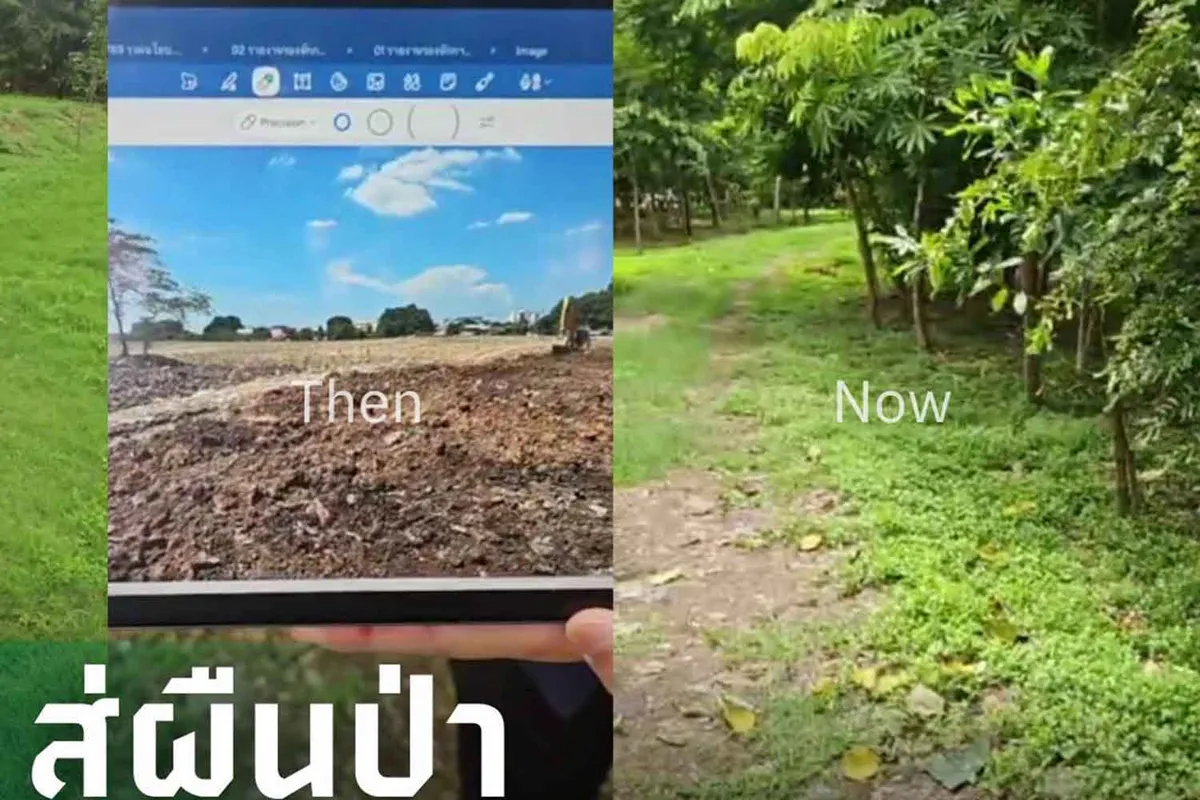
Bangkok is undertaking a significant transformation of its On Nut waste disposal facility, aiming to convert the decades-old site into a dual-purpose Green Eco Park. This ambitious project seeks to integrate advanced waste management solutions with expansive public green spaces, addressing long-standing odour concerns and enhancing the urban environment. Governor Chadchart Sittipunt recently inspected the facility, located in Soi On Nut 86, to review progress on rehabilitation efforts, odour control measures, and the long-term redevelopment plan.
From Landfill to Forested Land
The On Nut facility has served Bangkok for over 30 years, initially functioning as a landfill covering approximately 580 rai. In a notable shift towards environmental restoration, the Bangkok Metropolitan Administration (BMA) has dedicated the past four years to rehabilitating the area. This initiative has seen the planting of more than 48,000 trees, effectively transforming former waste disposal zones into verdant, forested land. This greening effort is part of a broader strategy to preserve the city’s tree stock and expand its green canopy.
Governor Chadchart emphasized the value of these trees, referring to them as “assets of the city.” The redevelopment plan includes the creation of public amenities such as trail-running routes and recreational areas. In line with this vision, trees that were relocated from various construction projects across Bangkok have been replanted at the On Nut site, further contributing to its ecological recovery and the expansion of urban green space.
Biodiversity’s Return
The extensive tree planting and site rehabilitation have begun to yield positive ecological results. Reports indicate a noticeable return of biodiversity to the area, with various bird species and wildlife now being observed, signaling a healthier ecosystem within the urban landscape.
Addressing Odour Concerns
A primary challenge at the On Nut facility has been odour emissions, largely attributed to two aging composting plants with capacities of 600 tonnes and 1,000 tonnes, respectively. These facilities utilize older composting systems that are known to generate unpleasant smells.
The contract for the 600-tonne plant is set to expire at the end of 2026, while the 1,000-tonne facility is scheduled to cease operations in June 2027. Following the expiration of these contracts, both areas are slated for conversion into additional green space, further supporting the Green Eco Park vision.
Enhanced Monitoring and Control
To manage and mitigate odour issues in the interim, the BMA has implemented intensified oversight measures. These include the installation of electronic odour-monitoring devices, known as e-Noses, and CCTV systems. Improvements have also been made to prevent odour leakage from the facilities. Waste disposal operations are subject to daily monitoring.
Deputy Bangkok Governor Pornphrom Vikitsreth explained that the e-Nose devices measure odour intensity using Dilution to Threshold (D/T) units. While occasional stronger odour episodes have registered around 5 D/T, most readings have consistently remained between 0 and 3 D/T, well below the standard threshold of 9 D/T. This data provides a quantifiable measure of odour levels and the effectiveness of control measures.
Governor Chadchart announced that data from the e-Nose monitoring network would soon be accessible online, allowing residents to track real-time odour levels in their vicinity. This move aims to enhance transparency and public trust regarding the facility’s operations.
The Green Eco Park Vision
The BMA’s long-term strategy envisions the On Nut site evolving into a comprehensive Green Eco Park. This master plan allocates approximately half of the area to green space and recreational facilities, with the remaining portion dedicated to advanced, enclosed waste management systems. The focus is on incorporating environmentally friendly waste-treatment technologies.
Integrated Waste Management Technologies
The future infrastructure at the Green Eco Park is planned to include a 1,000-tonne waste-to-energy incinerator, a biogas plant designed to convert waste into electricity, enclosed transfer stations for efficient waste handling, and a dedicated wastewater treatment system. These components represent a commitment to modern, sustainable waste processing.
While acknowledging that odour problems have not been entirely resolved, Governor Chadchart expressed confidence in the BMA’s approach. The city is working diligently within existing contractual and legal frameworks to improve conditions. The ultimate goal is to establish the On Nut site as a model for sustainable waste management and urban greening, demonstrating how industrial facilities can coexist with public amenities and environmental restoration efforts.
