

Chinese Influencer Questions Yuan-Only Payment at Bangkok Eatery
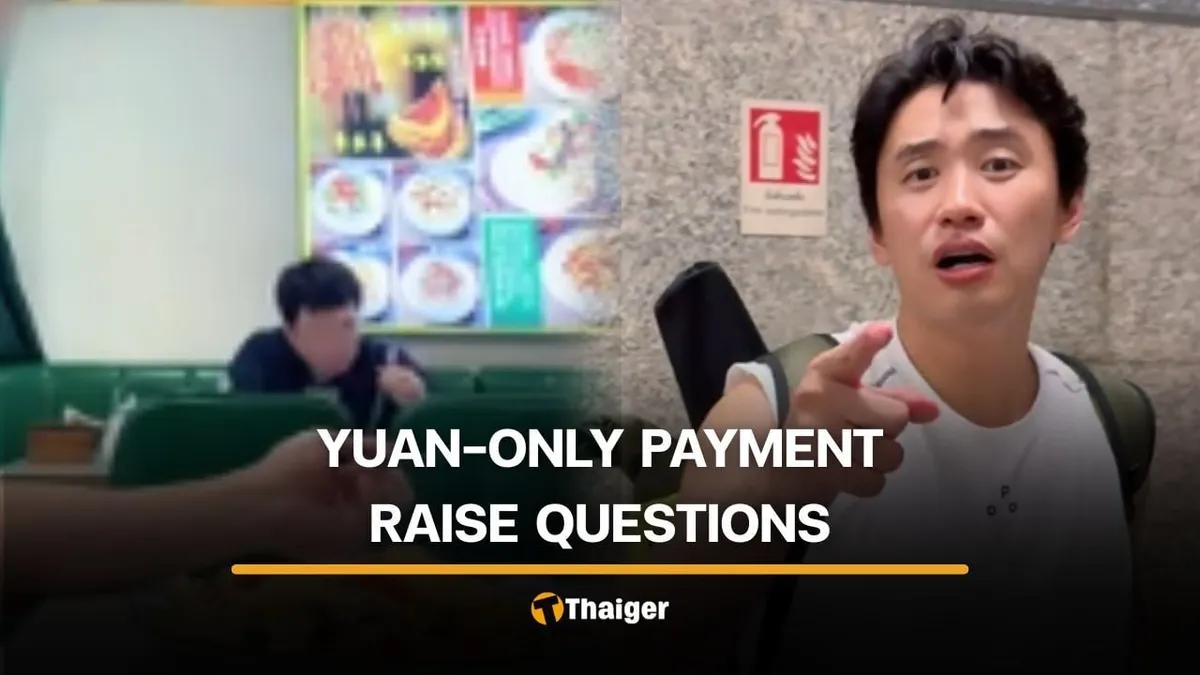
A prominent Chinese social media personality residing in Thailand has raised concerns regarding the operational legality of a Chinese restaurant in Bangkok’s Huai Khwang district. The influencer claims the establishment exclusively accepts Chinese yuan and WeChat Pay, foregoing standard Thai payment methods.
Allegations of Non-Compliance
Wang Bingyang, a 28-year-old known online as Bing, shared a video on his TikTok account, @jaideebingandfriend, on May 25. The clip recently gained traction among Thai social media users and local media outlets. In the post, Bing questioned, “A Chinese restaurant is operated in Thailand but did not have a Thai bank account and accepts only Chinese cash and WeChat payment. Is this legal? #HuayKwang #ChinesePeople.”
During the video, Bing recounted his experience attempting to pay for his meal using Thailand’s ubiquitous QR payment system. He stated that restaurant staff informed him that Thai QR payments were not accepted, citing the absence of a Thai bank account. According to Bing, he was told the restaurant exclusively accepted Chinese currency and Chinese payment platforms. He also reported being asked if he was Chinese before ultimately having to pay in yuan, which he noted cost approximately 50 baht more than the equivalent in Thai currency.
Bing suggested that the restaurant might have assumed he was unaware of Thai regulations due to his nationality. He emphasized the importance of businesses operating in Thailand adhering to local laws and encouraged Chinese-owned establishments to comply with these regulations.
Community Reactions and Further Inquiries
The incident prompted a wave of commentary from other social media users. Some shared similar experiences, with one Thai individual reporting that the restaurant in question often kept its front door locked, requiring customers to announce their entry and exit. Other users urged relevant government agencies to investigate the establishment and similar businesses in the Huai Khwang area to ensure legal compliance.
In response to the growing attention, a local news outlet visited Huai Khwang to interview other restaurant operators. Employees at the businesses surveyed confirmed that they accept Thai currency and Thailand’s QR payment system. They also noted that Chinese customers frequently opt to pay using Thai cash or digital payment methods.
Reports indicate that the restaurant at the center of these allegations has not yet provided a statement to media inquiries.
