

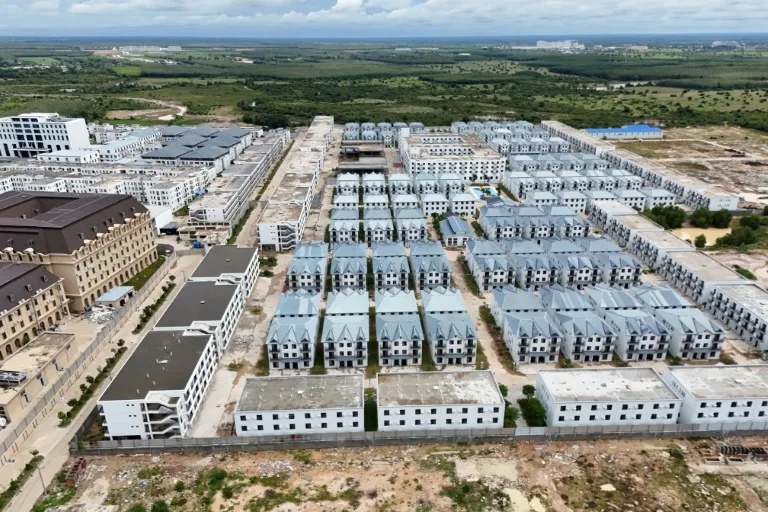
Cambodia is hosting an international conference this week, bringing together representatives from approximately 20 countries, including the United States and China, to address the escalating problem of online scams. The meeting, held on Wednesday and Thursday, occurs amidst significant international pressure on Phnom Penh to intensify its efforts against the multi-billion-dollar illicit industry that has taken root in Southeast Asia.
Southeast Asia’s Role in the Global Scam Industry
The region has become a major hub for sophisticated criminal syndicates operating scam centers. These operations often employ individuals, some voluntarily and others through trafficking, who are tasked with defrauding internet users. Common tactics include establishing fake romantic relationships or promoting fraudulent cryptocurrency investment schemes. Estimates suggest that this industry has generated revenue equivalent to as much as half of Cambodia’s formal Gross Domestic Product in recent years, highlighting the scale of the issue.
Phnom Penh’s Crackdown Efforts
Phnom Penh initiated a high-profile crackdown on these scam operations in 2025. This move was largely spurred by pressure from key international partners, including China, where scams have ignited widespread public anger, as well as the United States, the United Kingdom, and other nations. Despite these efforts, analysts observe that the scam industry has proven adaptable, often relocating to smaller, less conspicuous locations. Furthermore, there are reports that scam centers frequently receive advance warnings of impending raids, allowing them sufficient time to evacuate personnel and operations.
International Participation and Skepticism
The conference agenda features prominent figures such as a senior official from the FBI and China’s vice minister of public security, alongside Cambodian junior ministers and law enforcement officials. Cambodian Prime Minister Hun Manet is presiding over the talks, emphasizing the need for “collective efforts” to combat scams. However, many analysts express skepticism regarding the potential for concrete outcomes and the long-term impact of Cambodia’s crackdown, even with the reported closure of hundreds of scam centers. Transnational crime analyst Jacob Sims noted that while government action is undeniable, the underlying infrastructure—including elite protection networks, financial institutions, and corporate structures—remains intact, suggesting the potential for resurgence.
Showcasing a Shut Down Scam Center
On Monday, Cambodian authorities provided a tour of a massive scam center located on a 120-hectare site near the Vietnamese border. Officials stated that this facility had employed approximately 20,000 scammers in the previous year. Inside, reporters observed rows of soundproofed phone booths and counterfeit currency scattered on the floor. Motivational slogans in Chinese, such as “Give it your all” and “Getting rich overnight,” adorned the walls. The center even featured a mock Singapore police station, used as a backdrop for scammers conducting video calls while impersonating law enforcement officers. Authorities identified the center as being jointly operated by Chen Zhi of Prince Group and Li Xiong of Huione Group, both of whom have since been extradited to China.
Statistics and Evolving Tactics
Hay Makara, an official with Cambodia’s anti-scam commission, reported that authorities have so far shut down 663 scam sites, including 86 large compounds, and frozen approximately $300 million in scam-related accounts. He asserted that no scam compounds currently remain operational. However, he acknowledged the adaptive nature of criminals, who are now operating from rented homes, hotel rooms, and even vehicles. Initially, these syndicates targeted Chinese speakers but have since expanded their reach to other language groups.
Economic Impact and International Response
The United States estimates that transnational criminal organizations in Southeast Asia defrauded Americans of at least $18.2 billion through cyber-enabled scams in 2025 alone. The scam industry is also significantly present in Myanmar and Laos. Cambodian authorities announced last month the arrest of nearly 30,000 suspects, including 15 high-ranking officials and law enforcement officers. Despite these arrests, experts like Lindsey Kennedy, specializing in organized crime, argue that investigations into the closed sites have been superficial, with little effort made to dismantle the networks or gather evidence. She characterized the government’s actions as performing the “bare minimum.”
Sanctions and Information Sharing
Several governments have imposed sanctions on individuals and organizations implicated in scamming activities. The U.S. recently announced new visa restrictions targeting 32 unnamed individuals, many associated with the Prince Group, a conglomerate already sanctioned by the U.S., U.K., and South Korea. During a visit to Phnom Penh in July, FBI Director Kash Patel emphasized that online scams are a “top priority” and called for enhanced efforts to hold senior scam operators accountable and improve information sharing regarding complicit officials. China reportedly maintains consistent pressure on these operations, though its approach is generally less public than that of Western nations.
Conclusion: A Persistent Challenge
The global conference in Cambodia underscores the international dimension of the online scam crisis. While the Cambodian government has taken visible steps to address the issue, including raids and arrests, the adaptability of criminal networks and the deep-rooted nature of the problem present significant challenges. The focus now shifts to whether collaborative international efforts can lead to more sustainable solutions and effectively dismantle these lucrative criminal enterprises that continue to cause widespread financial harm globally.
