

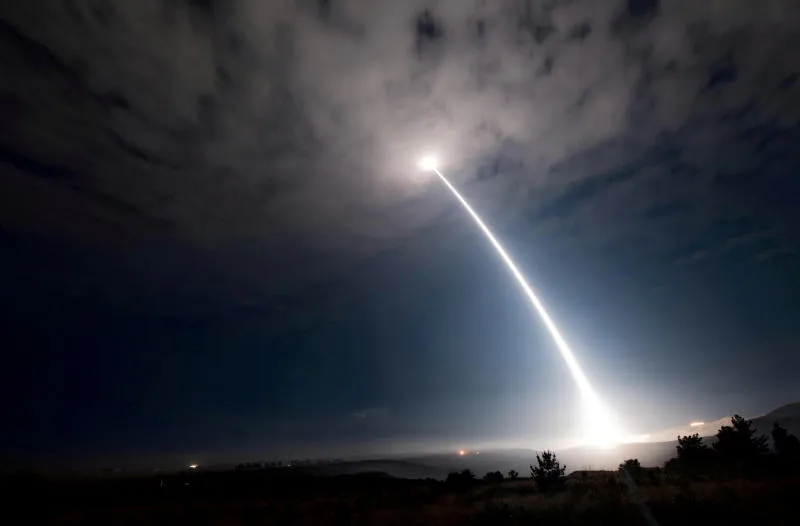
A recent long-range ballistic missile test conducted by China over the Pacific Ocean has heightened anxieties among neighboring nations and underscored the rapid expansion of Beijing’s military capabilities. The launch, which occurred at 12:01 PM Beijing time, involved a “mock warhead” fired from a Chinese nuclear-powered submarine, according to official Chinese state media. The missile reportedly landed accurately within its designated area in the Pacific. Chinese authorities stated the test was not directed at any specific country or target.
Regional Reactions and Escalating Tensions
The missile test has drawn sharp criticism from several countries in the Pacific region, who view it as a destabilizing action and a potential precursor to further military assertiveness. Governments were given advance notice of the launch, but the overt demonstration of China’s advanced weaponry has amplified existing concerns about regional security and a potential arms race.
New Zealand’s Stance
New Zealand’s Foreign Minister, Winston Peters, expressed deep concern, characterizing the test as part of a “recurring pattern by China.” He stated that his country, along with other Pacific nations, has no desire for the South Pacific to become a testing ground for Chinese missile technology. Peters described the development as unwelcome and concerning.
Australia’s Perspective
Australian Foreign Minister Penny Wong echoed these sentiments, calling the test “destabilizing to the region.” She placed the launch within the broader context of China’s “rapid military buildup.” This incident occurs as Australia strengthens its security ties with Pacific Island nations through new defense treaties and alliances, widely seen as a strategic response to China’s growing influence in the area.
Japan’s Concerns
The Japanese government also conveyed its “serious concern regarding the intensification of China’s military activities.” Tokyo had urged Beijing to reconsider the launch after receiving prior notification, highlighting Japan’s unease over escalating military actions in the region.
Context of China’s Military Modernization
This latest test follows a significant event in September 2024, when China launched a nuclear-capable intercontinental ballistic missile (ICBM) with a dummy warhead across the Pacific, landing near French Polynesia. That launch marked China’s first known ICBM test in the Pacific in four decades and also prompted regional condemnation.
Experts suggest that Beijing is not only testing its technological capabilities but also gauging the reactions of regional powers and the United States. Professor John Blaxland, an international security expert at the Australian National University, likened China’s actions to its approach toward Taiwan, describing it as a process of “probing and testing and incrementally acclimatizing intrusive, assertive, authoritarian behavior.”
Potential Missile Identification
While China has not officially disclosed the specific type of missile tested, scholars specializing in China’s nuclear arsenal believe it was likely the JL-3. This new-generation ICBM is designed for submarine launch and is capable of carrying a nuclear warhead. It was previously displayed at a military parade in Beijing. A 2023 Pentagon report indicated that the JL-3 is being deployed on China’s latest submarines, potentially enabling them to strike the continental United States from Chinese coastal waters.
Jeffrey Lewis, a scholar at Middlebury College, anticipates more such tests as China seeks to enhance its nuclear deterrent. He noted that China has historically tested its ICBMs less frequently than other nuclear powers, but a shift in political strategy may be underway, with Beijing now willing to accept the political repercussions of more frequent testing.
Submarine-Launched Ballistic Missiles (SLBMs)
Historically, China’s submarine-launched ballistic missile capabilities have been considered a weaker component of its nuclear triad. Earlier Chinese nuclear-powered submarines were known to be noisier than their Western counterparts, making them more detectable. However, the People’s Liberation Army is actively working to close this gap through the development of stealthier submarines and advanced missiles like the JL-3.
An analysis by the Federation of American Scientists suggested that the September 2024 test might have involved a DF-31 road-mobile missile launched from Hainan province. However, the recent Pacific test from a submarine points towards advancements in China’s sea-based nuclear deterrent capabilities.
Broader Geopolitical Implications
The missile test occurs amidst a backdrop of heightened geopolitical competition in the Indo-Pacific. China’s increasing military assertiveness, coupled with its expanding technological prowess, is contributing to a regional defense buildup. Nations are reassessing their security strategies and forging new alliances to maintain stability and deter potential aggression. The United States’ commitment to regional security also remains a key factor influencing these dynamics.
The strategic implications of China’s missile tests extend beyond immediate regional concerns. They signal a potential shift in global military balance and underscore the importance of ongoing diplomatic efforts and security dialogues to manage tensions and prevent escalation in this critical part of the world.
