

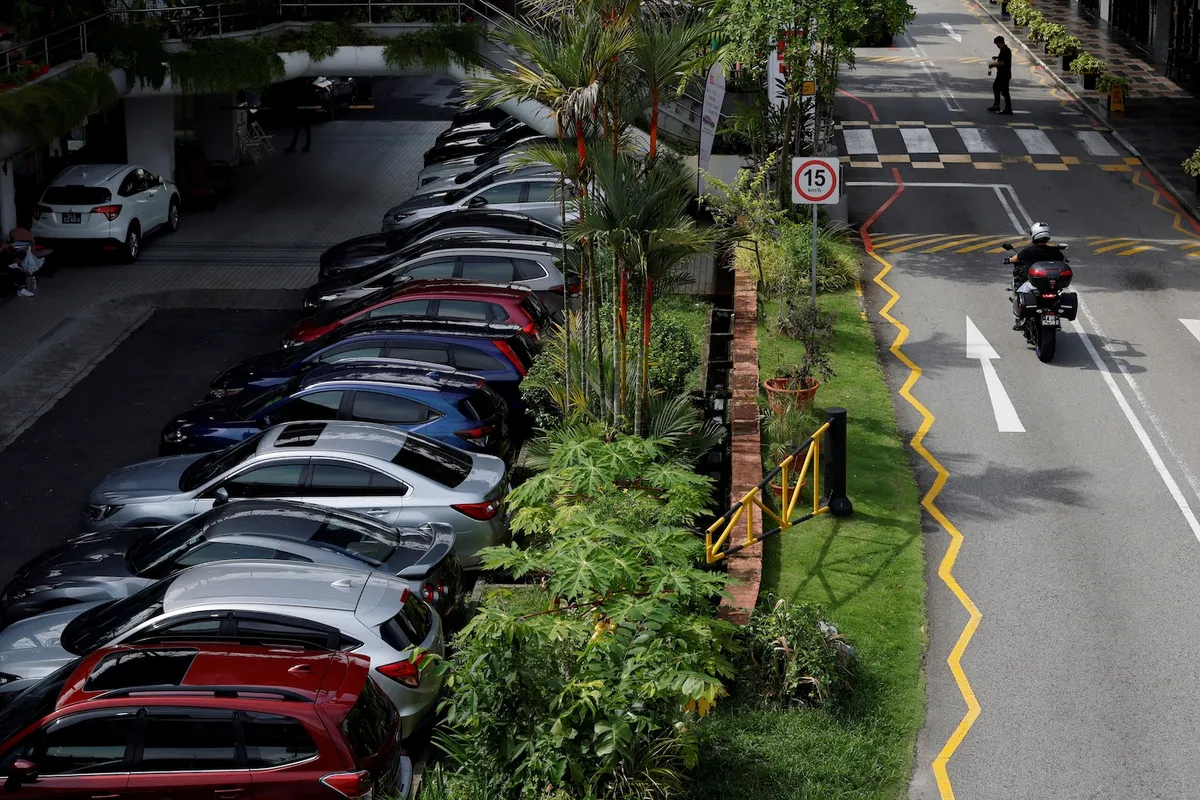
The cost of obtaining a Certificate of Entitlement (COE) for a small car in Singapore is rapidly approaching the S$100,000 (approximately US$74,000) mark, highlighting the extreme expense of car ownership in the city-state. These permits, which allow vehicle owners to drive on Singaporean roads for a decade, are a key component of the government’s strategy to manage traffic congestion in a densely populated urban environment.
Understanding Singapore’s COE System
Singapore implements a stringent vehicle quota system, auctioning a fixed number of COEs to control the total number of vehicles on its roads, which currently stands at around one million. This system is designed to maintain a manageable traffic flow within a nation that, despite its small size, boasts a population of 6.1 million. The city can typically be traversed by car in under an hour, underscoring the effectiveness of traffic management measures.
The COE auctions have consistently made Singapore one of the most expensive places globally to purchase and own a car. The price of these certificates has seen a dramatic surge, particularly for smaller vehicles with engine capacities below 1.6 litres. Prices for these permits have quadrupled compared to pre-pandemic levels, and there is currently no indication that this upward trend will slow.
Factors Driving Up COE Prices
In response to parliamentary inquiries regarding the escalating costs, Singapore’s Transport Minister, Jeffrey Siow, explained that demand for vehicle ownership remains robust. He attributed this sustained interest partly to competitive pricing in the electric vehicle (EV) market, which has made EVs more accessible. Concurrently, the supply of COEs for smaller vehicles at auction has been diminishing, creating a supply-demand imbalance that fuels price increases.
The current price of a COE alone for a small car is now equivalent to the cost of purchasing four Toyota Corollas in the United States. When factoring in the COE, registration fees, and various taxes, the total cost for a similar vehicle in Singapore can reach approximately S$180,000 (US$139,000). This figure stands in stark contrast to the median annual household salary in Singapore, which is S$149,352. Furthermore, a small, government-subsidised flat, often considered an entry-level housing option, costs upwards of S$139,000, illustrating that the price of a car permit can rival the cost of essential housing.
Historical Price Trends and Market Adjustments
The surge in COE prices is a relatively recent phenomenon, with significant acceleration observed over the past year. In October 2023, when certificates for larger cars surpassed the US$100,000 threshold, those for smaller cars were priced around US$77,500. Since then, prices have climbed steadily. This escalating cost has led some car manufacturers to adapt their offerings for the Singaporean market. Many carmakers now detune the engines of popular models specifically for Singapore, ensuring their vehicles qualify for the less expensive COE category for smaller engines.
The Broader Implications of High Car Ownership Costs
The high cost of COEs has a profound impact on vehicle affordability and ownership patterns in Singapore. It effectively limits car ownership to a wealthier segment of the population and encourages the use of public transportation, which is extensive and efficient in the city-state. The government’s objective is to maintain a high quality of life by preventing road congestion and its associated environmental and economic costs.
While the high prices may deter some potential buyers, they also reflect the success of Singapore’s urban planning and its commitment to sustainable transportation. The demand for vehicles, even at these elevated prices, suggests a continued aspiration for private car ownership, balanced against the practicalities of living in a land-scarce, highly developed city.
Looking Ahead
The trajectory of COE prices will continue to be closely watched by consumers, industry stakeholders, and policymakers. Factors such as government policy adjustments, shifts in consumer preferences towards electric mobility, and broader economic conditions will likely influence future price trends. For now, the prospect of a small car permit costing nearly S$100,000 underscores the unique challenges and strategies employed by Singapore in managing its transportation landscape.
