

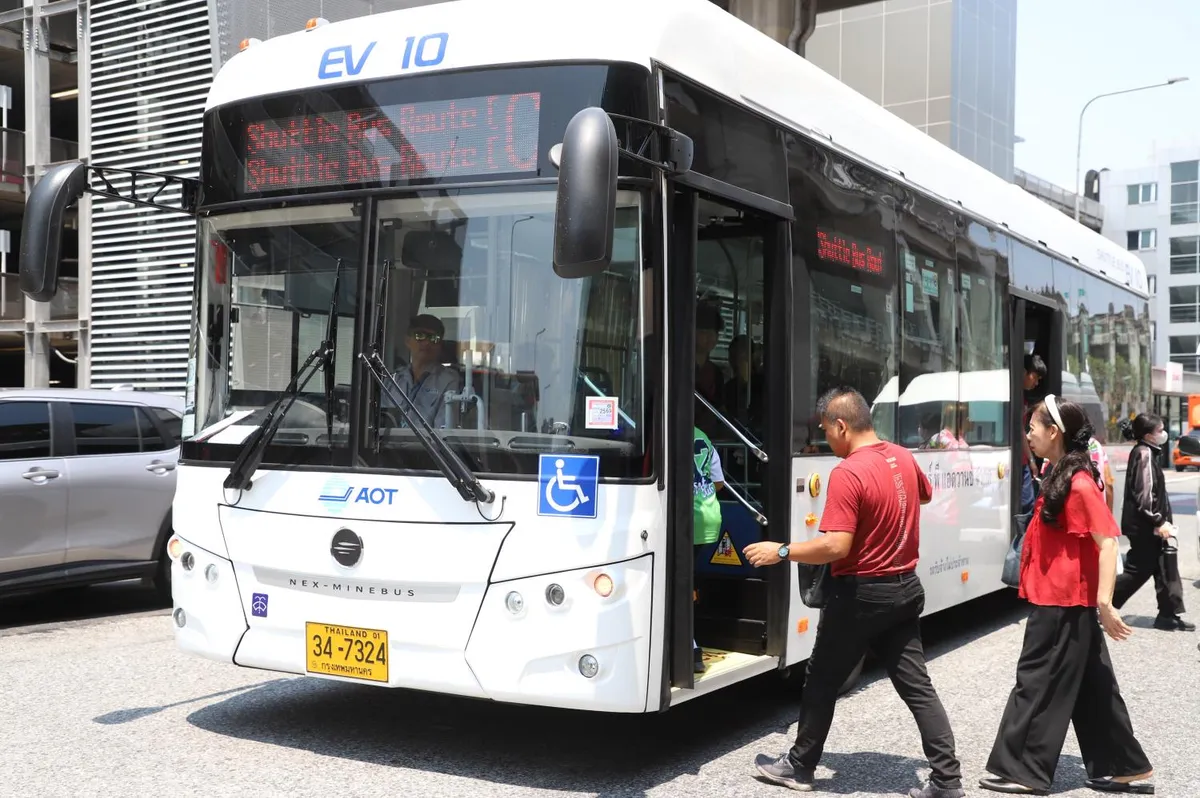
The Thai government is set to offer public loans to subsidize the conversion of public service vehicles to electric power, aiming to reduce fossil fuel dependency and bolster the domestic palm oil industry. This initiative will also extend support to vehicles running on B20 biodiesel, according to Finance Minister Ekniti Nitithanprapas. The program specifically targets high-usage vehicles like intercity buses, taxis, and public vans, which serve a significant number of passengers daily.
Transitioning Public Transport to Electric Power
The proposed transition program requires participating public transport operators to permanently retire their existing gasoline-powered vehicles. This involves de-registering the old vehicles with the Department of Land Transport to prevent them from re-entering service. Discussions are ongoing with the Ministry of Transport to finalize the specifics of this requirement. Furthermore, the Industry Ministry is involved in discussions regarding the dismantling of retired vehicles. This process is expected to be handled by private companies possessing specialized expertise in vehicle recycling and dismantling.
While a vehicle scrappage scheme to incentivize the replacement of old internal combustion engine (ICE) vehicles with electric vehicles (EVs) has been considered, it has not yet been approved. This is partly because the existing EV3.5 support program, which offers a subsidy of 50,000 baht per EV purchased, remains in effect.
Funding the Energy Transition
The government has authorized a total borrowing of 400 billion baht to address economic challenges, including the recent energy crisis exacerbated by global events. This borrowing is structured into two tranches: 200 billion baht allocated for economic relief under the “Thai Chuay Thai Plus” program, and another 200 billion baht designated to support the transition from fossil fuels to clean energy sources.
To ensure the judicious use of these funds, a screening committee has been established. This committee, chaired by the permanent secretary for finance, is responsible for evaluating project proposals submitted by government agencies. The committee applies a rigorous evaluation process to ensure that all proposals align with the objectives of the authorizing law and deliver maximum public benefit.
Disbursement and Oversight of Funds
Jindarat Viriyathavikul, director-general of the Public Debt Management Office, provided an update on the fund disbursement. Of the initial 200 billion baht allocated for the co-pay scheme, 138 billion baht has already been disbursed. An additional 30 billion baht is slated for borrowing within the next one to two months. Ms. Viriyathavikul noted that if this 30 billion baht remains unutilized, the government may consider reallocating it to support clean energy transition projects, provided they meet the objectives of the borrowing plan.
The borrowed funds are mandated to be used efficiently and cost-effectively. There is a strict timeline for disbursement, with all funds required to be utilized by September 2027. This ensures that the financial resources are channeled effectively towards achieving the government’s clean energy and economic objectives.
Broader Implications for the Economy and Environment
The push towards electric public transport is multifaceted. Beyond reducing reliance on imported fossil fuels, which can insulate the economy from volatile global energy prices, the initiative aims to support domestic industries. The emphasis on B20 biodiesel and the potential for increased palm oil consumption are intended to improve income for local palm oil farmers.
The conversion of high-mileage public transport vehicles to EVs is expected to yield significant environmental benefits. Reduced tailpipe emissions can lead to improved air quality in urban centers, contributing to public health. Furthermore, the shift to electric power aligns with global efforts to mitigate climate change by lowering greenhouse gas emissions.
The success of this program hinges on effective collaboration between various ministries, including Finance, Transport, and Industry, as well as the private sector. The careful selection of projects, rigorous oversight of fund usage, and adherence to timelines are crucial for maximizing the public benefit derived from this substantial government investment in clean energy infrastructure.
The government’s commitment to this transition underscores a strategic approach to economic resilience and environmental sustainability. By leveraging public loans for EV conversions and supporting related industries, Thailand aims to navigate current economic challenges while building a foundation for a greener future.
