

Renewed conflict in the Middle East and persistently high oil prices are significantly disrupting previous forecasts for both gold and the broader global economy. Analysts note that recent attacks in Iran, particularly those targeting oil fields, are exerting a more pronounced influence on oil prices than observed during the initial stages of the conflict between Russia and Ukraine.
Economic Headwinds Impact Gold Market
The sustained elevated levels of crude oil prices increase the likelihood of the Federal Reserve implementing further interest rate hikes. Market sentiment currently anticipates a rate increase by the Fed within the next three months. While gold is traditionally considered a hedge against inflation, which can be exacerbated by high crude oil prices, rising interest rates tend to negatively affect non-yielding assets like gold.
Gold Price Plunge and Future Projections
Bullion experienced a sharp decline, reaching $4,022 per ounce on Thursday, its lowest point since November 21st. While it saw a rebound to $4,089 later in the day, this still represented a 0.5% decrease from the preceding session. Over the last 30 days, gold has fallen by 12.5%.
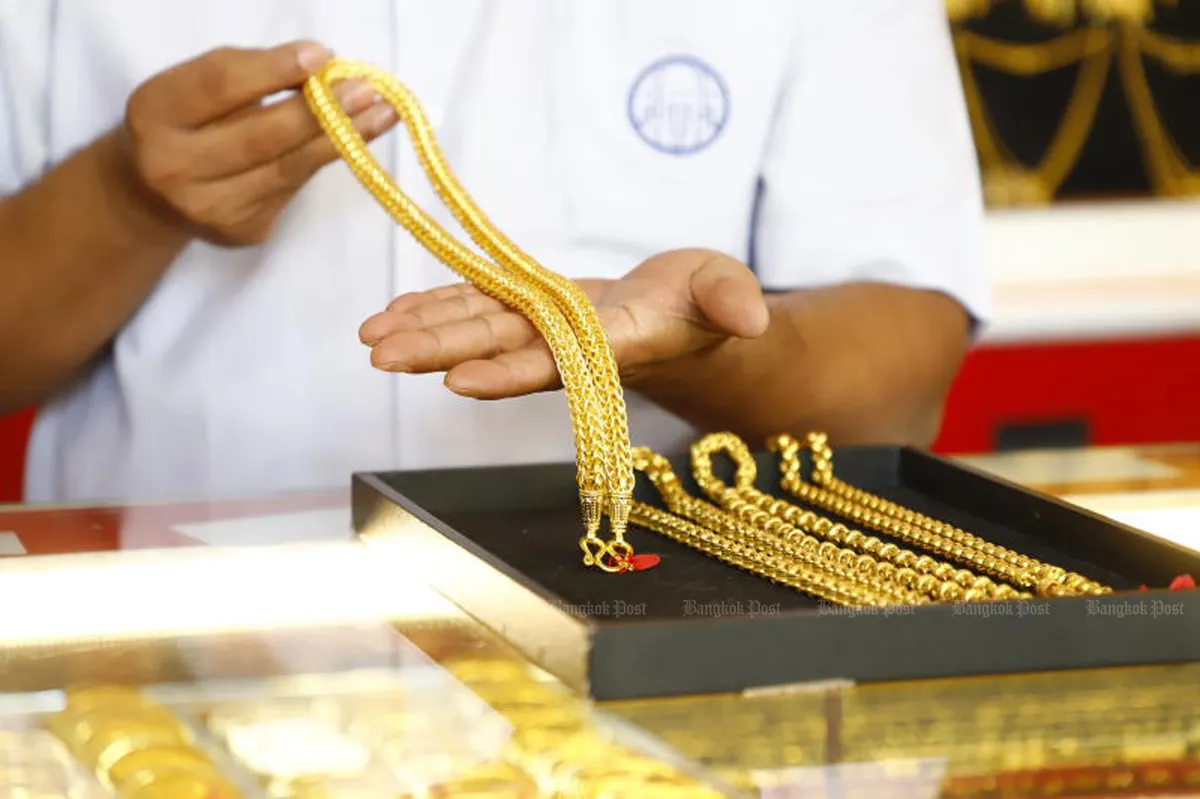
Leading gold traders in Thailand are projecting support levels for gold prices to range between $3,500 and $3,600 per ounce. Locally, the price of gold bars dropped by nearly 2,000 baht per baht-weight in early trading on Thursday. Following 29 price adjustments, gold bars were trading at 63,900 baht per baht-weight.
Expert Outlook on Gold Price Downturn
One market analyst suggested that this significant price downturn could persist until the end of the year. He further indicated that if the Federal Reserve proceeds with an anticipated interest rate hike in December, domestic gold bar prices are unlikely to fall below 60,000 baht per baht-weight.
Another prominent gold trading firm has set the next resistance level for gold at $4,115 per ounce. This firm’s analysis suggests that a breach below the $4,000 per ounce mark could lead to further price declines.
