

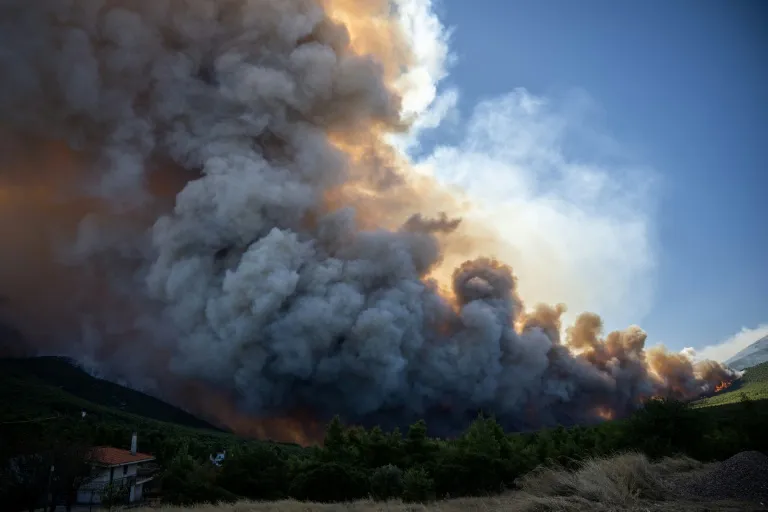
Greece is currently facing a severe outbreak of wildfires, marking a second consecutive week of intense blazes that have consumed vast swathes of land. While the country had initially seen a relatively calm start to the summer compared to other European nations like France and Spain, it is now grappling with multiple active fire fronts. The fires have scorched thousands of hectares of forest, scrubland, and agricultural areas, posing a significant threat to both the environment and communities.
Fires Rage on Multiple Fronts
As of Monday, authorities reported three particularly challenging fire zones: Psatha, Kryo Pigadi, and Kandyli. These areas are situated west of Athens, approximately 45 to 70 kilometers from the capital. The ongoing battle against these infernos has been described as difficult, with officials highlighting the uneven nature of the fight against the rapidly spreading flames.
The situation has been exacerbated by high temperatures and dry conditions, which create an environment ripe for fire ignition and rapid spread. Prime Minister Kyriakos Mitsotakis has cautioned that Greece is entering a period of “extremely difficult” days as these conditions persist, fueling the blazes and making containment efforts more challenging.
Aerial and Ground Operations Resume
Favorable weather conditions, specifically lighter winds, allowed aerial firefighting operations to resume early on Monday. Nine water-bombing aircraft, nine helicopters, and approximately 450 firefighters were deployed to combat the flames in the Boeotia and Attica regions. These operations are crucial for dousing fires in difficult-to-reach terrain and creating firebreaks.
In the preceding days, strong wind gusts, some reaching up to 80 kilometers per hour, had forced the grounding of aircraft due to safety concerns. This interruption significantly hampered firefighting efforts, allowing the fires to spread more freely. The resumption of aerial support marks a critical phase in the ongoing containment strategies.
Evacuations and Fatalities
Authorities have ordered new evacuations in villages located near Kandyli, a region approximately 45 kilometers west of Athens. The Greek Civil Protection agency issued these orders to ensure the safety of residents in areas directly threatened by the encroaching fires. The dynamic nature of wildfires often necessitates rapid evacuation plans to prevent loss of life and minimize injuries.
Tragically, the wildfires have claimed five lives since the previous week. The most recent fatalities occurred on Sunday when two Bell helicopters collided while engaged in firefighting operations near Psatha. A Danish pilot and a Greek co-pilot aboard one of the aircraft perished in the crash. These deaths followed the loss of three firefighters who died in the line of duty while battling separate wildfires in Crete and the Peloponnese the previous week.
Investigation into Helicopter Crash
The collision involving the two Bell helicopters has prompted an official investigation. All Bell helicopters involved in the firefighting operation have been grounded pending the outcome of this inquiry, according to reports from public broadcaster ERT. The helicopters were reportedly leased from McDermott Aviation, an Australian company that has supported operations in Greece for the past seven years.
The other aircraft involved in the collision, reportedly piloted by a British national with a Greek co-pilot, sustained injuries and were transported to a hospital for treatment. The incident underscores the inherent dangers faced by aerial firefighting crews working under challenging conditions.
Extent of Damage and Contributing Factors
Analysis from the European Union’s Copernicus Earth observation program, cited by local media, indicates that over 12,000 hectares of forest and agricultural land have been burned in the past week alone. This extensive damage highlights the scale of the crisis and the significant environmental and economic impact of the wildfires.
Scientists increasingly link the frequency and intensity of wildfires in Greece and across the Mediterranean region to climate change. Rising global temperatures and prolonged dry spells create conditions that are more conducive to large-scale fires. The current outbreak serves as a stark reminder of the growing threat posed by climate change to vulnerable ecosystems and communities.
Potential Arson and High Fire Danger
In a separate development, police have arrested two employees of an electricity utility company in connection with one of the fires. Investigators suspect that an electrical cable near the coastal village of Porto Germeno, on the Gulf of Corinth approximately 60 kilometers west of Athens, may have sparked the blaze on Friday. This potential link to infrastructure raises questions about preventative measures and maintenance protocols.
With the peak of the tourist season underway, authorities have issued warnings that the wildfire threat level remains “very high” for Monday. The Civil Protection agency has placed Attica, the region surrounding the capital, and the neighboring Boeotia region at a level four on a five-point fire danger scale, indicating extreme risk.
Conclusion
Greece continues its intensive efforts to combat a series of devastating wildfires, deploying significant resources in both aerial and ground operations. The ongoing high temperatures, dry conditions, and challenging terrain present formidable obstacles. The tragic loss of life and extensive environmental damage underscore the severity of the crisis, which is increasingly attributed to the impacts of climate change. Authorities are urging vigilance and adherence to safety guidelines as they work to bring the fires under control.
