

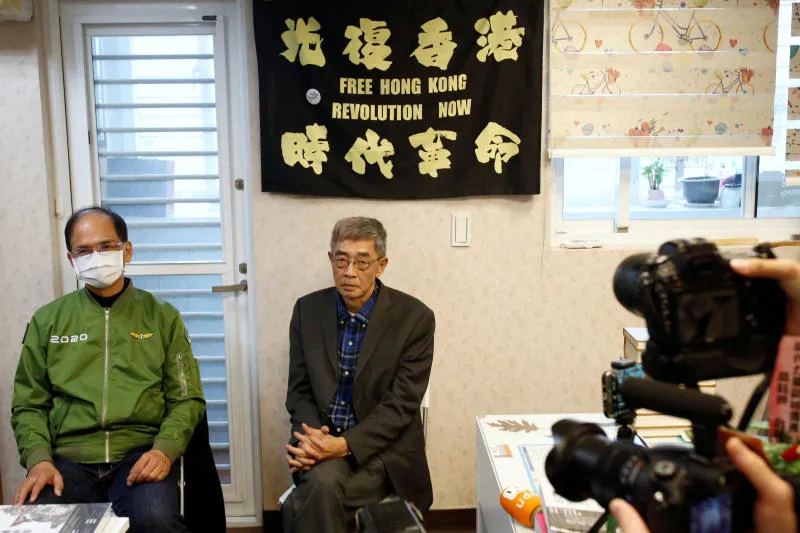
Lam Wing-kee, a Hong Kong bookseller who gained international attention after being detained in mainland China and later sought refuge in Taiwan, has died in Taipei. He was 60 years old. Lam was admitted to Mackay Memorial Hospital on Tuesday, and his condition deteriorated, leading to a coma. He was pronounced dead on Thursday evening, according to reports from local media cited by the South China Morning Post.
Background of Detention and Asylum in Taiwan
Lam Wing-kee had relocated to Taiwan in 2019, seeking asylum after his detention by Chinese agents in 2015. At the time of his arrest, he was working at Causeway Bay Books in Hong Kong, a bookstore known for stocking titles critical of the Chinese leadership. This incident was part of a broader operation that saw five booksellers associated with the shop disappear from various locations, including mainland China, Hong Kong, and Thailand, in late 2015. These individuals later reappeared in Chinese custody, where they were compelled to make televised confessions.
The case of the Causeway Bay Booksellers sparked significant controversy globally and eroded public trust in Beijing’s pledges to uphold Hong Kong’s autonomy and freedoms under the “one country, two systems” principle. Before its eventual closure in Hong Kong following the arrests, Lam’s bookstore had become a potent symbol of defiance against what many perceived as increasing Chinese interference in the city’s liberties.
Health Issues and Continued Activism
In the year prior to his death, Lam Wing-kee revealed that his battle with lung cancer had resurfaced and progressed to stage four, despite undergoing initial treatments. This personal health struggle did not deter him from continuing his advocacy for freedoms and democracy.
Following his arrival in Taiwan, Lam reopened a bookstore under the same name, Causeway Bay Books, continuing his work in a new environment. The Taipei branch aimed to serve as a space for intellectual exchange and to keep alive the spirit of free expression that his original Hong Kong store represented. He remained an active voice, participating in discussions and events related to Hong Kong’s political situation and the broader fight for democratic values.
The Shifting Landscape of Hong Kong
Lam’s story is inextricably linked to the dramatic political shifts that have occurred in Hong Kong. In 2019, the city was engulfed by massive pro-democracy protests, a response to growing concerns over Beijing’s tightening control. China’s subsequent crackdown on these demonstrations led to the imposition of a sweeping national security law in 2020, which has been widely criticized for stifling dissent and curtailing civil liberties.
The political climate in Hong Kong has continued to change drastically. In December of the previous year, the city’s last major opposition political party disbanded, marking a culmination of sustained pressure from Beijing on the remaining liberal voices and political opposition within the territory. Lam Wing-kee’s experiences and his eventual death in exile serve as a poignant reminder of the challenges faced by those who advocate for democratic freedoms in the face of authoritarian pressures.
Legacy and Continued Support
Lam Wing-kee’s legacy extends beyond his role as a bookseller. He became an international symbol for the defense of free speech and the rule of law, particularly in the context of Hong Kong’s unique political status. His courage in speaking out after his detention and his subsequent efforts to continue his work in Taiwan inspired many who felt marginalized or threatened by political changes.
The bookstore he established in Taipei continued to be a focal point for the Hong Kong diaspora and supporters of democracy, fostering a sense of community and providing a platform for open dialogue. His passing marks the end of a significant chapter for those who followed the Causeway Bay Booksellers’ case and its implications for press freedom and political expression in Hong Kong and beyond. The international community continues to monitor the situation in Hong Kong, with figures like Lam Wing-kee serving as enduring symbols of resistance and the pursuit of fundamental rights.
