

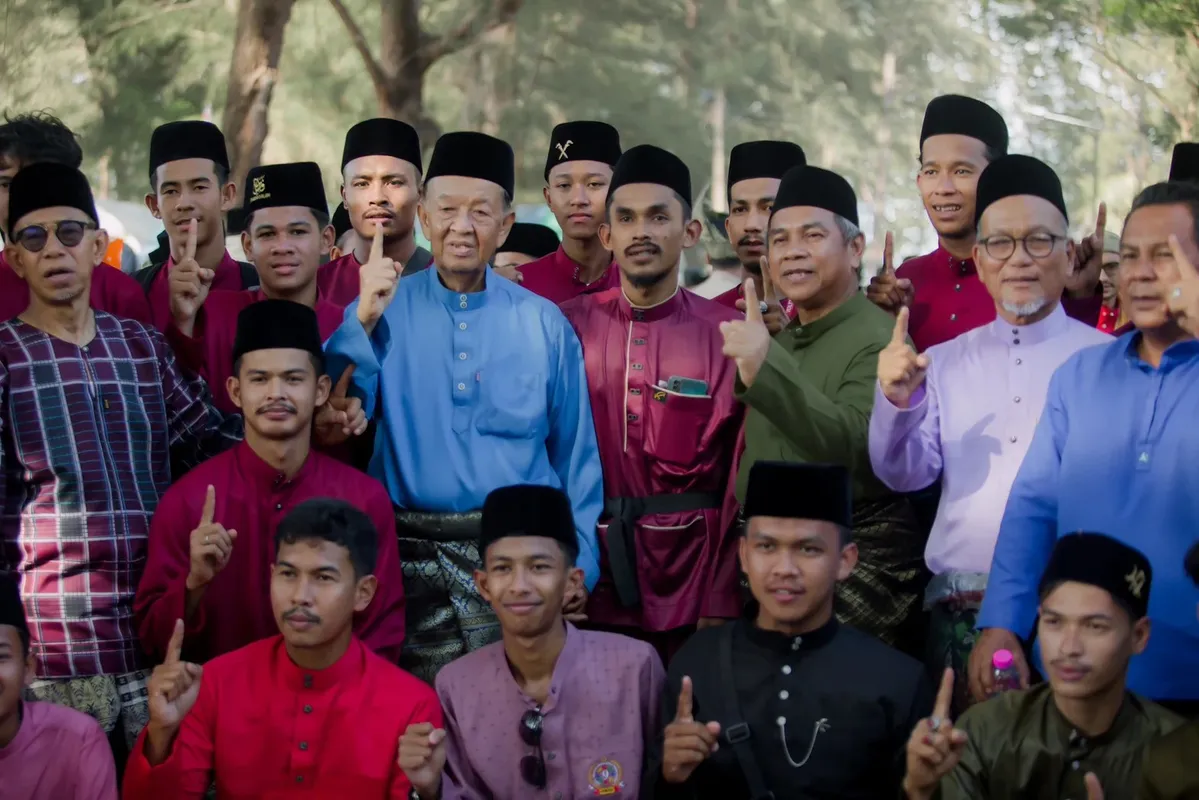
A prominent politician has ignited a debate regarding the necessity and effectiveness of the Internal Security Operations Command (ISOC), a powerful Thai security agency, by proposing its dissolution. The suggestion, put forth by veteran politician Mr. Wan, has been met with strong rebuttals from the Prime Minister and ISOC officials, who maintain the organization is vital for national security and public welfare.
Call for ISOC Dissolution Amid Budget Scrutiny
The proposal to dissolve ISOC emerged during a review of the National Security Council’s budget for the 2027 fiscal year, a staggering 3.8 trillion baht. Mr. Wan, a member of the committee scrutinizing this budget, focused his attention on the significant funds allocated to counter the southern border insurgency. He questioned the efficacy of ISOC’s long-standing financial allocations, stating, “I believe it is time to dissolve Isoc. It has been allocated billions of baht over many years, and we must ask whether that spending has been worthwhile.”
Mr. Wan expressed a lack of visible achievements by ISOC, citing a recent incident where the organization drew attention for alleged involvement in shooting a Member of Parliament. “Is shooting an MP part of Isoc’s mission? I don’t know. They may deny it, but the suspects have already been arrested, and the case is now before the court. It involved an Isoc vehicle, an Isoc firearm and Isoc personnel,” he asserted. This incident involved Kamolsak Leewamoh, an MP from the Prachachat party and a lawyer known for defending individuals allegedly wronged by the state in southern Thailand. Investigations into the assassination attempt reportedly uncovered suspected links to security services. Adding to the controversy, Lt Gen Narathip Phoynork, commander of the 4th Army Region and director of ISOC Region 4, was reportedly overheard saying, “If it were me, I wouldn’t let him survive.”
Government Defends ISOC’s Crucial Role
Prime Minister Anutin Charnvirakul swiftly dismissed the idea of dissolving ISOC. “I made it clear yesterday that Isoc will not be dissolved,” he stated, emphasizing its importance as a mechanism for implementing national security policies. The Prime Minister further elaborated that ISOC’s functions extend beyond traditional security roles, contributing to public well-being and acting as a crucial link between the government and the military in delivering services to citizens.
Gen Chaipruak Doungprapat, ISOC secretary-general and army chief of staff, echoed the Prime Minister’s defense, likening ISOC’s coordinating role to that of the U.S. Department of Homeland Security. He argued that ISOC is essential for integrating various security agencies to maintain domestic stability. While acknowledging that ISOC is open to criticism, Gen Chaipruak downplayed concerns about duplicate personnel payments, noting that most ISOC officers are seconded from the army and police forces.
Historical Context and Counter-Arguments
Nantiwat Samart, a former deputy director of Thailand’s National Intelligence Agency, provided historical context for ISOC’s existence. He reminded that the organization was initially established in the 1970s to combat the communist insurgency. This foundation, he argued, has equipped ISOC with expertise in maintaining internal stability and addressing diverse domestic threats. Mr. Samart views ISOC as a critical deterrent against separatist movements in the southern provinces.
He expressed concern that political efforts to dismantle state security units could undermine national interests. “Politicians are always trying to sever the limbs of state units that stand in the way of their benefits without care towards the interests of the nation, or trying to water them down to the point of being meaningless,” he stated. “We must not dissolve Isoc. We must not provide a loophole with which separatists can gain a foothold.”
Concerns Over Accountability and Effectiveness
Despite these defenses, critics point to several ongoing concerns surrounding ISOC’s operations and accountability. The article highlights a recent court order for ISOC to pay damages to human rights activists who were allegedly targeted by an information operation aimed at destroying their reputations. Furthermore, ISOC has reportedly acknowledged compiling a list of “high-value target” Thai citizens, including prominent figures, for monitoring.
The organization’s substantial annual budget, often exceeding 7 billion baht, is also a point of contention. Critics argue that these funds are used for operations that overlap with those of other state agencies. Moreover, the counter-separatist efforts in the southern border provinces, a primary mandate for ISOC, have reportedly seen little significant progress over two decades, raising questions about the return on investment.
Conclusion: Balancing Security Needs with Scrutiny
The debate over ISOC’s future hinges on balancing its perceived contributions to national security and public welfare against serious allegations of misconduct, questionable spending, and overlapping responsibilities. While proponents emphasize its historical role and its function as an integrating force for security agencies, critics question its necessity in its current form, given the existence of specialized entities and the persistent concerns regarding its operations. The core question remains whether ISOC’s purported benefits outweigh the significant and credible accusations leveled against it, prompting a critical examination of its role in Thailand’s internal security landscape.
