

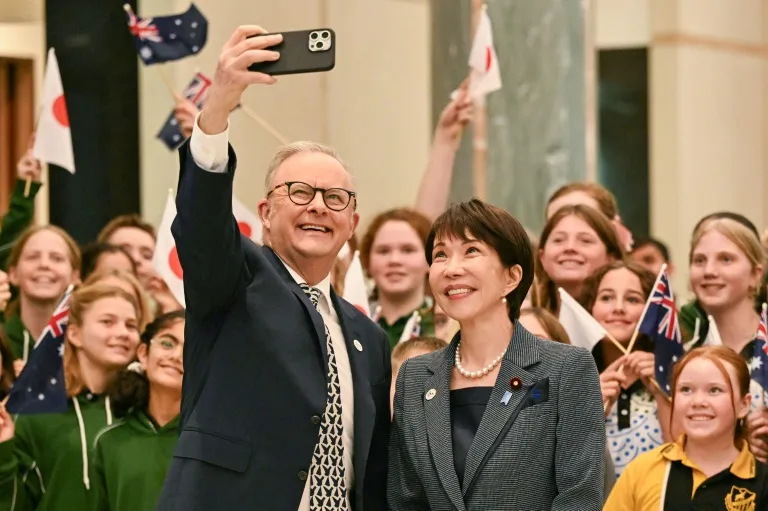
Japan’s government has stated it is aware of media reports concerning comments made by Australian Prime Minister Anthony Albanese regarding a gift of Japanese melons, but indicated that the remarks were not as they have been portrayed. A Japanese government statement released on Wednesday clarified that they had been informed by the Australian side that the Prime Minister’s comments were not made in the manner that media reports suggested.
The statement further emphasized that a dinner hosted by Prime Minister Albanese for the Japanese Prime Minister during the latter’s visit to Australia in May occurred in a very congenial atmosphere. This event, the statement suggested, was instrumental in fostering a strong personal rapport between the two leaders.
This situation arises amidst a separate controversy where Prime Minister Albanese had already issued an apology for remarks made during a comedy podcast interview the previous month. In that interview, he named singer Kylie Minogue as someone he would “shag.”
However, it was his subsequent comments within the same interview, describing a gift of Japanese melons from Prime Minister Sanae Takaichi as “strange” when asked about his “most crap” diplomatic gift, that ignited fresh controversy this week. The host of the podcast, Nikki Osborne, had humorously questioned if the Prime Minister had “smuggled” the expensive fruit through Australian customs. In response, Albanese reportedly gestured with his hands near his chest and mentioned receiving “a couple of melons.” Osborne then likened Prime Minister Takaichi’s appearance to that of Pamela Anderson, a well-known American actress.
The remarks have drawn criticism from Australia’s opposition, with calls for Prime Minister Albanese to apologize for what they termed “insulting” comments. When questioned in parliament on Tuesday about whether he would offer an apology for his “disrespectful behavior,” Albanese reportedly rejected the premise of the question.
In Japan, the comments generated considerable backlash on social media platforms like X (formerly Twitter). Many users expressed offense, viewing the remarks as disrespectful towards Prime Minister Takaichi, who notably became Japan’s first female prime minister in the previous year. One user lamented, “I’m not a supporter of the Liberal Democratic Party or a defender of the current government, but this is really awful. It’s disrespectful towards our prime minister.” Another commenter stated, “Sure this guy’s remarks are unbelievable. On top of that, it suggests how he thinks it’s OK to treat Takaichi — or Japan for that matter — this crudely.”
Furthermore, some social media users were offended by the perceived slight against Japanese fruit itself. The specific variety of melon gifted is known for its high value, with prices reportedly exceeding 30,000 yen (approximately $200 USD). A comment highlighting this point read, “Don’t you dare think the Australian fruits and ours are the same. Ignorance is pathetic.”
In an effort to qualify his statements, Prime Minister Albanese later commented that the melons, despite his initial description, “ended up being quite good.” This suggests a potential misunderstanding or mischaracterization of his sentiments regarding the gift and the diplomatic exchange.
Understanding the Diplomatic Gift Context
The controversy highlights the delicate nature of diplomatic gift-giving and the potential for misinterpretation, especially in informal settings like podcast interviews. Prime Minister Takaichi’s gift of high-value Japanese melons to Prime Minister Albanese was likely intended as a gesture of goodwill and a showcase of Japanese produce.
Japanese melons, particularly premium varieties, are often seen as luxury items and are a symbol of quality and meticulous cultivation. Their high price point reflects not only the quality of the fruit but also the cultural significance attached to such gifts in Japan. Presenting such an item can be a way to convey respect and strengthen bilateral ties.
The Role of Comedy Podcasts in Diplomacy
The incident also underscores the evolving landscape of political communication, where leaders increasingly engage with media platforms outside traditional channels. While comedy podcasts can offer a more relaxed and accessible way to connect with a broader audience, they also carry inherent risks.
The informal and often irreverent nature of these shows can lead to off-the-cuff remarks that may be taken out of context or perceived as disrespectful, even if not intended as such. The host’s provocative style, as noted in the reporting, can further amplify such risks.
Navigating International Perceptions
The strong reactions from some Japanese social media users indicate a sensitivity to how their country and its representatives are perceived internationally. The comments were seen not just as a personal slight against Prime Minister Takaichi but also as a reflection of how Japan itself might be viewed by foreign dignitaries.
The value of the melons further adds a layer to the perceived insult. Dismissing a gift of such significant monetary and cultural value could be interpreted as a lack of appreciation for Japanese culture and the effort invested in producing such a high-quality item.
Official Response and Future Implications
Japan’s official response, aiming to downplay the controversy and clarify the Australian Prime Minister’s intent, suggests a desire to maintain the positive trajectory of bilateral relations. By stating that the comments were not made as reported, Tokyo appears to be signaling that it does not wish for this incident to overshadow the broader diplomatic relationship.
The emphasis on the positive atmosphere of the dinner meeting further reinforces this approach, highlighting the personal trust built between the leaders as a key element in managing such minor diplomatic friction. This focus on the larger picture of bilateral ties is a common strategy in international diplomacy to prevent isolated incidents from causing significant damage.
Moving forward, the incident serves as a reminder for political figures engaging in informal media appearances to be mindful of their language and the potential impact of their words on international perceptions. While building personal rapport is crucial, maintaining respect for cultural nuances and diplomatic protocols remains paramount, even in less formal communication settings.
