

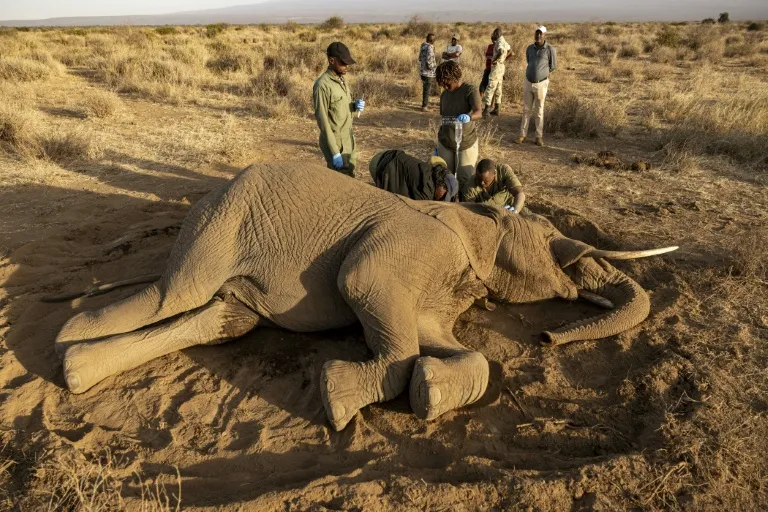
A perplexing and fatal ailment is sweeping through Kenya’s elephant population, leaving wildlife officials and conservationists baffled and concerned. Since June, at least 19 elephants, predominantly females and young males, have succumbed to a mysterious condition characterized by identical symptoms, including partial paralysis. The escalating death toll has raised urgent questions about the cause and the potential impact on the country’s vital tourism sector.
Amboseli National Park: A Tourist Hotspot Faces a Crisis
The Amboseli ecosystem, renowned for its breathtaking views of Mount Kilimanjaro and thriving elephant herds, has become the epicenter of this unfolding crisis. This region is a significant draw for tourists, and the unexplained deaths of its iconic pachyderms pose a sensitive issue for Kenya, where tourism is a major contributor to the national revenue. The sight of elephants struggling to survive has become increasingly common.
Patrick Papatiti, head of operations for Olgulului communal lands, which encompasses the Kitenden B reserve, described the agonizing process for affected animals. “You would find one struggling for a day, struggling for two or even three days. Until they completely die,” he stated, recounting the distress observed in elephants like Genghis Khan, an 11-year-old male found struggling to breathe. Vets could only administer glucose injections, as the underlying cause of the illness remained unknown.
Conflicting Theories Emerge: Poisoning vs. Disease
Initial investigations by the Kenya Wildlife Service (KWS) in late July pointed towards possible pesticide poisoning. Toxicology reports on the carcasses revealed high concentrations of cyanide, suggesting a link to chemicals used on nearby farms. However, this preliminary finding has been met with skepticism by several wildlife experts and local managers.
“It’s a disease,” insisted Papatiti, a member of the local Maasai community with deep-rooted knowledge of the area. He strongly dismissed the cyanide theory, highlighting that no other animal species, including scavengers or insects that fed on the carcasses, have shown any ill effects. This observation is critical, as such creatures typically succumb rapidly after consuming poisoned prey.
Joel Nyika, the Amboseli ecosystem manager for Kajiado County authorities, echoed Papatiti’s doubts. “If another animal feeds on that carcass and it is not dying, then definitely it is not a chemical,” Nyika told AFP. He also refuted the KWS’s suggestion that the cyanide might have originated from a specific type of foliage, arguing that local livestock, which often graze in the same areas, would have also been affected. “As wildlife managers, we believe it could be a disease that is only affecting these elephants.”
KWS Reassurance and Continued Observations
Despite the growing concerns and conflicting expert opinions, the KWS issued a statement on August 7 asserting that their findings to date did not indicate an infectious or transmissible disease. The service sought to reassure the public and tourists that Amboseli remained a safe destination.
However, observations on the ground continue to paint a troubling picture. Journalists visiting the Kimana reserve reported seeing six elephant carcasses within a single day, some appearing relatively fresh, others older. Rangers confirmed observing the characteristic partial paralysis that prevents the animals from standing. The scene included the remains of a four-month-old calf, partially consumed by scavengers, and a pregnant female elephant who had died shortly before giving birth, along with her unborn calf.
Conservationists Call for Deeper Investigation
Conservationists are urging for a more thorough investigation into the mysterious deaths. Paula Kahumbu, a prominent conservationist and head of Wildlife Direct, pointed to the “lack of evidence” supporting the pesticide theory. She further noted that the low number of adult male elephant deaths, despite their tendency to raid crops and potentially come into contact with pesticides, casts further doubt on the poisoning hypothesis.
Papatiti stressed the importance of identifying the root cause rather than assigning blame. “We need to know what is killing our elephants,” he urged, emphasizing that the focus should be on scientific inquiry and finding a solution. The sensitivity surrounding the issue has led many environmental organizations to decline public comment, while local rangers have stated they are not authorized to speak to the media.
Broader Concerns and the Unanswered Question
The escalating death toll has sparked fears that the affliction might not be confined to Kenya. Papatiti expressed concern that the true number of fatalities could be underestimated and that elephants in neighboring Tanzania might also be affected. The overarching question remains unanswered: “How many elephants will die before we can stop this?” The mystery surrounding this ailment underscores the urgent need for comprehensive research and collaborative efforts to protect Kenya’s iconic elephant populations.
