

Lebanon Faces Renewed Strikes as Ceasefire Efforts Stall
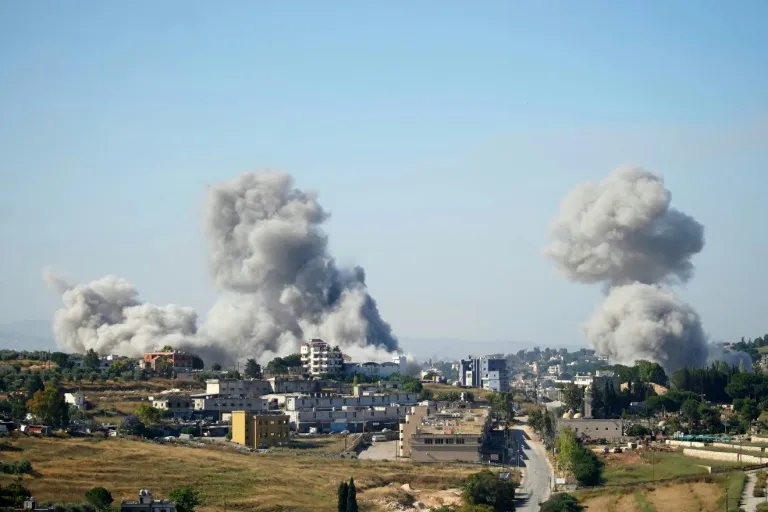
Despite a preliminary agreement aimed at halting regional hostilities, including in Lebanon, a wave of Israeli airstrikes has struck southern Lebanon, resulting in numerous casualties. The intensified attacks followed the deaths of four Israeli soldiers in combat, prompting strong domestic reactions.
Talks that were scheduled to take place in Switzerland to solidify the truce have been indefinitely postponed. Vice President JD Vance, who was expected to represent the American delegation, has deferred his trip. U.S. envoy Steve Witkoff is now en route to Switzerland to facilitate a return to negotiations, with Jared Kushner, a senior advisor, also anticipated to attend.
President’s Appeal and Shifting Dynamics
President Donald Trump stated that he had spoken with Israeli leadership, urging them to observe a ceasefire. “You just gotta calm down sometimes and use your head,” President Trump was quoted as saying, though he did not specify if he had engaged directly with Prime Minister Benjamin Netanyahu.
Following these discussions, a new ceasefire between Israel and Hezbollah was announced, brokered by U.S. and Qatari mediators. Israel’s ambassador to Washington indicated that the truce would be respected, provided Hezbollah reciprocated.
Escalation Despite Ceasefire
However, on Saturday, an Israeli military official confirmed ongoing attacks against the Iran-backed movement. This action was reportedly a response to Hezbollah launching over 50 projectiles at Israeli forces in southern Lebanon overnight. Hezbollah has not officially claimed responsibility for any attacks on Israel or its troops in Lebanon since the ceasefire announcement.
Lebanese state media reported extensive Israeli air raids targeting approximately 20 locations. The country’s civil defense agency reported 16 fatalities in the Nabatieh area, where plumes of smoke were observed rising after the strikes. Multiple explosions were also reported near the Beaufort Castle, a strategic site recently captured by Israel.
Calls for Respect and Retaliation
Hezbollah lawmaker Hassan Fadlallah emphasized the group’s expectation for comprehensive respect of the ceasefire by Israel. “The resistance has the full right to confront this enemy when it attacks us, as it is the aggressor and the occupier,” Fadlallah stated.
An Israeli military official, speaking to public broadcaster Kan, characterized the country’s approach to the truce as a response of “fire being answered with fire.”
High Casualty Toll and Historical Context
Lebanese authorities reported 47 people killed in Israeli airstrikes on Friday, marking the highest death toll since the U.S. and Iran brokered a deal to de-escalate the wider regional conflict. Hezbollah’s involvement in the conflict began in early March, with rocket fire into Israel following the killing of Iran’s supreme leader in U.S.-Israeli strikes.
A previous ceasefire intended to take effect in April was not honored, with both sides citing violations by the other as justification for continued hostilities.
Diplomatic Efforts and Ongoing Tensions
In a call with U.S. Secretary of State Marco Rubio, Lebanese President Joseph Aoun underscored the necessity for Israeli attacks on Lebanese territory to cease. Secretary Rubio, according to the State Department, stressed the importance of Lebanon’s commitment to disarming Hezbollah and re-establishing full territorial control.
The U.S. has been mediating direct talks between Israel and Lebanon, which lack formal diplomatic relations. Another round of these discussions is scheduled for next week.
