

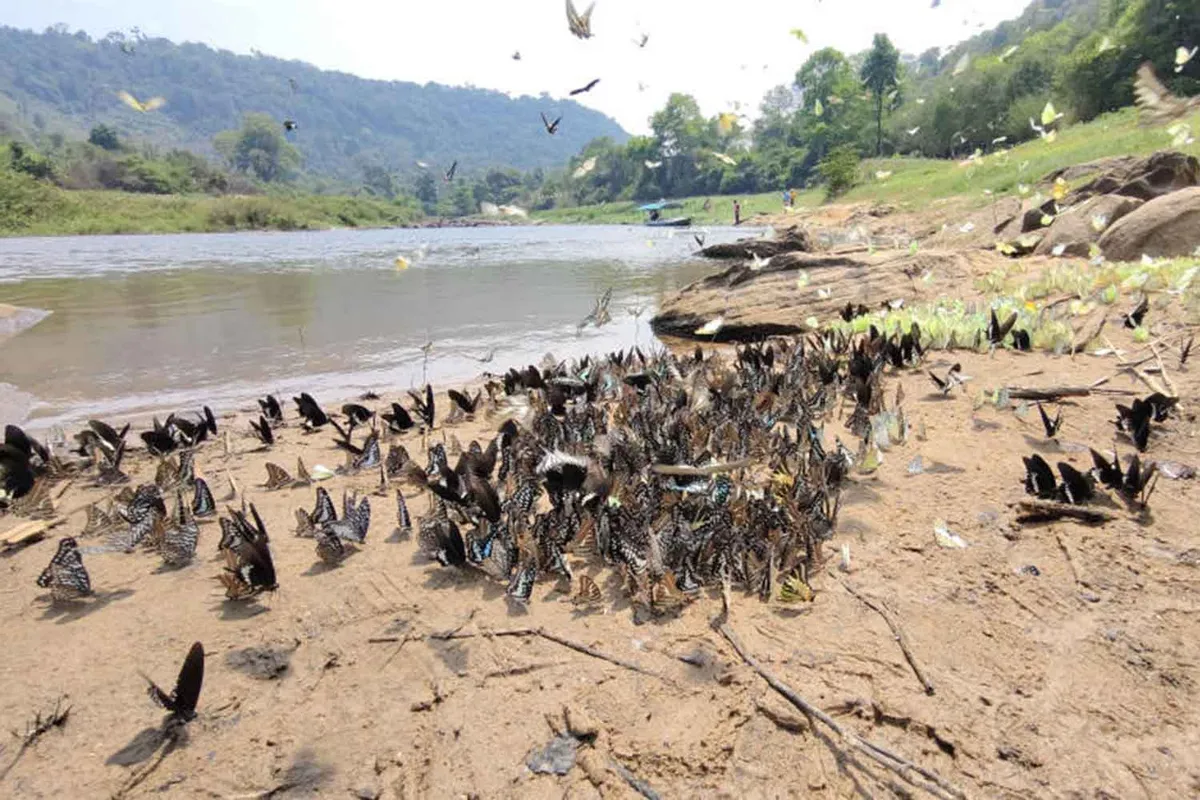
A significant revision to the boundaries of Thap Lan National Park has ignited a wave of protest, with environmental advocates rallying against what they deem an unlawful transfer of national land. The movement, organized under the social media hashtag #SAVEThapLan, is demanding a halt to the plan.
Park Boundary Adjustment Under Fire
The controversy stems from a resolution passed on June 15 by the National Park Committee, which approved a revised perimeter for Thap Lan National Park. This vast protected area, spanning 2,240 square kilometers (approximately 1.4 million rai) across Nakhon Ratchasima and Prachin Buri provinces, is a vital ecological zone.
The proposed adjustment would see 155,865 rai of land removed from the park’s jurisdiction. This land is slated for transfer to various state agencies, including the Agricultural Land Reform Office (Alro), for land-rights management and allocation.
Environmentalists Voice Strong Opposition
Environmental organizations are urging the government to reconsider this decision, citing the ecological significance of the affected forest lands and their role as critical wildlife habitats. They are calling for a more transparent review process concerning the areas impacted by the boundary change.
However, the Department of National Parks, Wildlife and Plant Conservation (DNP) has defended the move. Officials state that the boundary adjustment is intended to resolve long-standing conflicts arising from overlaps between the national park and land that was allocated by the state to local communities prior to the park’s establishment.
DNP Explains Rationale for Revision
Atthapol Charoenchansa, director-general of the DNP, explained that the majority of the land being withdrawn is already designated for agricultural reform, settlement projects, and military use. He emphasized that the revision aims to align official boundaries with historical land-use patterns rather than diminish environmental protection efforts.
Charoenchansa also clarified that approximately 450 ongoing encroachment cases would continue through the legal system and would remain unaffected by this boundary revision. He assured that no rights would be automatically granted to individuals currently facing prosecution.
Furthermore, the DNP, in conjunction with the Royal Forest Department, is initiating a study of an additional 86,966 rai of forest land situated outside the current park boundaries. This area is being evaluated for potential inclusion in Thap Lan National Park as part of a future expansion initiative.
Campaigners Remain Skeptical
Despite these explanations, campaigners remain unconvinced. They are planning to submit a petition to lawmakers during a rally scheduled for June 24.
Panudet Kerdmali, chairman of the Seub Nakhasathien Foundation, raised several critical questions. He highlighted uncertainties regarding who would qualify to receive the land, how disputed areas would be managed, and whether Alro could effectively complete rights verification within the proposed six-month timeframe.
Kerdmali also called for robust safeguards to preserve the ecological integrity of the Dong Phayayen-Khao Yai Forest Complex, a UNESCO World Heritage site. He warned that the approach taken in this instance could set a precedent for handling similar land disputes nationwide in the future.
Local Tourism Sector Expresses Cautious Optimism
In contrast to the environmental groups’ concerns, some local stakeholders have expressed a more measured response. Vacharee Prashyanusorn, chairwoman of the Nakhon Ratchasima Tourism Industry Council, and Pongtep Malachasing, president of the Wang Nam Khiao Tourism Promotion Club, offered cautious support for the boundary adjustment.
They suggested that resolving overlapping land claims and establishing a clearer land-management framework could potentially restore investor confidence and aid in the recovery of tourist numbers in the Wang Nam Khiao district, a popular destination within the park’s vicinity.
