

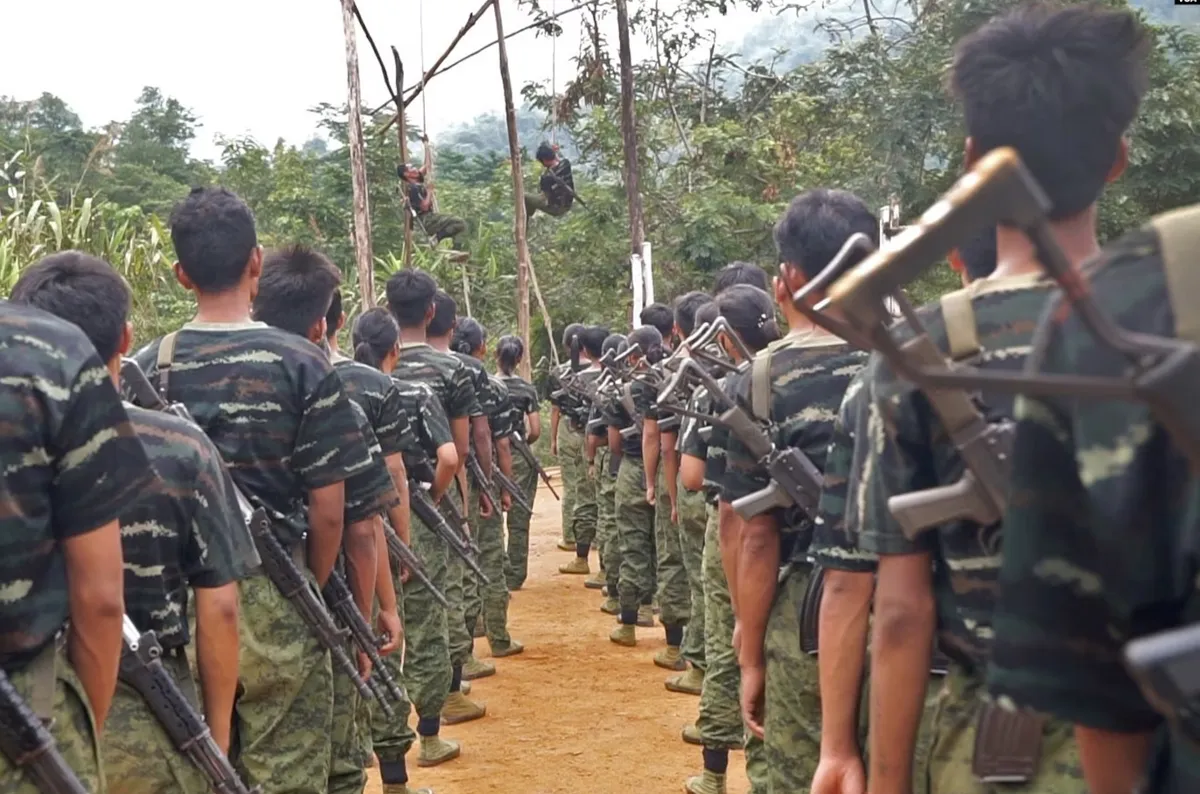
Human rights conditions in Myanmar have reached a new nadir, according to a comprehensive report released by the United Nations human rights office. The report, which covers the period from June 2025 to May 2026, details how relentless conflict, pervasive military violence, and a burgeoning “conflict economy” are inflicting severe hardship on the civilian population. Both the Myanmar military and the Arakan Army, which exerts significant control over Rakhine State, are implicated in widespread and systematic violations targeting Rohingya communities. These abuses include killings, torture, forced recruitment, forced labor, arbitrary detention, and displacement.
Escalating Violence and Civilian Suffering
The report underscores the dire situation for the Rohingya, a community that fled en masse in 2017 and has faced further atrocities since the 2021 military coup that ousted Aung San Suu Kyi. Nine years after the initial exodus, the Rohingya remain subjected to systematic discrimination. The UN notes that the military, led by junta chief Min Aung Hlaing, who engineered an election to assume the presidency, continues to employ tactics such as air strikes, arson, and the restriction of humanitarian aid. These actions are aimed at instilling fear and maintaining control. Since 2021, the conflict has resulted in the deaths of at least 8,075 civilians, including 1,774 women and 1,074 children. The UN cautions that this death toll is likely a significant underestimation.
The Myanmar military has previously stated that its limited airstrikes are conducted against military targets in response to insurgent attacks and actions by groups it designates as terrorists. However, the UN report paints a starkly different picture of the impact on civilians.
Internal Displacement and Food Insecurity
The ongoing conflict has led to a dramatic increase in internal displacement, with the UN reporting that 3.6 million people are now displaced within the country. Compounding this crisis, 12.4 million individuals face acute hunger, and approximately 400,000 mothers and children are suffering from acute malnutrition. These figures highlight a severe humanitarian crisis exacerbated by the protracted conflict and the breakdown of essential services.
Systematic Violations in Rakhine State
In northern Rakhine State, the Arakan Army is accused by the UN of committing serious violations against Rohingya populations. These include arbitrary arrests, torture, sexual violence, forced labor, and land seizures. The report also details how the Arakan Army has obstructed the return of displaced Rohingya while simultaneously resettling non-Rohingya individuals on their confiscated land. Satellite imagery has revealed approximately 2,000 acres of land being seized. Eyewitness accounts describe children as young as six being subjected to forced labor, and former detainees have reported experiencing torture and dying in custody.
The Rise of the “Conflict Economy”
Beyond direct violence, the UN report shines a light on the rapid expansion of illegal rare-earth mining in Kachin and Shan states. A collapsed rule of law in these regions has created fertile ground for illicit industries that are actively financing the ongoing conflict. Satellite imagery indicates a significant surge in mining activities, with 302 new mining sites identified in Kachin since 2021. In Shan State, the number of sites jumped from just 12 before the coup to 85 afterward. The UN estimates that the rare-earth trade reached a peak of approximately $1.4 billion in 2023, with the majority of these resources flowing into China’s market.
Environmental Devastation and Health Impacts
The environmental consequences of this unregulated mining are severe. Toxic runoff from the mining operations has heavily polluted local waterways and agricultural land, contributing to an increase in miscarriages and chronic diseases among the local population. The contamination has also spread to rivers that flow into Thailand, where tests have detected elevated levels of hazardous substances, including arsenic, lead, mercury, and manganese. This environmental degradation further compounds the suffering of communities already grappling with conflict and displacement.
Conclusion
The UN human rights office’s report presents a grim assessment of the situation in Myanmar, highlighting a complex web of conflict, systematic abuses, and a burgeoning illicit economy that preys on vulnerable populations. The findings underscore the urgent need for international attention and action to address the escalating humanitarian crisis and hold perpetrators of violations accountable.
