

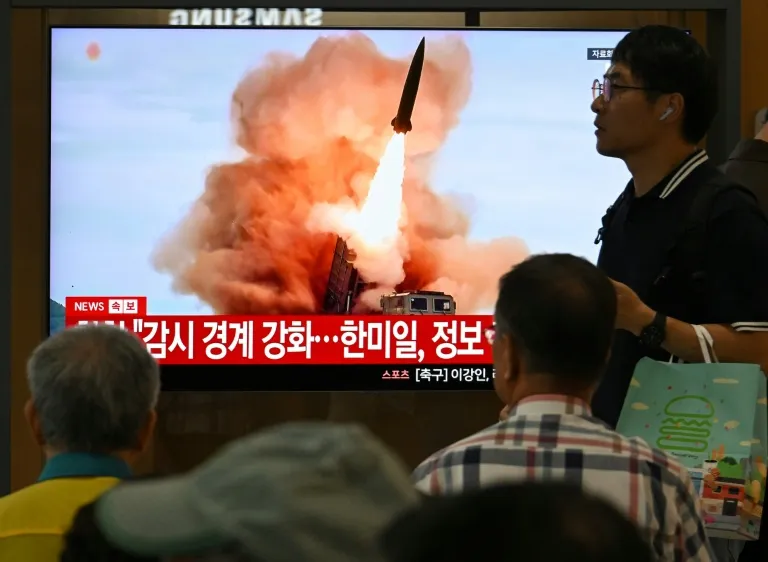
North Korea has solidified its position as a nuclear-armed state, with its leadership asserting that the nation’s atomic arsenal is now permanent and irreversible. This declaration comes as the country has legally enshrined its status, signaling a definitive stance against denuclearization efforts.
North Korea’s Legal Enshrinement of Nuclear Status
Kim Yo Jong, the influential sister of North Korean leader Kim Jong Un, stated that the Democratic People’s Republic of Korea’s (DPRK) status as a nuclear weapons state is “absolute” and cannot be reversed. Her remarks, disseminated by the official Korean Central News Agency (KCNA), emphasized that Pyongyang’s nuclear capabilities are a crucial element in deterring what she described as the “outrageous acts of international rogues.”
This assertion follows North Korea’s legislative action to codify its nuclear status, making it a permanent feature of the nation’s defense policy. The move underscores a significant shift in the geopolitical landscape, particularly concerning denuclearization talks that have historically been a focal point of international diplomacy with Pyongyang.
Dismissal of Denuclearization Prospects
During the General Conference of the International Atomic Energy Agency (IAEA) in Vienna, Kim Yo Jong addressed what she termed the “familiar silly talk” surrounding denuclearization efforts. She unequivocally dismissed the possibility, stating, “If they believe that it is really possible, they will only hear the word of idiots.” This strong condemnation indicates Pyongyang’s firm rejection of any external pressure or negotiation aimed at dismantling its nuclear program.
Kim Yo Jong further elaborated, asserting that regardless of how “hostile forces” might deny it, the reality of the DPRK’s permanently settled nuclear position, both physically and legally, cannot be altered. This declaration highlights North Korea’s commitment to maintaining and developing its nuclear capabilities as a cornerstone of its national security strategy.
Context of US-North Korea Relations
The timing of Kim Yo Jong’s statement is particularly significant, occurring amidst renewed signals from the United States regarding potential dialogue. U.S. President Donald Trump had previously indicated a willingness to engage in further discussions with Kim Jong Un, even suggesting a potential meeting later in the year. These overtures for dialogue have historically been met with a complex response from Pyongyang, often characterized by periods of engagement followed by escalations or firm rejections of core demands.
Estimates of North Korea’s nuclear arsenal vary, with President Trump reportedly stating in August that Pyongyang possessed 57 “very powerful” nuclear weapons. South Korean officials, however, place the figure higher, estimating between 80 and 120 warheads. The expansion of North Korea’s nuclear capabilities has been evident since the breakdown of the 2019 Hanoi summit between President Trump and Kim Jong Un. That summit, intended to advance denuclearization talks, ultimately failed to yield an agreement on sanctions relief in exchange for specific denuclearization steps from North Korea.
South Korea’s Observance
Officials in South Korea’s Unification Ministry acknowledged the significance of Kim Yo Jong’s statement, noting its relevance given the current diplomatic climate. A representative stated that they were closely monitoring the remarks, especially in light of President Trump’s recent expressions of openness to dialogue. This reflects Seoul’s ongoing efforts to navigate the delicate relationship with its northern neighbor and to understand the implications of Pyongyang’s evolving nuclear posture.
North Korea’s Strategic Rationale
Pyongyang has consistently argued that its nuclear weapons program is a necessary deterrent against perceived threats from the United States and its allies. The country views its arsenal as essential for its survival and sovereignty, particularly in the face of international sanctions and diplomatic pressure. The legal enshrinement of its nuclear status serves to reinforce this narrative domestically and internationally, signaling a long-term commitment to its nuclear deterrent.
Conclusion: A Standoff on Denuclearization
Kim Yo Jong’s firm declaration that North Korea’s nuclear status is permanent and irreversible, coupled with her dismissal of denuclearization as a possibility for anyone but “idiots,” paints a stark picture of the current state of affairs. While the U.S. and South Korea continue to signal a desire for dialogue, North Korea’s legislative and rhetorical actions indicate a resolute path toward maintaining its nuclear capabilities. This stance presents a significant challenge for future diplomatic efforts aimed at achieving peace and stability on the Korean Peninsula.
