

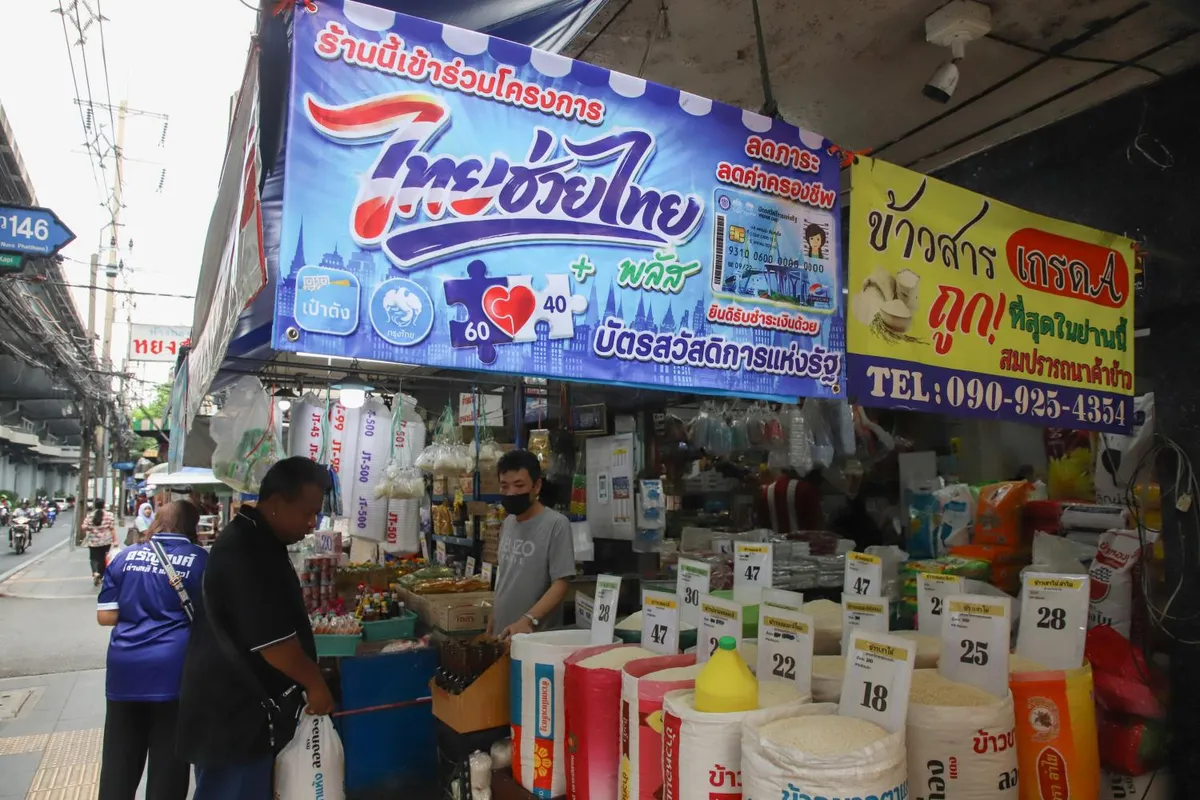
Small businesses in the retail sector are calling for more comprehensive government intervention, urging the implementation of long-term strategies beyond immediate financial aid to bolster their operations. While current co-payment schemes offer some relief, industry representatives highlight a critical need for programs that enhance the skills and formalize the practices of these vital enterprises.
Addressing Operational Challenges
Somchai Pornrattanacharoen, an honorary advisor to the Thai Wholesale and Retail Trade Association, pointed out that current government efforts are largely focused on funding co-payment initiatives. He emphasized that this approach lacks the necessary long-term vision to equip small retailers with the skills needed to thrive. Mr. Pornrattanacharoen advocates for government encouragement of small retailers to formalize their business operations. Proposed initiatives include offering training in fundamental accounting and Value-Added Tax (VAT) registration. To further incentivize participation, he suggests offering grace periods for newly registered businesses.
The challenges confronting small retailers are significant, according to Mr. Pornrattanacharoen. These include substantial gross-profit fees levied by e-commerce platforms, coupled with high rental costs and revenue-sharing agreements for those operating physical stores.
Concerns Over Economic Policy
There are also concerns that government incentives designed to attract foreign investment and large-scale manufacturers could inadvertently lead to the closure of local factories. Such a scenario, Mr. Pornrattanacharoen warned, would have a detrimental impact on smaller businesses and their employees.
A key recommendation from Mr. Pornrattanacharoen is for the government to provide low-rent retail spaces. This would enable small retailers to establish and operate their businesses at a significantly reduced cost, offering a viable alternative to the prohibitive expenses associated with traditional rentals and revenue-sharing models.
Co-Payment Scheme Performance
Regarding the effectiveness of the “Thais Help Thais Plus” co-payment scheme, feedback from a retailer in northeastern Thailand indicates a sales increase, though it fell short of expectations. Milin Veraratanaroj, chairman of Tang Ngee Soon Superstore, a prominent traditional wholesale chain in Udon Thani province, reported a 10% surge in sales between June 1st and 12th compared to a typical period. This figure, however, was below his anticipated 15% growth.
While Tang Ngee Soon Superstore itself is not eligible for the co-payment scheme, its wholesale operations continue to serve smaller, independent shops. Mr. Veraratanaroj observed that the prevailing economic climate appears to be negatively impacting consumer sentiment. Some individuals are prioritizing savings or deferring purchases, leading to a less robust response to the co-payment initiative than initially hoped.
Economic Headwinds Affecting Consumers
“The Thai economy has been struggling for some time. Geopolitical tensions and reports of economic instability are exacerbating the current situation, placing a strain on consumer confidence,” Mr. Veraratanaroj stated. He further noted that escalating energy prices are increasing the daily cost of living, compelling individuals to allocate a larger portion of their income towards energy expenses.
Last week, the Thai Retailers Association formally requested the government to ease the eligibility criteria for the Thais Help Thais Plus co-payment scheme, advocating for its expansion to businesses of all sizes. However, both Mr. Somchai and Mr. Milin have voiced apprehension that extending the program to larger corporations could disadvantage smaller retailers.
