

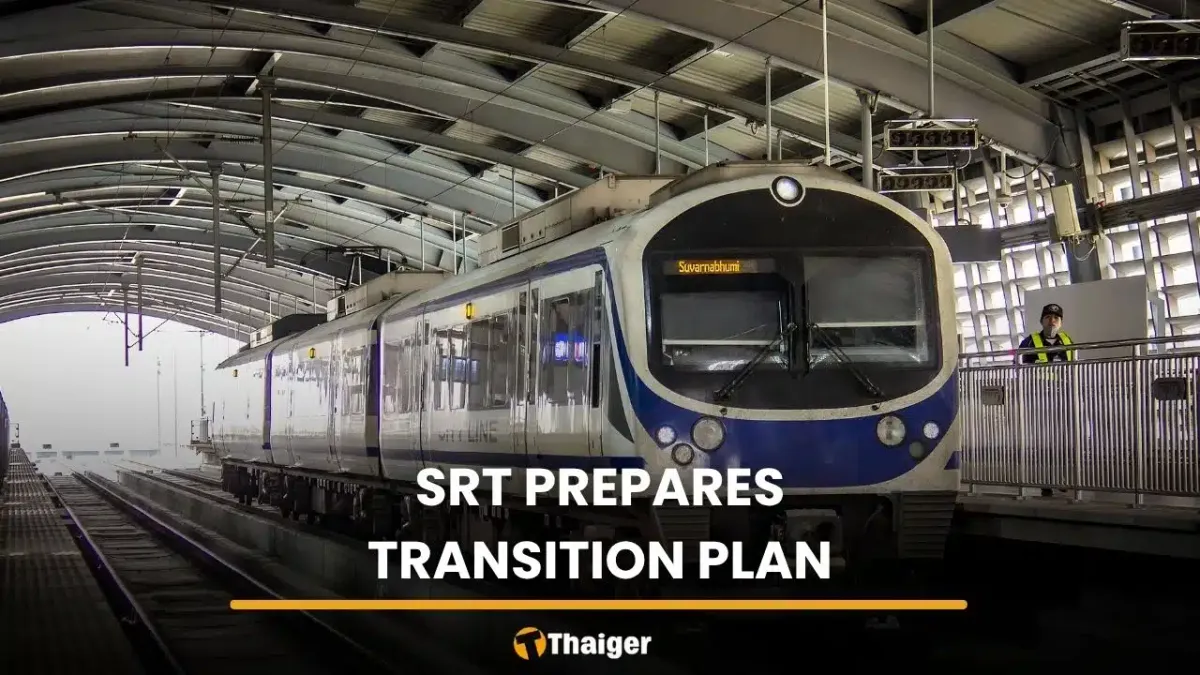
The State Railway of Thailand (SRT) is developing contingency plans to ensure the continuity of the Airport Rail Link’s operations following a notice from the private operator expressing an intent to cease services after September 30. Transport Minister Phiphat Ratchakitprakarn indicated that a temporary extension of operations, potentially lasting two to three months, is being considered to prevent passenger disruption during the transition period.
Airport Rail Link Transition Challenges
The private operator of the Airport Rail Link has formally notified the SRT of its intention to exercise its contractual right to halt services. This move has prompted the SRT to urgently explore options to maintain service without interruption. One primary strategy under consideration involves extending the current operator’s contract for an additional two to three months. This interim period would provide crucial time for the SRT to implement a more permanent solution.
Discussions are underway regarding the potential transfer of the Airport Rail Link’s management to the SRT’s subsidiary, S.R.T. Electrified Train Company Limited (SRTET). If the private operator definitively proceeds with its exit as scheduled, the SRT asserts that SRTET is prepared to assume immediate control of the project’s management. The goal is to ensure a seamless transition, allowing trains to continue running without any downtime for passengers.
SRT Board’s Urgent Deliberations
The SRT board is actively engaged in high-level discussions to determine the most effective path forward. A key proposal being evaluated is the engagement of a third-party private company to assist in managing train operations. This potential outsourcing arrangement is being considered for a duration of six months to one year, though the precise timeframe is still under finalization. The SRT is prioritizing a swift decision to mitigate any potential service gaps.
Background of the Airport Rail Link Project
The Airport Rail Link is a critical component of the broader High-Speed Rail Linking Three Airports Project. This ambitious infrastructure initiative aims to connect Bangkok’s Suvarnabhumi Airport, Don Mueang International Airport, and U-Tapao Rayong Airport with high-speed rail services. The project involves significant private sector participation, with a consortium led by CP Group being a key partner.
The SRT, as the government contracting party for the High-Speed Rail Linking Three Airports Project, has confirmed that it fulfilled its obligations regarding land handover to the private sector. These land transfers were completed ahead of the agreed-upon deadlines, adhering to the contractual stipulations. This demonstrates the SRT’s commitment to facilitating the project’s progress according to the established agreements.
Value for Money and Contractual Agreements
Questions regarding the project’s overall value for money and any potential agreements for its continuation fall under the purview of the Eastern Economic Corridor (EEC) Policy Committee. Minister Phiphat emphasized that the Ministry of Transport would not intervene in decisions made by this committee, respecting its designated authority over such matters. This stance highlights the distinct responsibilities assigned to different governmental bodies involved in the project.
The situation has arisen in the context of attempts by the CP Group-led consortium to renegotiate or terminate its involvement in the three-airport high-speed rail contract. The consortium’s efforts to exit the agreement have led to governmental responses aimed at upholding the contractual obligations.
Government Stance on Contractual Commitments
Prime Minister Anutin Charnvirakul has publicly stated that private operators cannot unilaterally withdraw from such significant agreements. This firm position underscores the government’s expectation that all parties adhere to the terms of the signed contracts. The government’s approach aims to ensure the stability and successful completion of major infrastructure projects, which are vital for national development and economic growth.
Moving Forward: Ensuring Service Continuity
The SRT’s proactive planning for the Airport Rail Link handover reflects a commitment to minimizing disruption for the traveling public. By exploring options such as temporary extensions and the immediate readiness of SRTET, the railway authority is working to safeguard passenger services. The ongoing deliberations by the SRT board are crucial in finalizing a robust plan that ensures the Airport Rail Link continues to operate efficiently, regardless of the outcome of the negotiations with the current private operator.
The situation highlights the complexities inherent in large-scale public-private partnership projects. While the SRT has met its land handover obligations, the operator’s notice introduces a critical juncture requiring careful management and strategic planning. The SRT’s focus remains on a smooth operational transition, potentially involving its subsidiary or a contracted third-party manager, to maintain this vital transportation link.
