

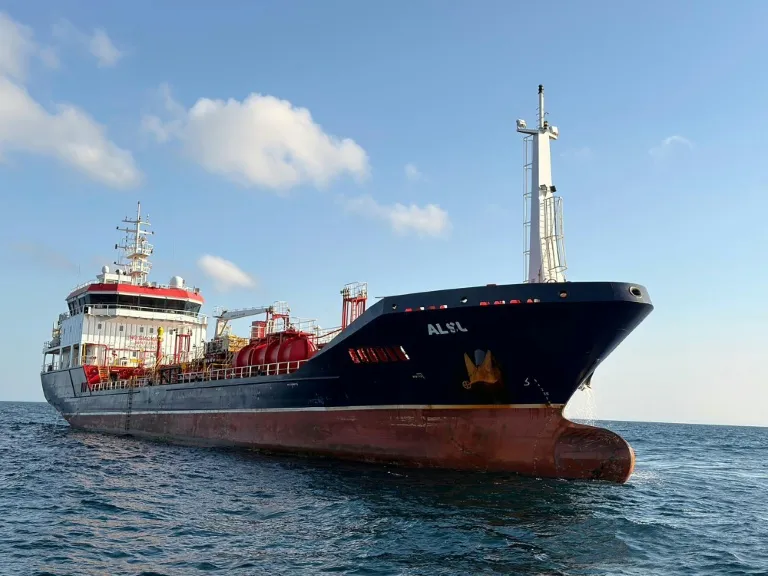
A Turkish cargo ship, the Tugberk Imamoglu, has sunk with all 10 crew members presumed lost after a collision with an oil tanker in the Sea of Marmara, approximately 18 nautical miles off the coast of Istanbul’s Silivri district. The incident occurred before dawn, with the cargo vessel reportedly going down very rapidly after the impact.
Cargo Ship Sinks Rapidly After Collision
The collision involved the Tugberk Imamoglu, a cargo ship carrying rolled steel, and the ALSU, an empty oil tanker. According to the transport ministry’s maritime directorate, the Tugberk Imamoglu did not respond to calls, leading authorities to believe it had sunk. Transport Minister Abdulkadir Uraloglu confirmed the sinking, stating the vessel went down “very quickly.” He noted that the emergency call was received at 3:26 AM, and if the captain’s reported collision time of 3:15 AM is accurate, the ship sank within approximately 11 minutes.
Search and rescue operations were immediately launched, involving 14 vessels and a helicopter. While life buoys and an empty lifeboat belonging to the Tugberk Imamoglu were spotted, no survivors have been found. The 10 individuals on board, including the captain and nine crew members, are all Turkish nationals.
Details of the Vessels and Cargo
The Tugberk Imamoglu, a Turkish-flagged cargo ship built in 1990, is approximately 90 meters (300 feet) long. At the time of the collision, it was carrying 4,200 tons of rolled sheet metal and rebar. The ALSU, the oil tanker involved, was reportedly empty at the time of the incident, a detail confirmed by the governorate after an initial report suggested it was carrying motor oil.
Search and Rescue Efforts Underway
The maritime directorate reported that the sunken cargo ship lies in waters about 900 meters deep. The ALSU, which sustained no damage from the collision, is also assisting in the search and rescue efforts. The depth of the water presents significant challenges for locating the vessel and its crew.
Potential Causes of the Collision
While the exact cause of the collision remains under investigation, maritime experts suggest human error is a likely factor. Sabri Gokhan, a maritime engineer, commented to private broadcaster NTV that the Sea of Marmara is a heavily trafficked and monitored area, often described as a “maritime highway.” He emphasized that ships do not typically sink easily in these waters, implying a crew mistake was probable.
The Sea of Marmara, situated between the Black Sea and the Aegean Sea, is a critical shipping route. Its busy nature requires constant vigilance from all vessels navigating its waters. The proximity of the collision to Istanbul, a major port city, highlights the importance of maritime safety in the region.
Context of Recent Maritime Incidents
This tragic incident follows closely on the heels of another maritime disaster. Just three days prior, a deadly ferry accident off the coast of Northern Cyprus resulted in the deaths of eight Turkish nationals, with a further 20 people still missing and presumed lost. Rescuers continue to search for those unaccounted for in that incident.
Historically, the Sea of Marmara has seen its share of maritime accidents. A notable fatal shipwreck occurred in September 2018 when a ferry traveling from Bandirma sank, leading to one death and four missing individuals. These past events underscore the inherent risks associated with sea travel and cargo transport in busy waterways.
Conclusion
The sinking of the Tugberk Imamoglu is a somber reminder of the dangers faced by seafarers. With 10 individuals still missing, the focus remains on the ongoing search and rescue operations. The investigation into the cause of the collision will likely examine navigational procedures, communication protocols, and potential human error in this critical maritime corridor. The maritime community awaits further updates as efforts to find survivors and recover the vessel continue.
