

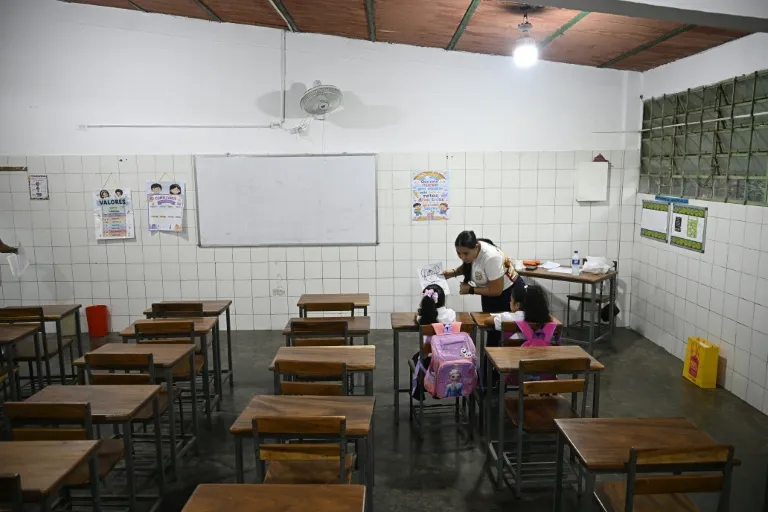
Schools in Venezuela’s coastal city of La Guaira have begun the new academic year with significantly lower student attendance following devastating earthquakes on June 24. The twin quakes, measuring magnitude 7.2 and 7.5, struck the region approximately 40 kilometers from the capital, Caracas, causing widespread destruction and claiming over 6,500 lives. The disaster, considered the worst in the Caribbean country in decades, reduced hundreds of buildings to rubble and left thousands homeless.
Impact on Educational Infrastructure
The earthquakes inflicted substantial damage on the region’s educational facilities. Dozens of schools were rendered unusable due to structural compromise. Compounding the challenge, an additional 60 schools were repurposed as temporary shelters to house the large number of residents displaced by the seismic events. This diversion of school buildings meant that even those with minimal damage could not immediately resume classes.
Low Turnout for New School Year
As the academic year commenced, many schools in La Guaira, a city known for its popular resort, found their classrooms sparsely populated. The John Paul II Diocesan Educational Unit, one of the few institutions able to open its doors, reported an enrollment of just over 300 students for the new term. However, the school has the capacity to accommodate more than double that number. On a recent Tuesday, only seven children were present for classes, illustrating the profound impact of the disaster on community confidence and the willingness of families to return to normal routines.
Parental Concerns and School Reassurance
The low attendance reflects deep-seated parental fears regarding the safety of school buildings and the possibility of aftershocks. Many parents are hesitant to send their children back to classrooms, prioritizing their perceived safety over the resumption of education. Amni Nunez, a 40-year-old industrial engineer, expressed a contrasting viewpoint, sending his two young children back to school. He believes it is crucial for them to understand that life must continue and that adapting to a new reality is essential. “We have to learn to live with this new reality,” Nunez stated, emphasizing the need for resilience.
School officials are working to address these anxieties. Marco Antonio Espinoza, the principal of John Paul II Diocesan Educational Unit, acknowledged the pervasive fear, especially given the hundreds of aftershocks that have continued to rattle the region since the initial earthquakes. “It is normal to be afraid,” Espinoza commented, but he also noted the remarkable resilience and determination of survivors to resume their lives and daily activities. He assured the community that the return to classes is being managed with a primary focus on the emotional well-being of both students and staff, aiming for a gradual and secure reintegration.
Addressing Structural Safety
Teachers are on the front lines of addressing these concerns. Yanet Dominguez, a fifth-grade teacher at the school, reported being frequently approached by parents seeking detailed information about the structural integrity of the school building. She has been reassuring them, stating, “Improvements have been made to the building this year, and that they shouldn’t be afraid to send their children.” These assurances, coupled with visible safety measures, are part of the ongoing effort to rebuild trust and encourage a return to educational normalcy.
The Path Forward: Resilience and Recovery
The reopening of schools in La Guaira amid such challenging circumstances highlights the complex process of recovery following a major natural disaster. The low student turnout is a stark reminder of the psychological toll the earthquakes have taken on the community. However, the efforts by school administrators and teachers to provide a safe and supportive environment, alongside the determination of some parents to instill a sense of normalcy, point towards a gradual path to recovery. The focus remains on rebuilding not just structures, but also the confidence and emotional resilience of the community, allowing education to once again become a cornerstone of daily life in the quake-affected region.
