

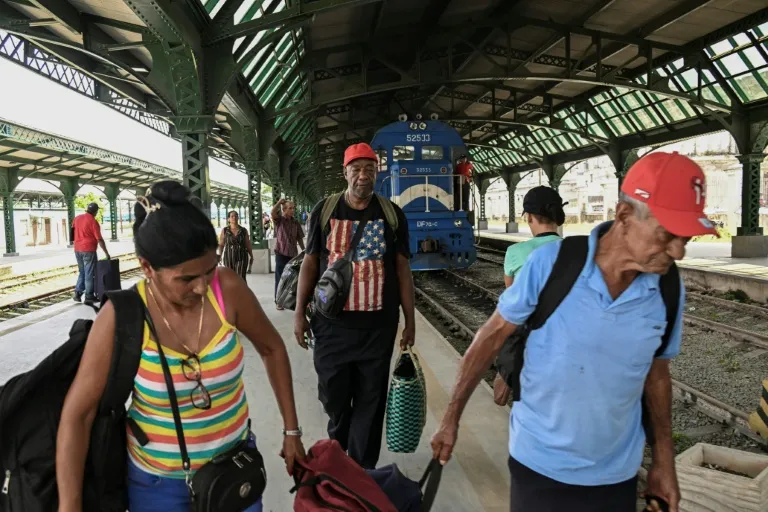
Cuba is implementing drastic restrictions on its public transportation network, a move that significantly impacts daily life for its citizens. The island nation has been grappling with severe fuel shortages since January, following a decision by the United States to cut off fuel imports as part of a broader economic pressure campaign.
Nationwide Transport Grinds to a Halt
The already strained transport system, already reeling from the country’s worst economic crisis in recent memory, has come to a near standstill as petrol stations face dwindling supplies. Effective Thursday, long-distance train services from the capital, Havana, to eastern cities will be reduced to a frequency of once every 16 days, a stark contrast to the previous schedule of approximately three times per week.
Similarly, public buses, which historically operated at least daily to provincial cities, will now run only one to three times each week. Deputy Transport Minister Luis Ladron de Guevara has stated that while no special permits are required for travel, a “priority system” will be in place. Passengers will need to apply for passage seven days in advance.
Impact on Citizens’ Lives
These stringent measures affect the state-run transportation services, which the majority of Cubans rely on. While a limited number of private taxis and buses operate between cities, their fares are prohibitively high, sometimes reaching up to 200 times the cost of state-provided alternatives.
Outside a state-run bus office in Havana, 51-year-old Madelaine Montero expressed her concern. She was attempting to secure a ticket to take her 80-year-old father, who has cancer, back to his home in Granma, located approximately 750 kilometers to the east. “He needs to be home 20 days before his next check-up to undergo tests, otherwise he can’t receive treatment,” she explained.
Nearby, Jose Manuel Garcia, 60, who is partially blind and receiving treatment for retinal detachment, was also seeking passage to his home city of Santiago de Cuba. He voiced fears that he might have to suspend his treatment, which is only available in Havana, if travel becomes too arduous.
Urban Mobility Severely Limited
Within Havana itself, municipal buses have become a rarity. This forces many residents to walk to work and school, often in temperatures nearing 40 degrees Celsius. The black market price for fuel has surged to around $8 per liter, making even short taxi journeys an unaffordable expense for many, consuming a significant portion of a civil servant’s salary.
“With prices so high … people are staying home,” commented Julio Cesar Padron, a 30-year-old driver who has converted a Chevrolet truck into a 40-seat bus. On Wednesday, dozens of individuals were observed along the highway leading east out of the capital, attempting to flag down passing vehicles.
Alexi Martinez, a 56-year-old public health worker, shared that she spends nearly her entire salary on truck tickets to visit her elderly diabetic mother in Havana. As an only child, she feels she has no other choice but to make the journey.
Cuba has indicated its resolve to withstand external pressure while simultaneously announcing reforms aimed at attracting investment and counteracting the outflow of foreign capital.
