

An astronomer, recognized with a prestigious Kavli Prize often likened to the Nobel Prize in astrophysics, is pioneering the field of galactic archaeology. This discipline seeks to reconstruct the tumultuous history of our Milky Way galaxy by examining stars as historical records, akin to uncovering “cosmic fossils.” Her groundbreaking work has revealed that the Milky Way’s formation was a far more violent process than previously understood, involving significant galactic collisions.
Galactic Archaeology: Stars as Cosmic Fossils
The astronomer, a 55-year-old expert originally from Argentina, explained that by analyzing the chemical composition of stars, scientists can glean information about their origins and the environments in which they formed. “We can measure, for example, the amount of chemicals in the stars,” she stated in an interview. “This works as a kind of DNA of a star in the sense that they preserve information of where they were born and in which environment.” This approach moves beyond the traditional image of astronomers peering through telescopes, focusing instead on the analysis of vast datasets containing information on billions of stars.
The Gaia Mission: A Turning Point
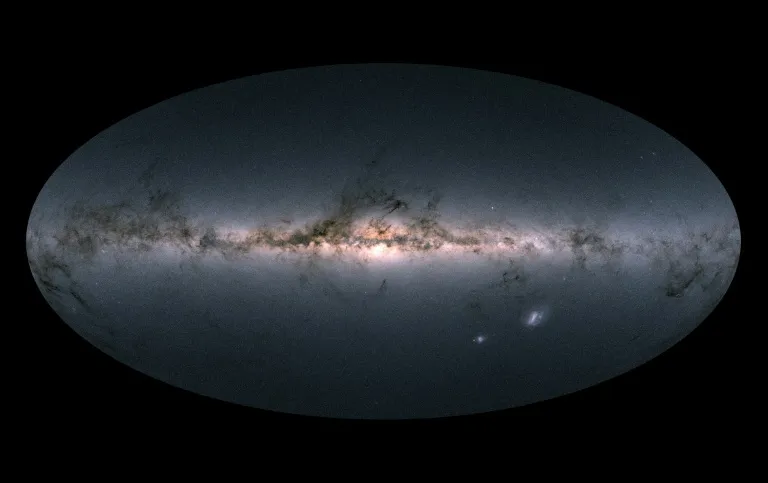
A pivotal moment in this research came with the European Space Agency’s Gaia mission. This ambitious project aimed to create a precise three-dimensional map of the Milky Way, cataloging the positions, movements, and properties of an unprecedented number of stars. The astronomer herself contributed to this mission. “That measured the motions of about one and a half billion stars over a much larger volume than before,” she noted. “It wasn’t just the huge number of objects, but also how accurately we could measure the motions, how precisely.” The sheer volume and accuracy of the data provided by Gaia were instrumental in allowing researchers to reconstruct the galaxy’s history.
Unveiling the Milky Way’s Violent Origins
Utilizing the data from the Gaia mission, the astronomer and her team were able to piece together a dramatic narrative of the Milky Way’s formation. Their research indicates that approximately 10 billion years ago, a significant collision occurred between a smaller dwarf galaxy, identified as Gaia-Enceladus, and the nascent Milky Way. This cataclysmic event led to the merger of the two galaxies. The stars that now form a halo surrounding our galaxy are believed to be remnants of this ancient merger.
Furthermore, the cosmic collision triggered the formation of new stars and contributed to the “puffed up” disk structure that characterizes the Milky Way today. This discovery challenged the long-held view that the Milky Way grew gradually and smoothly over time. Instead, it provided compelling evidence that our galaxy was assembled through a series of violent mergers with other galaxies.
Recognition and Future Endeavors
This significant contribution to understanding galactic evolution earned the astronomer a share of the Kavli Prize in Astrophysics. She shares the award with Vasily Belokurov of the University of Cambridge and Rodrigo Ibata of the University of Strasbourg. The trio was recognized for “uncovering the fossil evidence of past mergers proving that the Milky Way galaxy was built through hierarchical accretion.” The prize includes a $1 million fund, a medal, and a citation, with the award ceremony scheduled for September in Oslo, organized by the Norwegian Academy of Science and Letters.
Upon learning of the award, the astronomer expressed being “totally speechless.” She described the Kavli Prize as “the biggest there is” and found the recognition “absolutely unbelievable.” She also highlighted the award as a significant acknowledgment for the field of galactic archaeology, which, though relatively young, has experienced substantial growth in recent years.
Looking Ahead: The Galaxy’s Future
Looking forward, the astronomer is eager to delve into further data from the Gaia mission and explore innovative methods for modeling the immense datasets. Reflecting on the Milky Way’s turbulent past, she offered a perspective on its future. “Nothing much has happened” since the major merger events, she observed. “So you could say it’s been a wild youth and now a quiet, restful adulthood.” This suggests that the galaxy has entered a more stable phase after its formative, collision-dominated era.
The work of this astronomer and her colleagues is fundamentally reshaping our understanding of how galaxies form and evolve, providing a vivid picture of the Milky Way’s deep history and its place in the cosmos.
