

City’s Future Hinges on Strong Leadership and Policy Reform
Residents and community leaders are urging the next governor of Bangkok to implement decisive policies addressing critical issues ranging from street vending and air pollution to corruption and public transport. A growing chorus of voices emphasizes the need for tangible action to improve the quality of life for all city dwellers.
Stricter Management of Sidewalks and Street Vendors
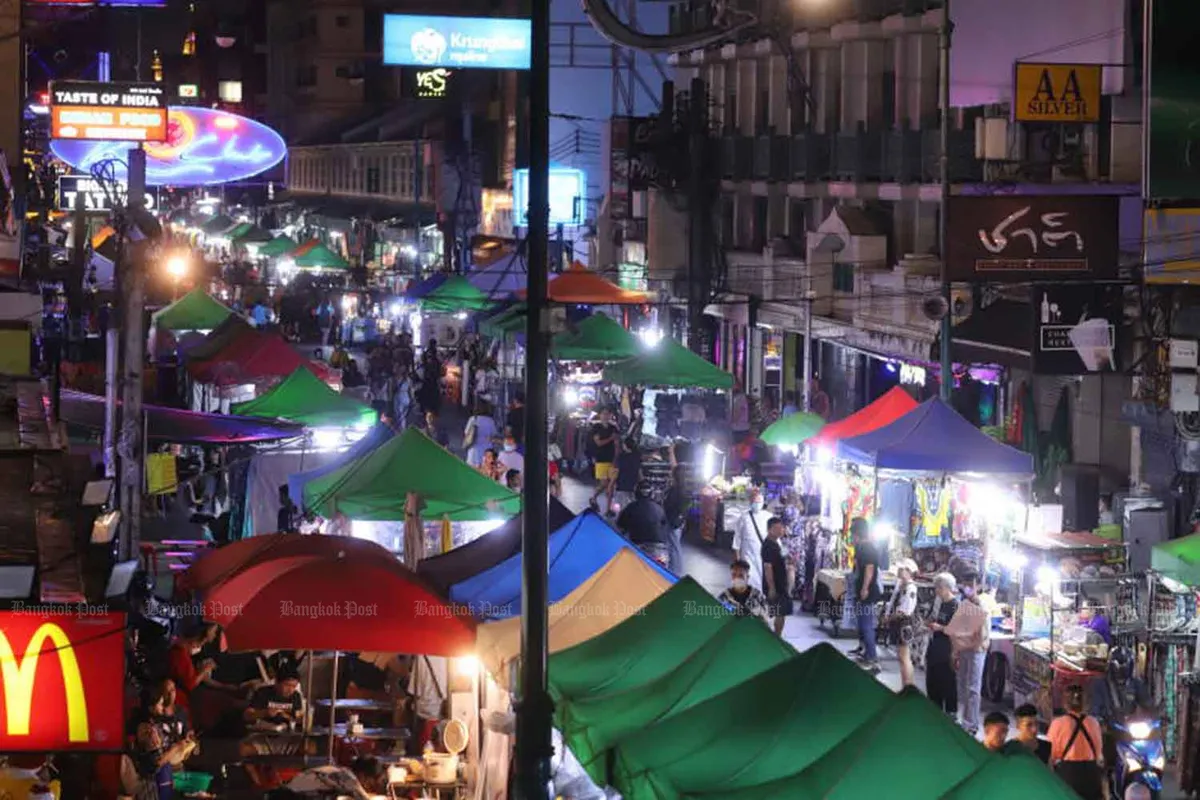
Sanga Ruangwattanakul, president of the Khao San Road Business Association, highlighted the urgent need for more rigorous management of sidewalks, particularly in business and tourism hubs. He called for a transparent registration system for street vendors, ensuring that permits are held by genuine operators rather than those who sublease them for profit. “Authorities should stop relying on fines that do not solve the problem at its root,” Mr. Ruangwattanakul stated. He proposed that prime vending locations in popular tourist areas should be reserved for low-income individuals who truly depend on the income, not for those seeking to profit from subletting.
Effective regulation, he believes, would not only enhance cleanliness in tourist zones but also generate additional revenue for the city, which could then be reinvested in tourism development and essential public services.
Tackling Air Pollution and Environmental Concerns
Air quality emerged as another pressing concern. Mr. Ruangwattanakul urged the incoming governor to adopt a more aggressive stance against PM2.5 pollution, asserting that Bangkok can achieve cleaner air through stringent enforcement of environmental regulations. “If people are encouraged to exercise in parks but still have to breathe polluted air, then those campaigns lose their meaning,” he commented.
Environmental advocate and actor Alexander Rendell echoed these sentiments, classifying pollution and waste management as public health crises rather than solely environmental issues. “Clean air is a basic right,” Mr. Rendell emphasized. He pointed out that while some can mitigate exposure by staying indoors, many are forced to spend their days exposed to harmful pollutants, making this a top priority for the city.
Mr. Rendell also stressed the need for a governor committed to confronting difficult challenges and improving residents’ well-being over political expediency. He identified corruption, education, and environmental sustainability as three fundamental priorities for Bangkok’s future. Corruption, he noted, erodes public trust and hinders government project effectiveness, while education is crucial for future generations. Greener public spaces and safer outdoor environments, he added, would foster healthier lifestyles and stronger community bonds.
Addressing Systemic Weaknesses and Governance
Sompong Patpui, secretary-general of the Grassroots Development Foundation, observed that many past governors have started with good intentions but faced challenges in delivering results due to systemic administrative weaknesses. “The governor cannot do everything alone,” Mr. Patpui explained. “There must be a capable team to follow through on policies and ensure they reach the implementation stage. Otherwise, instructions disappear once they enter the bureaucracy.” He highlighted the absence of effective monitoring and accountability mechanisms as a reason why many well-intentioned policies fail to yield concrete outcomes.
Structural solutions are required for several of Bangkok’s persistent problems, including city planning, public participation, and governance. Mr. Patpui acknowledged that urban planning often involves conflicting interests, making reform difficult, yet poor planning impacts everything from transportation and housing to environmental management. He stressed the importance of meaningful public participation in decision-making and called for greater transparency in governance, citing ongoing complaints about procurement processes leading to costly, low-quality projects.
Easing Economic Pressures on Urban Poor and Improving Public Transport
Consumer rights advocate Narumol Mekborisut, deputy director of consumer protection at the Foundation for Consumers, drew attention to the increasing economic hardships faced by Bangkok’s urban poor. She noted that many low-income individuals, particularly the elderly, are falling into informal debt due to escalating costs of living, including food, transportation, and housing.
Ms. Mekborisut also criticized the state of public transportation, citing reduced routes and insufficient bus services that have driven up commuting costs for many residents. She described how some are compelled to make multiple transfers or resort to taxis for medical appointments. She urged the next governor to collaborate with relevant agencies to enhance transport links within neighborhoods, especially in smaller roads and residential areas where convenient access to public transport is often lacking.
