

Governor Chadchart’s Re-election Bid Tested by ‘Agong System’ Allegations
Recent polling indicates a strong public mandate for Bangkok Governor Chadchart Sittipunt, with a survey by the National Institute of Development Administration showing him with 67.3% support, suggesting a clear path to repeating his 2022 landslide victory. However, the upcoming election is increasingly becoming a critical assessment of the very quality that propelled him to office: public trust.
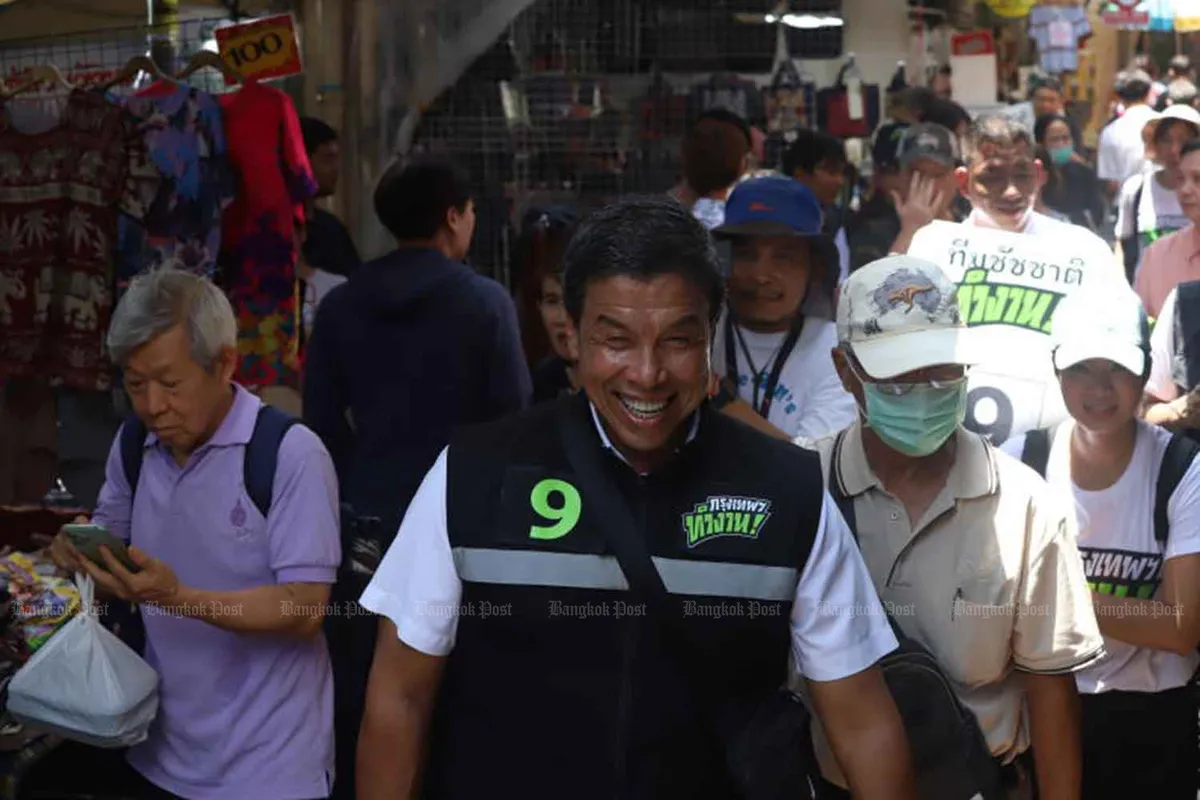
Governor Chadchart’s campaign for a second term, operating under the slogan “Bangkok Works,” largely builds upon initiatives implemented during his first four years. His platform encompasses 251 proposals focused on quality of life, economic opportunities, urban livability, and administrative efficiency.
Key Campaign Priorities
Healthcare remains a central focus, with pledges to expand Bangkok Metropolitan Administration (BMA) hospitals to serve an additional 1.3 million residents. The governor’s urban agenda also includes increased investment in pedestrian infrastructure, cycling networks, flood management systems, and environmental protection measures.
A significant policy objective is the passage of the proposed BMA Act 2025. Governor Chadchart asserts this legislation will modernize Bangkok’s governance structure and grant City Hall greater autonomy over matters currently managed by external agencies.
His campaign strategy reflects a long-standing belief that city governance should prioritize addressing everyday resident concerns over an exclusive focus on large-scale infrastructure projects. Critics have often characterized these initiatives as “capillary policies” or minor interventions rather than transformative solutions.
Governor Chadchart strongly refutes this characterization. “People say we only work on capillary projects. I disagree,” he stated during a recent campaign event. He frequently points to the Traffy Fondue complaint platform as an example of how incremental reforms can yield significant positive change. He reports that over one million complaints have been processed through the system, with approximately 70% of flooding-related issues resolved.
“These small-scale projects are powerful,” he explained. “They change systems and can be more significant than many megaprojects.”
‘Agong System’ Controversy Emerges
Despite the focus on policy, recent discussions have been dominated by allegations concerning what critics have termed the “Agong system.” This controversy surfaced following claims by former Pheu Thai MP Jirayu Houngsub and Economic Party leader Chris Potranandana. They allege that influential individuals operating outside formal channels exerted undue influence over the appointments and transfers of 17 senior BMA officials.
The issue gained further traction when the politicians submitted a petition to the National Anti-Corruption Commission (NACC) on Thursday, requesting an investigation into the matter.
Mr. Jirayu alleged that individuals not part of the official administrative structure played a substantial role in promotions and personnel movements. Mr. Chris claimed to possess evidence detailing the transfers of 16 district directors and one inspector during Governor Chadchart’s tenure. He further alleged that some assistant district directors were informed that promotions required payments of up to 4 million baht and meetings at a “safehouse.””
No evidence substantiating these allegations has yet been formally examined. Nevertheless, the accusations carry significant political weight, directly challenging Governor Chadchart’s image as an independent reformer operating outside traditional patronage networks.
Former deputy governor Tavida Kamolvej has dismissed the allegations, asserting that personnel decisions adhered to established procedures. She also downplayed suggestions that references to “Agong” indicated an informal power structure, describing the term as simply a nickname for a respected senior advisor.
Governor Chadchart himself has welcomed scrutiny. “Good. I have no problem with investigations,” he said. He characterized the public discourse surrounding the issue as lacking “substance and no real evidence” and urged a greater focus on policies directly impacting residents.
Defending Against Corruption Allegations
Simultaneously, Governor Chadchart has been compelled to address allegations of corruption related to the procurement of exercise equipment. Critics questioned the disciplinary actions taken after investigations involving 32 officials led to 20 being cleared and 12 receiving penalties perceived by opponents as insufficient. The controversy was amplified by reports suggesting some officials faced salary reductions of only a few hundred baht despite allegations of overpriced procurement.
Governor Chadchart maintains that the case is ongoing. “This case is not finished,” he stated during a recent press conference. He confirmed that City Hall established investigative committees, referred the case to anti-corruption agencies, and supported disciplinary proceedings for senior officials.
“Corruption is something I detest,” he declared. “Anyone seeking personal benefit is unacceptable to me.”
Supporters highlight a broader record of disciplinary enforcement. Ms. Tavida noted that 41 officials were dismissed during the administration following complaints and investigations, emphasizing that misconduct cases were actively pursued.
Trust as the Campaign’s Core Challenge
Politically, the impact of these controversies may hinge more on public perception than on the definitive proof of allegations. The primary risk to Governor Chadchart’s campaign is not necessarily that the allegations will be substantiated before polling day, as investigations by oversight bodies are likely to extend well beyond the election.
The critical challenge lies in whether these accusations succeed in eroding the public trust that formed the bedrock of his political success. Current polling suggests that confidence remains largely intact, with Governor Chadchart maintaining a substantial lead and no significant challengers emerging. Many voters continue to view his administration favorably.
As election day on June 28 approaches, the central question shifts from the tangible improvements in Bangkok’s infrastructure and services to voters’ belief in the transparency and accountability that were instrumental in Governor Chadchart’s rise to power. The election will ultimately determine if these foundational principles have endured during his term at City Hall.
