

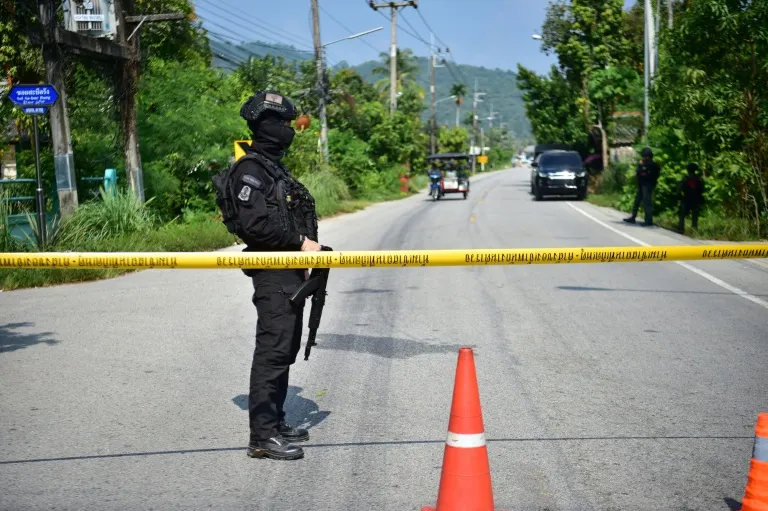
Dozens of coordinated night-time attacks across Thailand’s three southernmost provinces, areas bordering Malaysia, have injured three people and resulted in significant damage to government buildings and vehicles over the past weekend. The latest incident on Monday involved an explosion at a convenience store, marking a continuation of incendiary attacks within the long-standing conflict in the region.
Roots of the Southern Thailand Insurgency
The current unrest is deeply rooted in historical grievances. The region, historically part of the Malay-Muslim Patani sultanate, was annexed by Siam (now Thailand) in the early 1900s following an agreement with colonial power Britain. Over decades, concerns over cultural identity, political representation, and economic development within the predominantly Buddhist-majority nation have steadily grown among the local Malay-Muslim population.
By the 1960s, militant groups, most notably the Barisan Revolusi Nasional (BRN), emerged, advocating for an independent Islamic nation. The current phase of the insurgency is widely considered to have begun in January 2004, when militants attacked an army base in Narathiwat province, resulting in the deaths of soldiers and the theft of weapons. A pivotal and tragic event occurred in October of the same year when security forces opened fire on protesters outside a police station in Tak Bai, Narathiwat, killing seven people. Shortly thereafter, 78 individuals died from suffocation after being arrested and transported in overcrowded military trucks. This crackdown, often referred to as the “Tak Bai massacre,” is frequently cited as a major catalyst for the modern southern unrest.
The “Tak Bai massacre” became a symbol of state impunity in the Muslim-majority south. Its impact was further underscored when murder charges against seven officials involved were dismissed two decades later due to the expiration of the statute of limitations. Since 2004, the conflict has claimed approximately 7,000 lives, according to data compiled by the monitor Deep South Watch.
Recent Escalation and Expert Analysis
The recent spate of attacks indicates a concerning escalation. In July of this year, five soldiers were killed in a combined shooting and bomb attack at a checkpoint, with six civilians also sustaining injuries. In response to these events, the government stated that a “terrorist network is seeking to instil fear among the public and target state officials.”
Kannavee Suebsang, a former Thai MP and human rights advocate, observed “an increase in the coordination and visibility of the attacks this year.” However, Matthew Wheeler, a senior analyst for Southeast Asia at the International Crisis Group, offered a more measured perspective, describing the situation as “business as usual.” He noted that while the scale of last Saturday’s attacks drew significant media attention, such incidents have been occurring with considerable frequency for over two decades.
Statistics from the Uppsala Conflict Data Program reveal that dozens of lives have been lost annually on average in the strife. Fatalities peaked between 2005 and 2007, exceeding 200 deaths per year. Wheeler emphasized that the recent attacks are “remarkable only in their scale,” which garnered wider notice, but that “these kinds of attacks have taken place weekly, if not daily, for more than two decades.”
Objectives Behind the Attacks
While the perpetrators have not officially claimed responsibility for the latest attacks, experts suggest they serve multiple purposes. Wheeler posits that these actions are a demonstration of the militants’ capabilities and their continued presence, despite a substantial deployment of state security forces. Munira Mustaffa, a Malaysia-based expert on counterterrorism and extremism, views the attacks as “frustrated signalling” by insurgents, aimed at compelling the government to re-engage in peace talks.
Thailand initiated peace talks with the BRN in 2013, with Malaysia acting as mediator. Although the most recent round of discussions took place in December, negotiations have been repeatedly stalled. Thanat Suwannanon, Thailand’s chief negotiator and Director of the National Intelligence Agency, indicated that the current attacks might be an attempt by the insurgents to gain leverage in the upcoming round of discussions. He also suggested that the militants are testing the readiness of security forces, focusing on symbolic targets like the burning of government buildings and vehicles.
Path Forward: Security vs. Political Solutions
In response to the heightened violence, the Thai government has reinforced its military presence in the southern provinces. Malaysia has also bolstered security along its shared border. Kannavee Suebsang criticized this approach, stating that the administration is “using the security apparatus to solve the problem,” but argued that “this is a political problem.”
Security analyst Don Pathan explained that the BRN is seeking self-governance and a power-sharing agreement with Bangkok. However, the Thai government has thus far offered only a position within a southern development agency. Kannavee stressed the importance of including local stakeholders, such as landowners and community representatives, in the peace dialogue to ensure its effectiveness and foster a sustainable resolution.
Negotiator Thanat Suwannanon confirmed that peace talks were anticipated to resume in late October. An earlier session scheduled for September had been postponed following the recent deaths of soldiers. The ongoing cycle of violence and stalled negotiations highlights the complex and deeply entrenched nature of the southern Thailand insurgency, underscoring the need for a comprehensive approach that addresses both security concerns and underlying political grievances.
