

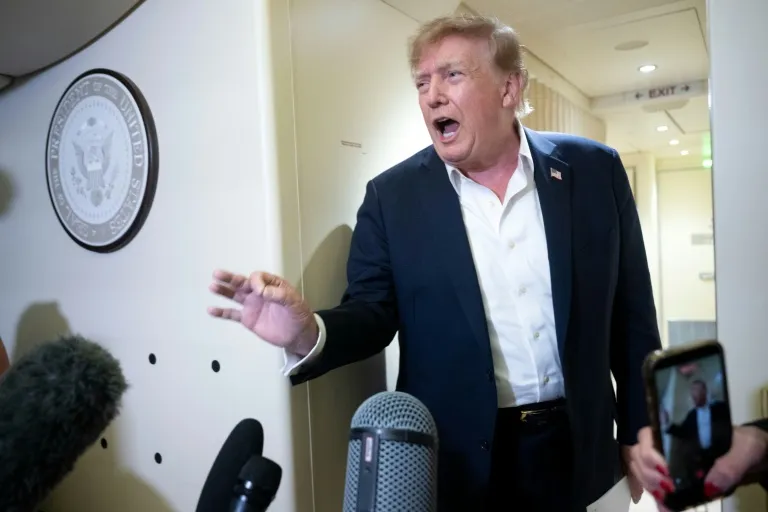
The Supreme Court has temporarily blocked an executive order by former President Donald Trump that aimed to restrict mail-in voting, a decision Trump publicly decried as “horrible” and “highly political.” The ruling, which came just months before the November midterm elections, found that state and local election officials would not have adequate time to implement the proposed changes before the upcoming votes.
Trump, who signed the executive order in March, had asserted without providing evidence that mail-in voting systems are susceptible to fraud. This claim has been widely disputed by election security experts and has been contradicted by the widespread use of mail-in ballots in numerous countries and by politicians across the political spectrum in the United States.
The legal challenges to Trump’s order centered on the constitutional division of powers regarding election administration. States, particularly those led by Democratic administrations, argued that the U.S. Constitution grants states, not the federal government, the primary authority to manage their own elections. This principle underpins the decentralized nature of election oversight in the United States.
Supreme Court’s Decision and Rationale
The Supreme Court’s majority opinion, with Justice Brett Kavanaugh writing a concurring opinion, acknowledged that while Trump’s proposed restrictions might be legally permissible in principle, the practical timeline made their implementation unfeasible for the imminent elections. The court emphasized the need for sufficient notice and preparation time for election officials to adopt new voting procedures.
Only two of the nine justices dissented from the majority decision. This indicates a broad consensus among the court regarding the logistical challenges and the established roles of state election authorities.
Trump’s Reaction and Claims
Following the ruling, Trump expressed strong disapproval on his social media platform, Truth Social. He suggested that some justices were intimidated by “crazed and depraved Democrats” and lacked the “courage necessary to save our America.” He characterized the mail-in voting system as a “laughing stock all over the World” and a “Nation Destroying SCAM,” despite evidence to the contrary.
It is noteworthy that more than 30 countries globally permit their citizens to cast ballots by mail. Furthermore, Trump himself has utilized mail-in voting, including for a primary election in Florida shortly before his public statements against the practice.
Trump contended that the court’s decision was a significant setback for Republicans and the nation, asserting it would make it easier for “cheating by the Radical Left ‘Dumocrats,’ on Mail-In Ballots.” He lamented that the Supreme Court had “really let our Country down!”
Context of Mail-In Voting and Election Integrity
The debate over mail-in voting has intensified in recent years, particularly as states have expanded options for absentee ballots. Election security experts generally agree that mail-in voting, when properly administered with robust security measures, is a secure and reliable method of casting a ballot. Concerns about widespread fraud have not been substantiated by empirical evidence from states with extensive mail-in voting systems.
The executive order and subsequent legal battles occurred amidst a broader political landscape marked by disputes over issues such as partisan redistricting. These conflicts carry significant weight as the nation approaches the November elections, where control of Congress is at stake.
The Role of Mail-In Ballots in Elections
Mail-in voting, also known as absentee voting, allows registered voters to receive a ballot by mail, complete it, and return it to election officials either by mail or in person. This method offers convenience and accessibility, particularly for individuals who may have difficulty visiting polling places on Election Day due to work, illness, disability, or travel.
To ensure the integrity of mail-in voting, states typically implement various safeguards. These can include:
- Voter Registration Verification: Ensuring that only eligible registered voters receive ballots.
- Signature Verification: Comparing the signature on the returned ballot envelope with the voter’s signature on file.
- Ballot Tracking: Systems that allow voters to track the status of their ballot from mailing to counting.
- Secure Drop Boxes: Designated secure locations for voters to return their ballots in person.
- Audits and Recounts: Procedures for post-election audits and recounts to verify results.
Despite these measures, concerns about potential vulnerabilities persist, often amplified during contentious election cycles. The legal and political discourse surrounding mail-in voting reflects ongoing efforts to balance accessibility with security.
Political Stakes and November Elections
The Supreme Court’s ruling on Trump’s executive order adds another layer to the already high-stakes political environment leading up to the November elections. Republicans currently hold slim majorities in both the House of Representatives and the Senate. However, polls and analyses at the time suggested Democrats had a favorable outlook, particularly for the House, with potential to gain control of the Senate as well.
Factors influencing voter sentiment included the former president’s approval ratings, which remained weak, and widespread public concern over economic issues, such as the rising cost of living, and ongoing foreign policy challenges, including the war in Iran.
The accessibility and security of voting methods, including mail-in ballots, are often central themes in election campaigns. The court’s decision ensures that the existing framework for mail-in voting will largely remain in place for the upcoming elections, impacting how millions of Americans will cast their votes.
Conclusion
The Supreme Court’s decision to temporarily block former President Trump’s restrictions on mail-in voting underscores the complex legal and logistical considerations surrounding election administration. While the former president voiced strong objections, the court prioritized the practical ability of election officials to conduct the upcoming midterms smoothly. This ruling maintains the status quo for mail-in voting, a method used by millions of Americans, and highlights the ongoing national conversation about election integrity and accessibility.
