

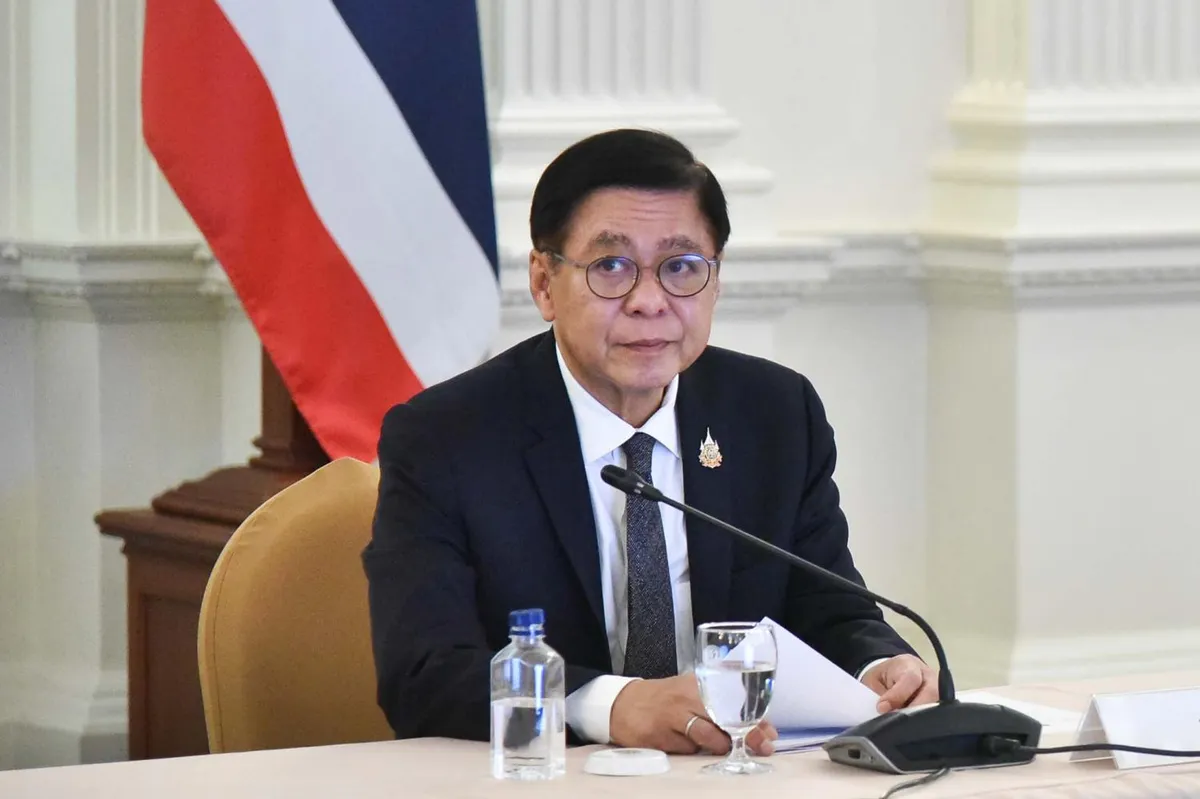
Direct bilateral negotiations between Thailand and Cambodia concerning their land border have been suspended, according to a senior Thai official. The Thai Ministry of Foreign Affairs stated that while direct dialogue remains the preferred method for resolving territorial disputes, current circumstances have made such discussions impossible. The stalemate arises from Cambodia’s decision to engage with the United Nations Convention on the Law of the Sea (UNCLOS) process, a move that has effectively closed the door on further direct talks for the time being.
Stalled Negotiations and the UNCLOS Factor
Speaking from Beijing, Thai official Sihasak explained that the opportunity to discuss land boundaries has become exceedingly difficult. “At this point, the door is closed. There is no opportunity to talk about land boundaries. It will be difficult,” he remarked. This statement underscores the significant impasse reached in resolving the long-standing border issues between the two neighboring nations. The core of the current deadlock lies in Cambodia’s choice to pursue resolution through the UNCLOS framework, a path that Thailand’s Ministry of Foreign Affairs views as hindering direct engagement.
Thailand’s Approach to Border Resolution
Thailand has consistently advocated for bilateral negotiations as the most appropriate and effective means to settle territorial disputes. This approach emphasizes direct communication and mutual agreement between the involved parties. Despite this preference, the engagement with UNCLOS by Cambodia has necessitated a shift in Thailand’s strategy. The Thai government has taken steps to prepare for the UNCLOS process, appointing international legal experts to its conciliation panel. Specifically, two former presidents of the International Tribunal for the Law of the Sea (ITLOS), hailing from South Africa and Germany, have been approved by Thailand’s cabinet to serve on this panel. Sihasak himself has been designated as the head of Thailand’s negotiating team for this process, with Songchai Chaipatiyut, Thailand’s ambassador to Kuwait, appointed as his deputy.
China’s Role and Offer of Facilitation
Amidst these stalled discussions, China has expressed its willingness to play a facilitating role in restoring relations between Thailand and Cambodia. This offer was conveyed during Prime Minister Anutin Charnvirakul’s official visit to China. The Thai government has acknowledged and appreciated Beijing’s offer, reiterating its stance that bilateral negotiations are the ideal starting point for any resolution. However, the current situation, marked by Cambodia’s entry into the UNCLOS process, prevents Thailand from proceeding with such direct talks.
Chinese President Xi Jinping has also publicly urged both Thailand and Cambodia to resolve their border dispute through dialogue. According to China’s Xinhua News Agency, President Xi stated that Beijing is prepared to contribute a “constructive role” in fostering a peaceful settlement. This indicates China’s interest in regional stability and its readiness to mediate or assist in resolving the conflict, although Thailand’s immediate focus remains on navigating the UNCLOS process due to the current limitations on bilateral talks.
Background on Thailand-Cambodia Border Disputes
The land border between Thailand and Cambodia, stretching over 800 kilometers, has been a source of contention for decades. Disputes often center on overlapping territorial claims, particularly in areas rich in natural resources or of historical significance. Several flashpoints have emerged over the years, most notably around the Preah Vihear Temple, a UNESCO World Heritage site. While international courts have made rulings regarding the temple area, broader demarcation and resolution of other border sections have remained challenging.
The UNCLOS is a comprehensive international agreement that establishes a legal framework for all marine and maritime activities. While primarily focused on maritime boundaries and ocean governance, its principles and dispute resolution mechanisms can sometimes extend to related territorial issues, particularly where land and sea borders intersect or where historical claims are intertwined with maritime zones. Cambodia’s decision to involve UNCLOS suggests a belief that this international framework offers a more structured or favorable path to resolving aspects of the border dispute, which Thailand, while preferring direct talks, is now preparing to engage with through its appointed conciliation panel.
Future Prospects and Diplomatic Efforts
The current impasse highlights the complexities of international border disputes and the varying diplomatic strategies employed by nations. Thailand’s commitment to bilateral dialogue reflects a desire for direct control over the resolution process, aiming for mutually agreeable solutions. However, the engagement with UNCLOS signifies an adaptation to circumstances and a willingness to utilize international legal mechanisms when direct channels are blocked.
China’s offer to facilitate dialogue and its call for a peaceful settlement underscore the geopolitical significance of the region and Beijing’s role as a major power. The success of any future resolution will likely depend on the willingness of both Thailand and Cambodia to engage constructively, whether through direct talks, international legal processes, or a combination thereof. The appointment of international experts to Thailand’s conciliation panel suggests a serious commitment to addressing the dispute within the UNCLOS framework, even as the preferred path of bilateral negotiation remains temporarily closed.
