

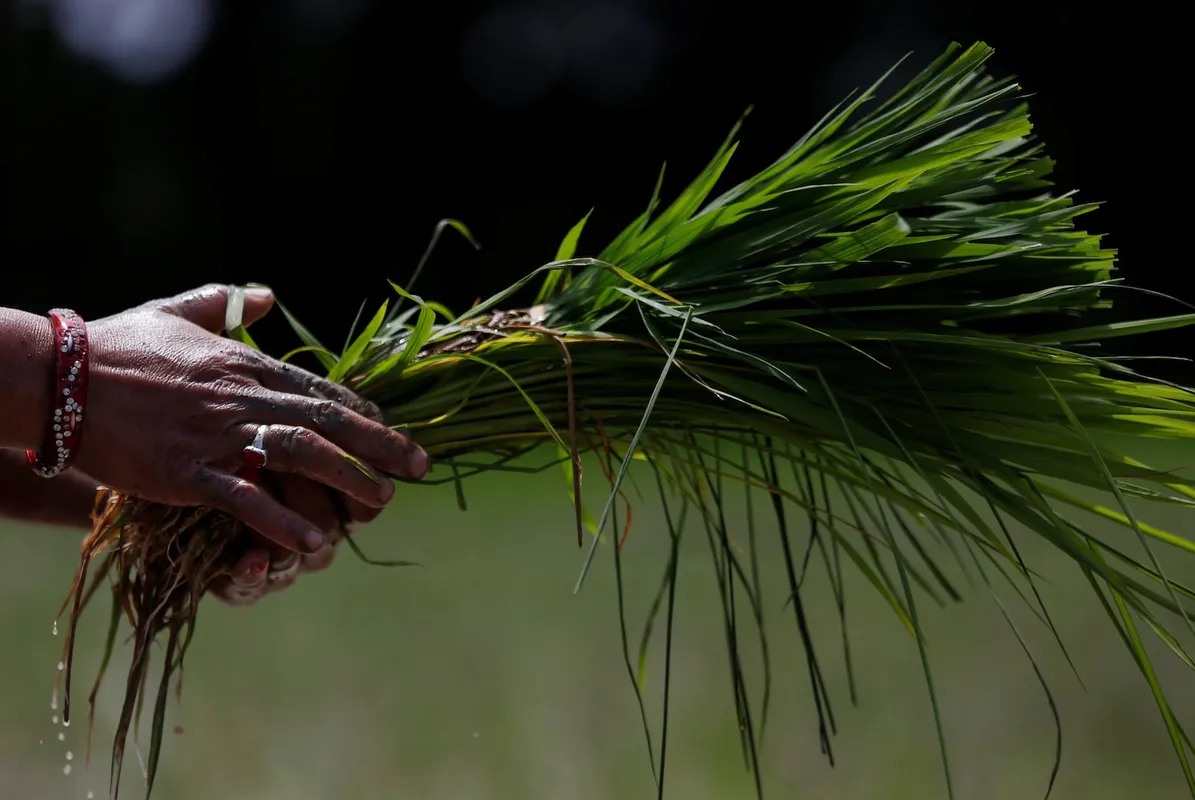
Across Asia’s vital agricultural regions, hot weather and insufficient rainfall are significantly impacting crop yields and forcing farmers to scale back planting. From India’s northern grain belts and Thailand’s rice paddies to Australia’s wheat fields and Indonesia’s palm oil plantations, the dry conditions are creating a challenging environment for food production.
El Niño’s Grip on Global Harvests
The current dry spell, strongly linked to El Niño patterns, presents a compounded challenge for farmers already contending with shortages of essential inputs like fertilizer and diesel fuel, exacerbated by geopolitical conflicts in the Middle East. This situation is already influencing global commodity markets, with wheat prices seeing a notable increase of approximately 20% since the beginning of 2026, largely driven by drought concerns in key U.S. growing areas. Similarly, rice prices in major Southeast Asian export hubs have climbed around 15% over the past month, attributed to rising production costs and fears of tightening supply.
Forecasting models widely anticipate the development of one of the strongest El Niño events on record in the latter half of 2026. This phenomenon is expected to bring arid conditions to Asia while potentially causing excessive rainfall in the Americas. The impact is further amplified by ongoing global climate change, which is intensifying weather extremes.
Early Signs of Drought Emerge
Meteorologists are observing early indicators of drought across parts of Asia. Chris Hyde, a U.S.-based meteorologist with satellite data firm SkyFi, noted that high-resolution imagery platforms are already revealing signs of dryness in several Asian regions. This aligns with the projected global impact of El Niño, which often begins in Southeast Asia, India, and Australia before creating downstream effects in North and South America.
India’s Monsoon Woes
In India, the national meteorological department has revised its forecast for the crucial four-month monsoon season downwards. This season typically accounts for about 70% of the country’s annual rainfall. Officials have indicated that current temperature levels across much of the nation remain significantly above normal, creating unfavorable conditions for the timely planting of summer crops. The late onset of the monsoon is expected to delay planting, with a greater concern being the potential for below-normal rainfall and extended dry periods even after the monsoon’s arrival. India’s primary summer crops include rice, soybeans, pulses, sugarcane, and corn.
Southeast Asia Faces Water Scarcity
For countries in Southeast Asia, the dryness is directly impacting rice and palm oil yields. Nerawat Oramah, a 47-year-old farmer in Thailand’s central Chai Nat province, expressed widespread concern about the drought. “Everybody is worried (about drought), it’s risky,” he stated. “For my second harvest, I have to wait and see the situation. It’s a risk for everyone (if there is not enough water), there will only be one harvest.”
Thailand and the Philippines are currently in the process of planting their main rice crops in June and July, while Vietnam and Indonesia are sowing their second-season crops. Indonesia’s meteorological agency has reported that its most populated island, Java, along with parts of northern Sumatra, south Kalimantan, and Sulawesi, have experienced no rainfall for over ten days. The agency anticipates medium to low rainfall in these areas throughout June.
Rising Rice Prices Signal Potential Crisis
Despite ample rice supplies in India, a major global exporter, prices are on the rise. Traders point to this as a clear indication of an impending crisis, with Thai rice prices alone increasing by approximately 15% in the past month. Analysts suggest that while India holds substantial rice reserves, the country may begin to view these stocks as a critical asset and potentially implement export restrictions if early monsoon patterns prove problematic.
However, some analysis suggests that strong reservoir levels could partially mitigate the impact of dryness. A note from KKP Research, a unit of Kiatnakin Phatra Bank in Thailand, highlighted concerns about fertilizer supply. The bank estimated that a fertilizer shortage could potentially reduce rice production by as much as 15-20% in a worst-case scenario.
Australia’s Wheat Outlook Uncertain
Recent rainfall has provided some relief to parched Australian farmlands, enabling late wheat sowing. However, growers remain cautious about the looming El Niño, which could negatively affect yields in the coming months. The Bureau of Meteorology forecasts that many cropping regions in New South Wales and Queensland will receive between 20 and 40 millimeters less rain than average over the next three months. John Lowe, a farmer in central New South Wales, reported that his total cropping area is still significantly reduced, approximately 30% smaller than it could have been.
El Niño is anticipated to have a neutral effect on China and the Black Sea region, while bringing increased rainfall to the Americas. Agricultural meteorologist Drew Lerner commented on the U.S. outlook, stating, “Statistically speaking, there is not much correlation with weather in the US and El Nino, during the summer.” He added that while some El Niño summers may see slightly more moisture, it does not necessarily translate to above-normal rainfall.
